
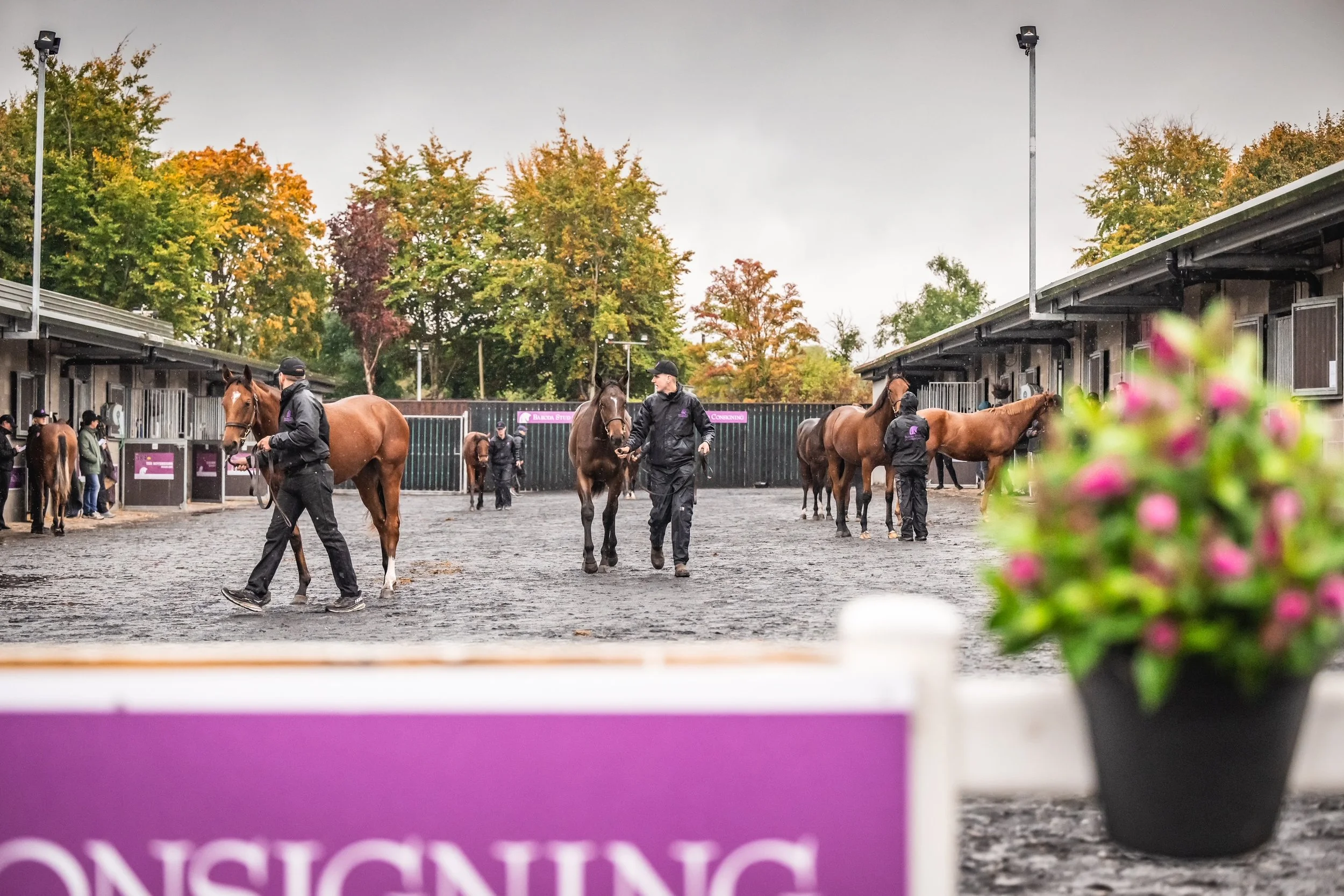
The Wife’s Guide To Goffs
The Wife’s Guide to the Goff’s Sale written by the brilliant Tamso Doyle, for expert insight as to where to stay, shop, eat and relax near Kildare, Ireland.
Written by Tamso Doyle Cox
How to make the most of sales week in County Kildare. If you’ve found yourself accompanying a husband, partner, friend or family member to a bloodstock sale, you may initially wonder what on earth you’re going to do while everyone else discusses pedigrees, black type and fetlocks.
But actually, why should you just be accompanying someone?
Buying a horse is not a boys’ club, and you certainly don’t need to leave the serious horse business to someone else. Women have always been an important part of racing and bloodstock, and there is absolutely nothing to stop you getting involved yourself — whether that means buying a share in a racehorse, joining a syndicate or, if you really fall in love with one, buying a horse of your own. And you couldn’t choose a better place to start. Ireland has some of the best racing, trainers, breeders and bloodstock in the world, and Goffs is right at the heart of it.
Even if you arrive knowing very little about buying a horse, there is no reason not to ask questions, look through the catalogue and get involved. You might be surprised how quickly you find yourself studying a pedigree or developing a very strong opinion about which horse you like.
The good news is that Goffs is in a particularly brilliant part of the world for this. Goffs is right in the heart of County Kildare — the home of the Irish thoroughbred — and is conveniently close to Dublin city and Dublin Airport. So you can easily make a trip of it: stay in Dublin and enjoy the city, or base yourself closer to the sales and explore Kildare.
I’ve spent most of my life around bloodstock sales, and I still love them. There is something very special about the atmosphere: I get an instant buzz as I arrive at the top sales, the beautifully turned-out horses, the familiar faces appearing from all corners of the racing world, the anticipation before a horse enters the ring and, of course, the inevitable post-sale dinner where everyone analyses what just happened. But my advice is not to feel that you have to spend every waking hour at the sales. Enjoy some of it. Take in the atmosphere. Have a wander around. Ask questions. And then, when you need a break from it all, escape for a few hours and make the most of what’s on the doorstep.
A little about me
I have quite literally grown up around the bloodstock sales. My parents were racehorse trainers, bloodstock agents and consignors, so some of my earliest memories are of the sales yards, horses, busy auction rings and the wonderfully familiar rhythm of sales week.
Today I live in County Kildare with my family where we run Baroda Stud (https://www.barodastud.com), which is both a breeding operation and also one of Europe’s leading thoroughbred consignors. Over the years I’ve travelled to many of the major bloodstock sales around the world, and I’ve learned that there is far more to sales week than what happens in the ring. I love the people, the horses, the atmosphere, the impromptu lunches and dinners and the slightly surreal experience of seeing the thoroughbred world descend on one place for a few days. But I also know that if you’re accompanying someone who is there to buy horses, it’s rather nice to have a few ideas of your own.
So here is my guide to making the most of Goffs and the surrounding area.
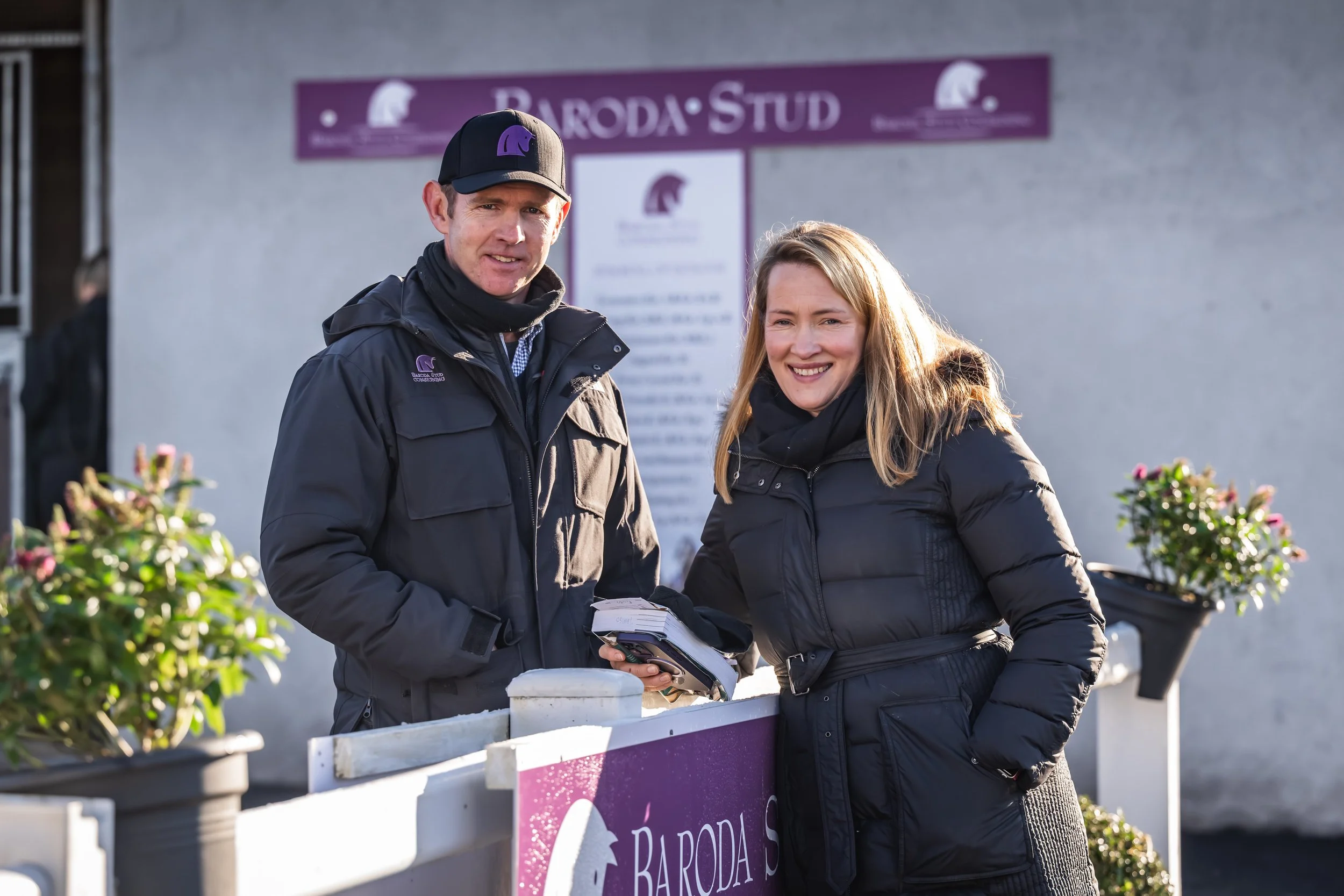
First things first: getting your bearings
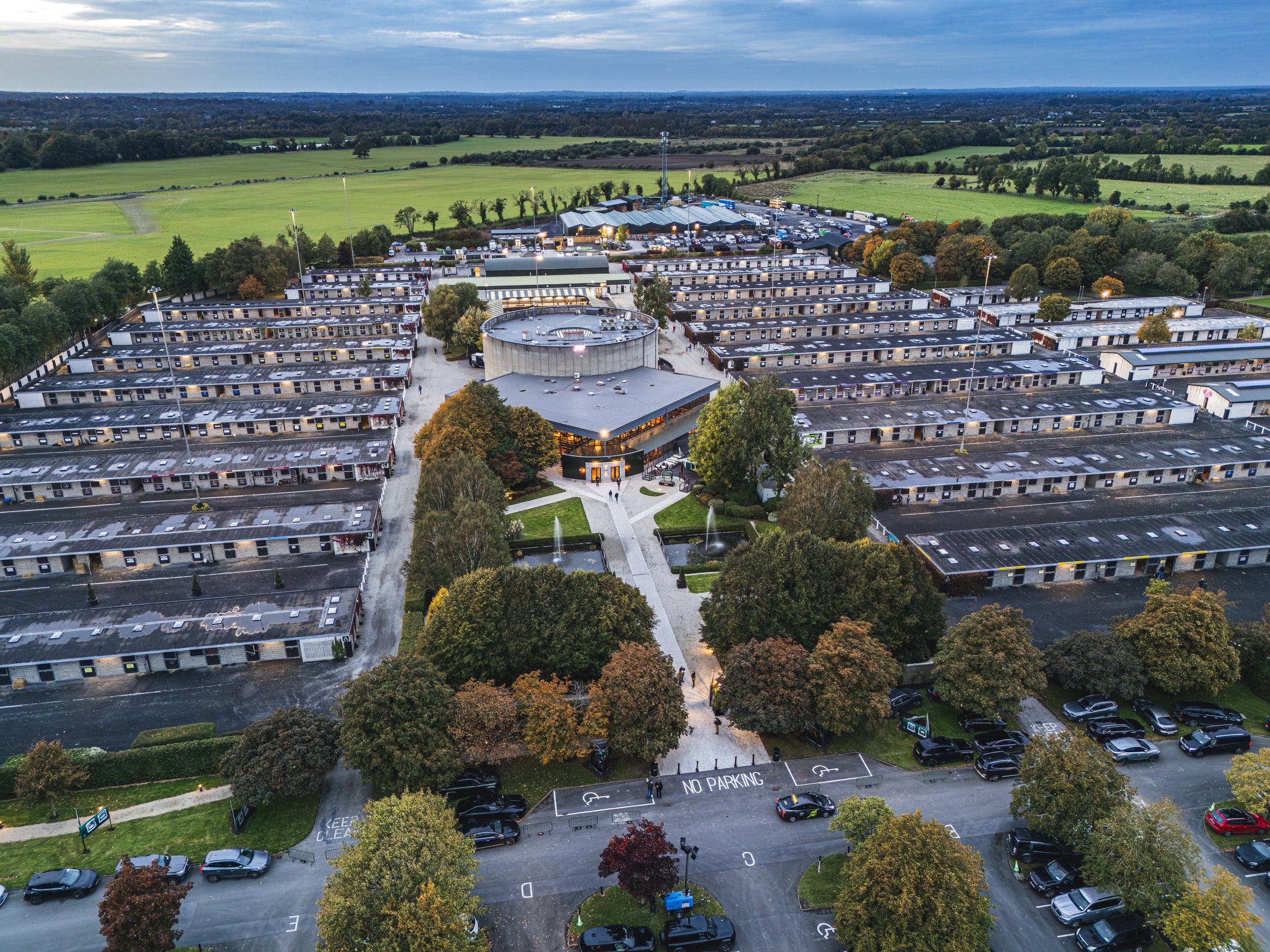
One of the great things about Goffs is that it is remarkably easy to navigate. The barns are laid out in a grid, with the Barns arranged alphabetically, so once you get your bearings you can find your way around without too much trouble. And don’t be intimidated by the fact that everyone else appears to know exactly what they are doing. Pick up a sales catalogue from the front desk. Apart from being incredibly useful, it immediately makes you feel as though you belong.
Barbara Bashford is always wonderfully friendly and helpful, as are the Irish Thoroughbred Marketing team (https://www.itm.ie), who are particularly useful for international visitors. If you are traveling from overseas to buy, ITM is well worth knowing about. They can help with sales visits, itineraries and travel, and their buyer incentive scheme can contribute towards flights for eligible purchasers.
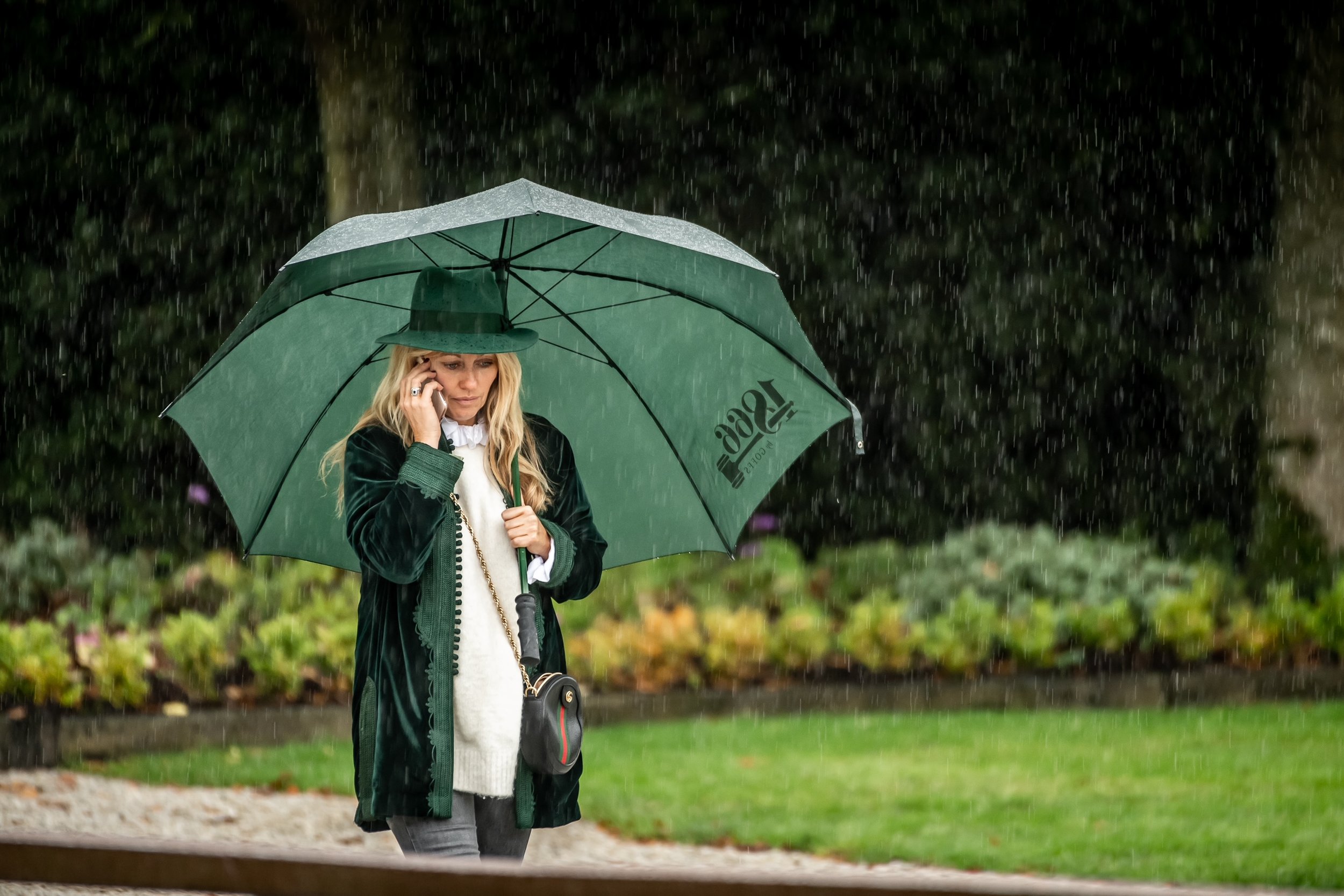
What to wear
The good news is that there is no real dress code at Goffs — and that is part of the charm. You’ll see plenty of smart jeans, good boots, cashmere layers and silk shirts, but equally people are dressed very practically because they are spending the day walking around looking at horses.
Comfort definitely wins. A good pair of boots that you can wipe clean is probably the most important thing to bring. After that, think nice but practical: jeans, a cashmere sweater, a shirt, a good coat and perhaps a pair of funky trainers. You’ll see plenty of Lucy Nagle cashmere (https://www.lucynagle.com) around the place, one of my favourite brands and she’s closely associated with racing too.
There’s no need to overthink it. You want to look put together, but you also need to be able to walk around the barns, stand outside watching horses and generally get involved as well as being prepared for hot, cold, sunny or wet!
And if you’re staying in Dublin, you have the added bonus of Brown Thomas (https://www.brownthomas.com Ireland’s leading department store and one of my favourite shopping destinations in the world) and all the other great city-centre shopping on your doorstep.
The sales survival kit
Comfortable runners or boots: Essential. There are horses involved. You will see a lot of funky trainers on peoples feet at the sales!
A sales catalogue: Your passport to looking like you know what you’re doing (you can go pro and download the sales catalogue app and have the catalogue on your iPad or tablet.
Layers: Irish weather. Enough said.
A good coat: Particularly for the autumn sales.
A handbag you can actually carry around: You’ll be walking. Mine is usually enormous and loaded up or a nice Cross body is very handy too.
Children: Goffs is a wonderful place for children who love horses, and my own children love coming. But it is a working sales complex, so keep little ones close and choose your timings carefully. Steer care of the earnings and no running around the horsey areas . Horses and busy people are moving around constantly, so safety comes first.
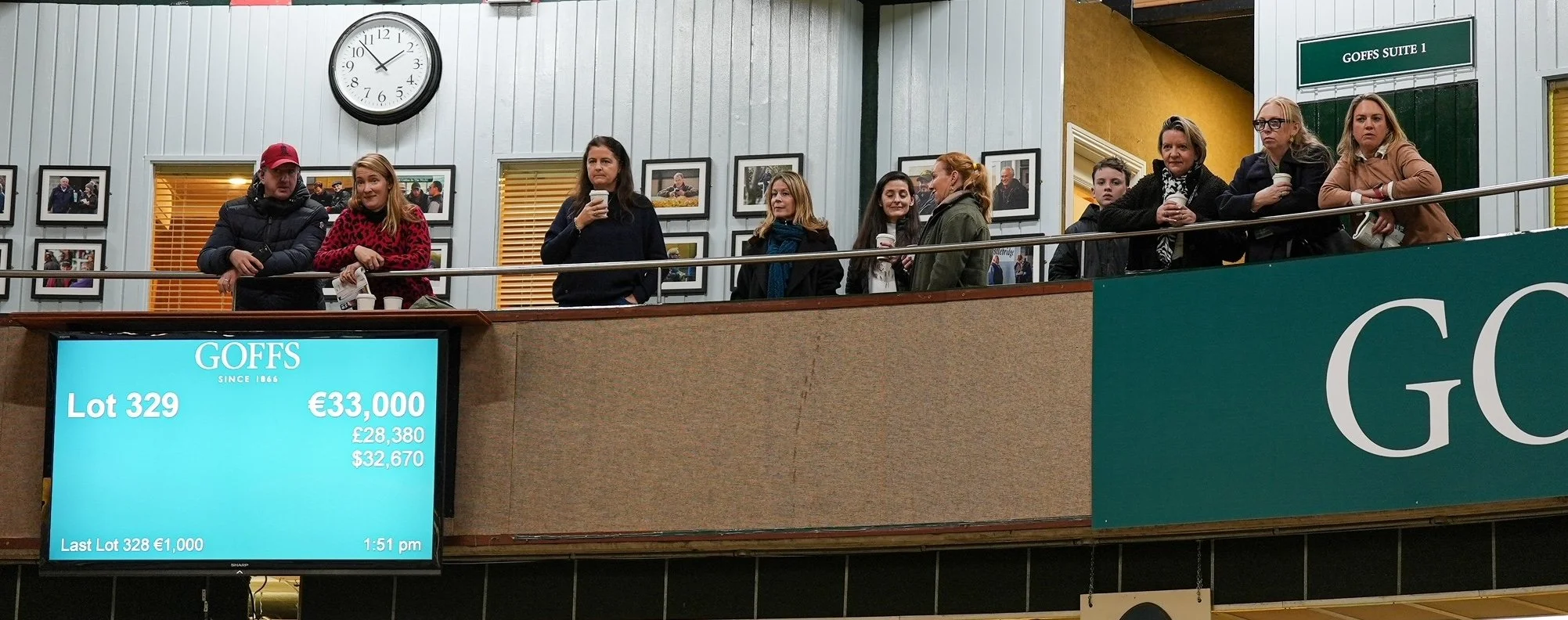
Coffee, lunch and a little hospitality
Goffs makes a real effort to look after people during the sales.
There are good coffee and food options on site, with Lily & Wild providing the catering, and Peter Bark’s coffee offering a very welcome caffeine stop.
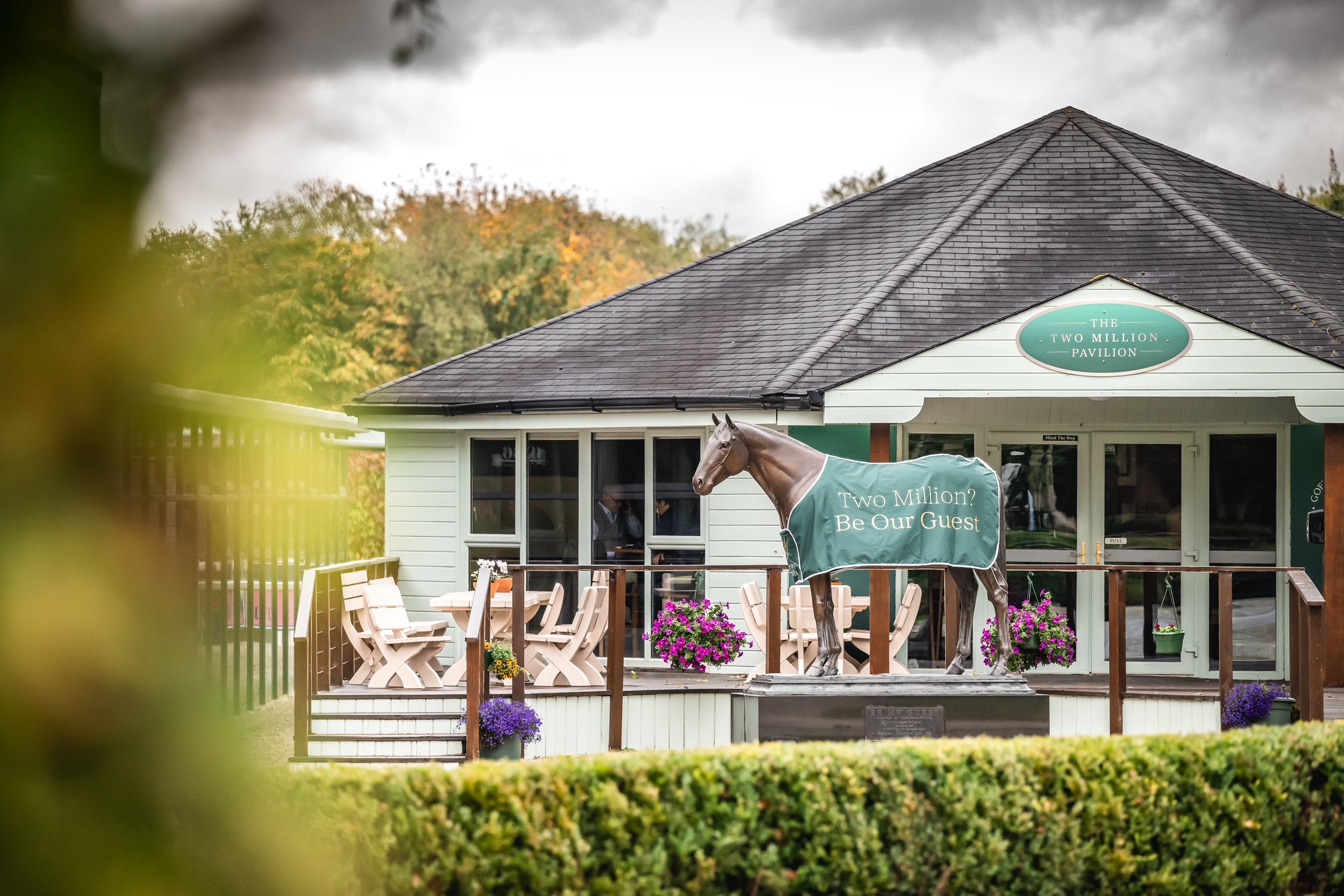
There are two main restaurants, one in the pavilion outside and another upstairs, closer to the sales ring. Personally, I prefer the upstairs one, I like to be close to the action so I can pop in and out of the sales ring with the balcony overlooking the rostrum.
And keep your eyes open as you walk around the barns. Quite a few consignors have hospitality at their barn ends, which can be a lovely place to stop for a coffee, a drink or a quick catch-up.
Sales week is surprisingly sociable. Even if you arrive knowing very few people, you’ll probably leave knowing rather more.
Where to stay
One of the great advantages of Goffs is its location. You can stay in Dublin and have the whole city on your doorstep, while still being able to get to the sales easily.
If you’d rather stay in the countryside, The K Club (https://www.kclub.ie) and Barberstown Castle (https://www.barberstowncastle.ie) are two of my favourite options. Both are close to Goffs, set in beautiful surroundings, and have good restaurants and lovely places to walk.
For absolute convenience, Goffs Hotel (https://www.clubhotel.ie) is the obvious choice as it is within walking distance of the sales and soon (not complete yet) there will be padel courts (which can be rented separately to the hotel) there which would be another fun thing to do.
In Naas, Lawlor’s Hotel (https://www.lawlors.ie) is a practical town-centre option, while Killashee House Hotel (https://www.killasheehotel.com) is another good choice if you fancy something a little more relaxed, with a spa, sauna, steam room and good relaxing Elemis treatments. They have a great gym there too.
Naas: your shopping escape
If you have a few hours away from the sales, go to Naas (5mins drive/taxi). It is one of the best boutique shopping towns in the area and is right on the doorstep of Goffs. It is very easy to walk around and plenty to see.
It is a close run race for the top spot, but for me it would be between Gallery 9 (https://gallery9.ie) and Emporium Kalu (https://emporiumkalu.com). Emporium Kalu is the grand dame of boutiques in Ireland, it is a beautiful, high-end boutique over two floors, run by Kate and Louise and their team, who are excellent at putting an outfit together. Think beautiful cashmere, winter coats, silk dresses and some very good labels including Mantu. It is not the place to go if you are trying not to spend money. Then there is Gallery 9 founded by Niamh McCoy. It can be quirky and has an excellent edit of international designers. Victoria Beckham is among the brands currently stocked.
Aria Boutique (https://ariaboutique.ie) is another one worth putting on the list and is only around the corner.
There are plenty of other independent shops around the town, so I would allow yourself time simply to wander. Tuckmill crafts, Granny’s Attic and Meadows and Byrne are all lovely to browse and shop for treasures.
Kildare Village
And then there’s Kildare Village (https://www.thebicestercollection.com/kildare-village/en/), one of my all-time favourite places to shop. It’s less than 15 minutes from Goffs, very easy to park at, and has a great mix of designer and contemporary brands — think Burberry, Hugo Boss, Moncler, ba&sh, American Vintage and Seven for All Mankind. There are some lovely places to eat too, and Sprout is a particular favourite of mine for its amazing salads. A new addition is Wrights of Howth, which has just opened and is another good reason to stop. One of my top tips is to book the personal shopping service in advance — they’re excellent and can make the whole experience much easier. And if you’re making a proper day of it, the Irish National Stud (https://irishnationalstud.ie) is only a couple of minutes away, so you can combine a little shopping with a visit to see some of Ireland’s famous stallions and have a wander around the stud.
Coffee is serious business
If you are a coffee person, Naas is a very good place to be.
PS Coffee (https://pscoffeeroasters.com) is one of my favourites. It is a proper artisan coffee destination and the team behind it are passionate about their beans and coffee.
Then there is Vault Coffee (https://www.instagram.com/thevaulttrailer) which is in the centre (opposite Kalu) and makes excellent coffee. But whatever you do, don’t leave without trying one of their dates filled with pistachio or peanut butter. You have been warned.
I also love Gra Coffee (https://gragallery.com), right in the middle of the Main Street, serious protein balls there to accompany your caffeine hit. And you can’t go wrong with Butlers and their gorgeous coffee accompanied by a seriously delish complimentary chocolate (https://butlerschocolates.com/pages/butlers-chocolate-cafe-naas).
Where to eat
Vie de Château: For me, this is one of the standout restaurants in Naas. (ViedeChateaux) It has a lovely French feel, with locally sourced Irish ingredients given a French twist, and a very good wine list. I would be tempted by the starter prawns and the mussels — and basically anything else that looks as though it has come from a French holiday.
Neighbourhood: Another excellent option if you want somewhere smart but relaxed. It has a wood-fired grill, a great wine list and regular steak nights. It has also received Michelin Guide recognition and was named Best Restaurant in Kildare for 2026. (Neighbourhood Naas) And the cocktails are worth knowing about.
TANI: If you’ve had enough Irish and French food and fancy something Japanese, I love TANI. (https://tani.ie/naas/)
There are plenty of other restaurants around Naas, but those would be my first three recommendations. If it’s brunch or lunch you are after another lovely place to visit is Naas racecourse (https://naasracecourse.com), they have a cafe on site run by Lily & Wild which is both airy and bright, easy to park and delicious.
Your beauty emergency is also covered
After several days of early mornings, muddy boots and late dinners, you may decide you need a little maintenance.
Essence is a new hair salon in Naas and one I would particularly recommend (https://www.essencehairsalon.ie). Lawrence Harrington is a fantastic hair stylist and worth knowing about if you want your hair looking good for a sales lunch or dinner (https://www.kevillehair.com/index.php/about/team#).
Peter Mark is another very handy option, particularly if you need a last-minute blow-dry (https://www.petermark.ie/salon/naas-shopping-mall-kildare/)
And there are plenty of nail bars around town. Ambiance, close to Lawlor’s Hotel, is a useful one to know for a manicure or pedicure (https://ambiancenailspa.ie)
Basically, Naas has most things covered.
Escape to the river
One of my favourite discoveries for a little break from sales week is Treehouse Sauna. It is tucked away beside the River Liffey in Naas and feels like a complete change of scene. You can book a 50-minute sauna session for €15, with riverside views, cold plunges and a jacuzzi. (Treehouse Sauna)
It is exactly the sort of thing I would recommend if you have spent several hours walking around the sales and need to switch off. There is fresh air, the river flowing beside you, the smell of wood and sauna, and just enough time to completely reset before getting back into your sales-week clothes.
And if you really want to escape…
If you have a little more time, staying in Dublin gives you another whole dimension to the trip.
You can enjoy the sales during the day and then head back into the city for dinner, drinks, shopping or simply a change of scenery. Brown Thomas and the rest of Dublin’s shopping are an obvious bonus. My favourite places to stay in Dublin are the Merrion Hotel (https://www.merrionhotel.com) & the Westbury (https://www.doylecollection.com/hotels/the-westbury-hotel). They are close to the action and give great service, but there are lots of cool new hotels in Dublin too that offer better value and are also a great place to stay. My Top places to visit in Dublin is the National Gallery of Art on Merrion Square (https://www.nationalgallery.ie), this is one of the most incredible gallery spaces and has an inspiring collection of Irish art in particular which I adore, think Yeats, Roderic O’Connor, Paul Henry, etc.
And that is really the beauty of coming to Goffs. You don’t have to be a bloodstock expert to enjoy it. Come for the horses. Stay for the atmosphere. Have a look around the sales, enjoy a long lunch, find a beautiful jumper in Naas, disappear for an hour in a riverside sauna, and meet everyone for dinner afterwards.
You may even find that, by the end of the week, you know what everyone is talking about when they start discussing the catalogue. Or at the very least, you’ll know where the good coffee is. And that, in my experience, is never a bad thing to know.
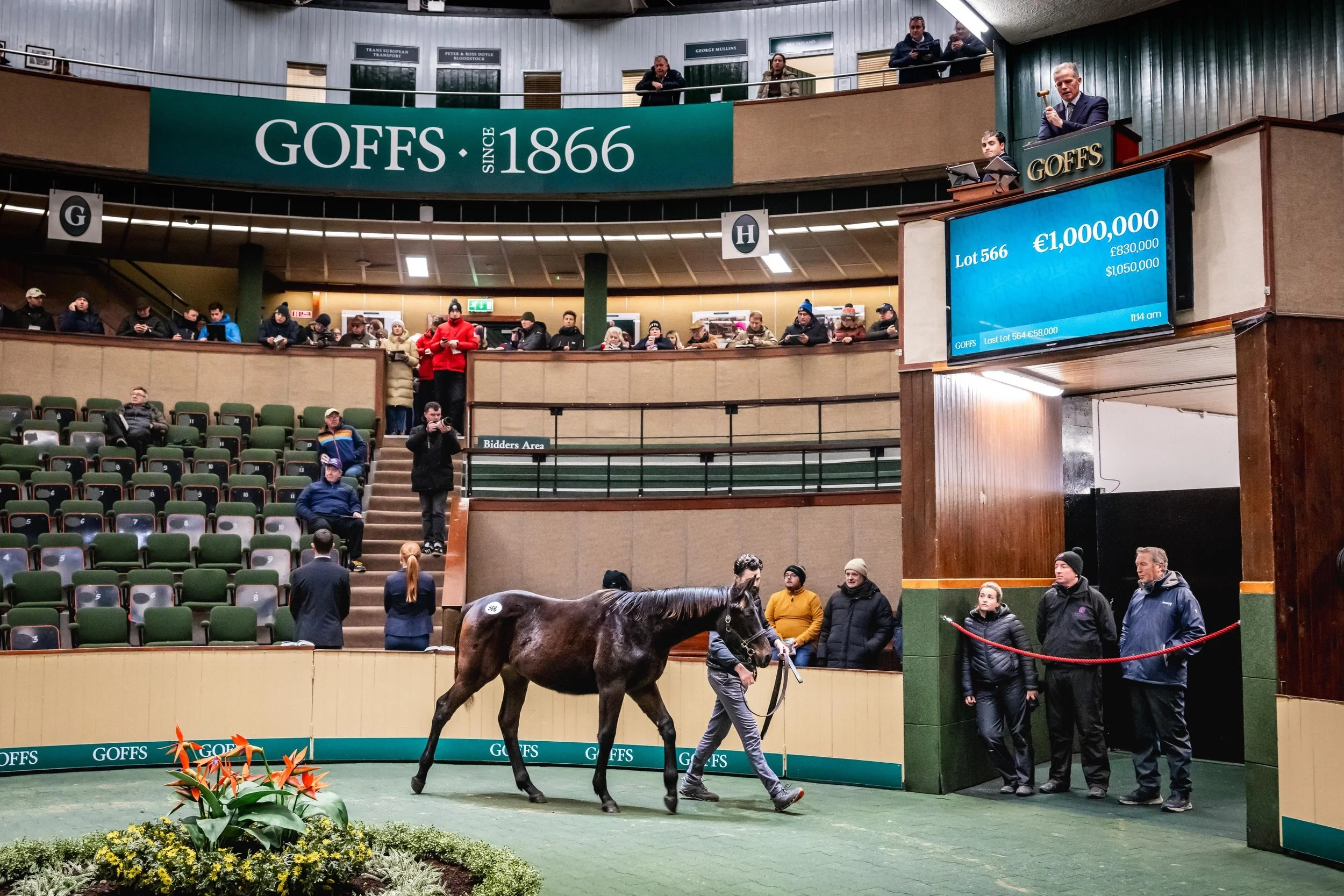
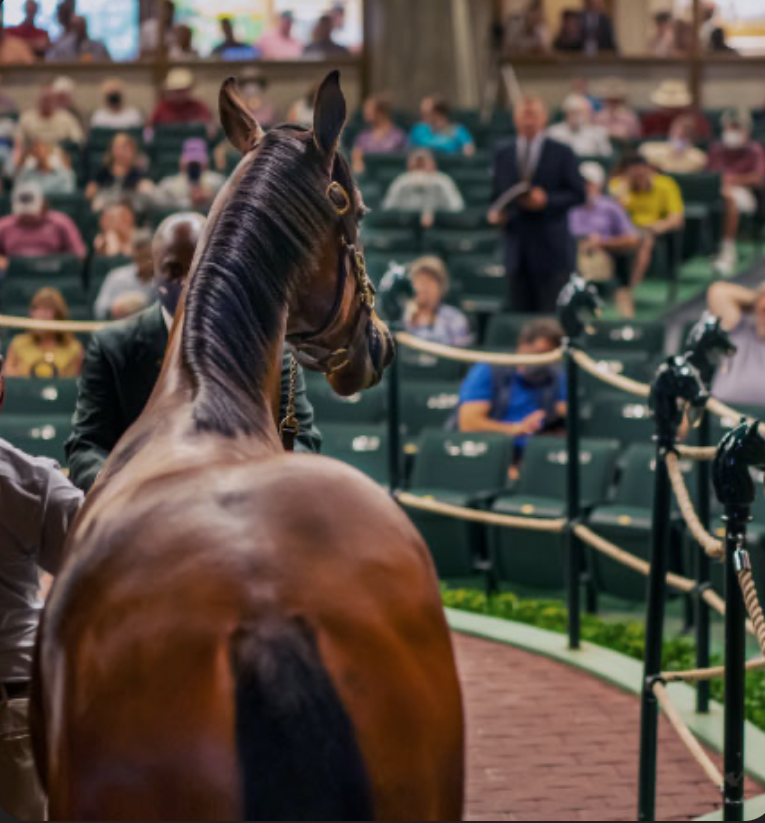
The Wife's Guide to the Keeneland September Sale
A Wife’s Guide to the Keeneland September Sales. For when you need a break from the sale pavilion.
There's a two-week stretch every September when Lexington quietly becomes the center of the Thoroughbred universe — and it has nothing to do with a race. No starting gate, no photo finish, no mint julep in sight. Just barns full of yearlings, an endless auctioneer's chant, and enough generational wealth changing hands to make your head spin. Think of it as horse racing's version of the NFL draft — except the prospects can't run a 40-yard dash for you, and nobody will know who the real steal was for another two or three years.
Welcome to the September Sale. https://www.keeneland.com/sales/2026/12/september-yearling-sale/
If you've only ever experienced Keeneland on a race day, the sale is a different animal entirely — quieter in some ways, more intense in others, and one of the most fascinating things you can watch for free in this town. It’s right around the corner and we are excited! If your husband is bringing to you the sales, but letting you sort out the details, here's everything you need to know before you go.
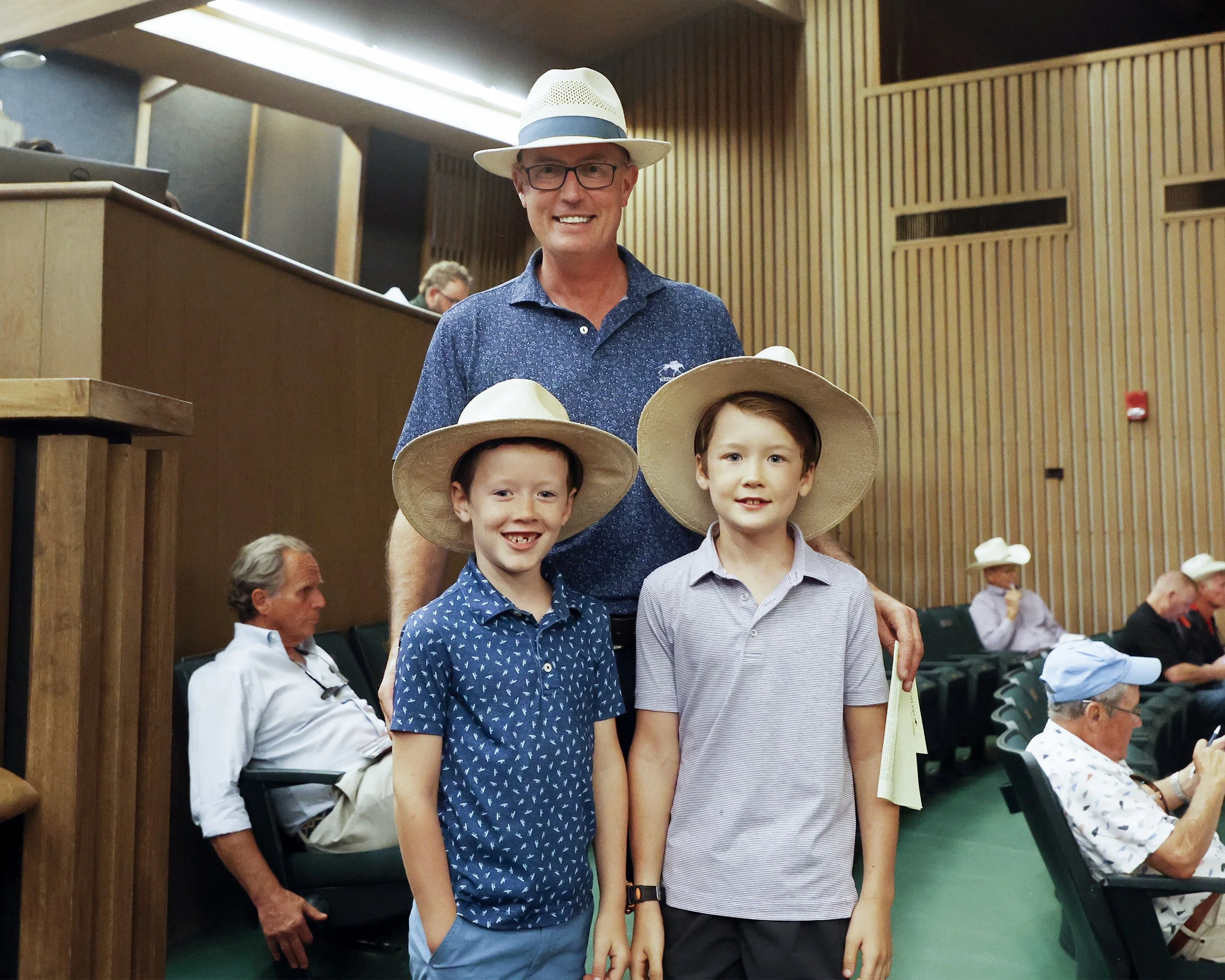
What is the September Sale?
The Keeneland September Yearling Sale is the largest Thoroughbred auction in the world — over 4,000 yearlings (young horses, roughly a year and a half old, who haven't raced yet) cataloged and sold over nearly two weeks. This is where the next generation of racehorses gets bought and sold, often for eye-watering sums, by bloodstock agents, trainers, and owners from every corner of the globe.
The sale is broken into "books" — essentially chapters of the catalog, organized by pedigree and perceived quality. Book 1 comes first and features the most elite, expensive prospects — this is where you'll see the seven-figure hammer prices and the biggest names in the industry. Each subsequent book features horses suited to more modest budgets, all the way down to Book 6. Same auction, same pavilion, very different energy depending on which week you walk in.
Here's the part that makes the whole thing so addictive to watch: a champion can come out of any book. Plenty of Derby winners and Grade 1 horses were bought for a fraction of what Book 1 prospects fetch, discovered by someone willing to look past the price tag. Nobody — not the buyer, not the seller, not the bloodstock agents who do this for a living — actually knows which yearling in front of them will turn into a superstar. That gap between pedigree on paper and what happens on the track is the whole game.
You'll also hear the term RNA — "reserve not attained" — meaning no one bid past the seller's hoped-for reserve price, so the horse technically goes unsold. It's a normal part of the process— often the buyer and seller simply step outside the ring and negotiate a private sale after the fact.
When to Go
The 2026 September Sale runs Monday, September 14 through Saturday, September 26.
If you want the spectacle — the seven-figure hammer prices, the biggest buyers in the industry elbow to elbow, a genuine sense of history happening in real time — go during Book 1 or 2, the first few days of the sale. It's the most crowded, most electric, and most photographed stretch.
If you'd rather absorb the whole process at a slower pace, without needing to elbow for a spot on the viewing benches, the later books are calmer and potentially a better introduction if this is your first time. You'll still see beautiful horses and real money change hands.
Session start times shift as the sale progresses, so double-check the day-of schedule on Keeneland's website before you go. At the front of the pavilion are several copies of the catalog available for anyone grab if you want to brush up on pedigrees and follow along.
Do You Need to Be "In the Industry" to Go?
No — and this might be the best-kept secret on this entire list. Keeneland sales are free and open to the public. You don't need credentials, an invitation, or a single connection to the industry to walk in and watch.
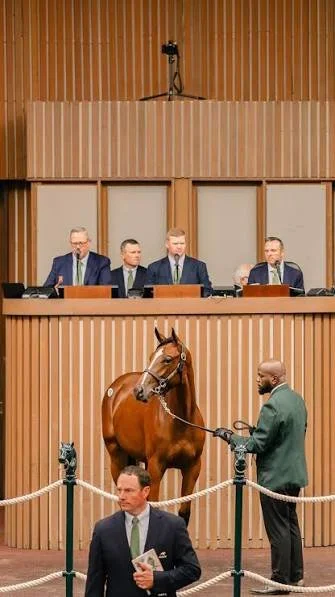
What you can't do is bid — the reserved seating inside the actual sales arena is for registered buyers and sellers only. But the viewing benches that ring the outside of the arena are open to anyone, and you're welcome to wander the barn area behind the pavilion (with caution— stay alert as these are young and sometimes flighty horses!), where yearlings are shown to prospective buyers before they go through the ring. If you want real context, Keeneland runs a Behind-the-Scenes Sales Tour (https://tickets.keeneland.com/tour-event/keeneland-behind-the-scenes-sales-experience/) a few mornings during the sale — well worth booking if it's your first time and you want someone to formally explain the entire process.
A few terms that'll make the whole thing click:
Hip number — the number pinned to each yearling, corresponding to its catalog page. This is how horses are referred to before they have a racing name — you'll hear "Hip 214 is up next," not the horse's name. Rarely are horses named before they go through the sales ring, but you will occasionally see a named horse in the catalog, otherwise they are listed by their dam (mother) and sire (father).
Walking the barns — literally what it sounds like: buyers and the curious alike stroll the barn areas to see horses up close before they go through the ring. Pro tip— stay alert, these are young horses that can sense the energy and sometimes decide to give their handler a run for their money.
The ring — the auction ring itself, where the actual bidding happens under the lights.
What to Wear
This is not a race day outfit. Nobody is arriving at the September Sale in a fascinator.
Think equestrian elevated-casual: you're on your feet for hours, walking barns, standing on gravel, possibly getting rained on. The uniform that works is polished but practical; jeans are fair game or a knee-length dress if it’s hot out (and it can be in September in Kentucky), a vest or structured jacket for the morning chill, and shoes you can walk a barn aisle in (this is not the day for your newest heels), boots and sneakers all welcome. Save the statement pieces for the Triple Crown; this is quieter, more tailored, more "I belong here" than "look at me."
Where to Eat & Stay
Sessions can start as early as 10 a.m., which for an industry that keeps racetrack hours feels almost civilized. There are several food options on the grounds— with 2 new dining options available this year, the Sycamore Room (full service lunch) and the 1936 Room (light bites in a casual setting, also coffee!). Inside the pavilion, an easy option is the Limestone Café for a quick grab and go bite between hip numbers you’re eyeing. There are also often local food trucks near Barn 40.
Once you're off the grounds, here are my tried and true recommendations:
Sushi — Omakase, with two locations: Chevy Chase or Palomar if you want something closer to the sales grounds. High-end sushi, and honestly my favorite restaurant in Lexington — the O'toro nigiri is top class. https://www.omakaselex.com
American — Bella Cafe. A solid lunch or dinner spot with two locations, Chevy Chase and Palomar (closer to the sales grounds). Fresh salads and burger options mean there's something for everyone in your group. https://bellacafeandgrille.com. My preference would be lunch here, but they also have dinner hours.
Steak — The upscale, obvious choice is Jeff Ruby's or Tony's. If you'd rather have a quieter experience without sacrificing the quality of the steak, Blue Heron Steak House or Cole's 735 Main are both excellent.
Southern — Carson's downtown, which also recently opened a sister restaurant, Carson's Back Porch, worth checking out too. Cole’s menu also focuses on Southern cuisine. https://carsonsfoodanddrink.com
Pizza — Pearl's Pizza, downtown. It's tiny, it doesn't deliver, but it's worth the trip if you want a casual, quiet escape. https://www.pearlspizzapie.com. Hidden gem IMO!
French — Le Deauville, a longtime favorite of industry insiders looking for a more intimate dining experience.
Fun Vibe — V at the Vine. A recently revamped menu and beautiful city views give it a vibe that takes you out of Lexington for the night. https://thevatthevinelex.com
Light Bites with a View— Lost Palm at the top of the Manchester Hotel has a beautiful roof top patio (21+) with great tapas and elevated cocktails if you’re looking for a nice warm weather patio to wind down after a busy day at the sales.
Bakery— Wild Lab. This place is another hidden gem and I’m kinda obsessed with it. Fresh sourdough, amazing rotating menu of muffins, scones, bagels and focaccia. They also have a small lunch menu available from 11-2 Wednesday-Friday, the veggie sandwich is what dreams are made of. https://www.wildlabbakery.com
Coffee — Old School Coffee House, simply the best cup in town. Three locations— downtown at Dudley Square, Tates Creek in Lansdowne Shoppes, and in the Hamburg shopping area. https://www.oldschoolcoffeelex.com
Best Ice Cream — Graeter's, hands down, worth the calories. A great consolation prize if you didn't land the horse that caught your eye. New location opened up in the Palomar area not too far from the sales ground.
Where to stay:
Downtown:
AirBnB Condos at the Vine— These brand new condos are part of a residential social club that opened in 2025. These two-bedroom condo sits inside The Vine on Vine Street, and renters get day-pass access to The Vine Club and all its amenities — think rooftop pool, on-site restaurant and bar, and a gourmet kitchen. It's downtown directly across from Jeff Ruby’s, so an easy walk to nearby restaurants and bars. It turns your stay into part of the experience rather than just a place to sleep. Book it here. The building has a couple of other condos available too, if you're traveling with a bigger group or want more room to spread out.
Marriott City Center — Recently built, with a great location. There is also a Residence Inn next door. The top hotel choice if you want the easiest walk to everything and to get those Bonvoy points! https://www.marriott.com/en-us/hotels/lexdt-lexington-marriott-city-center/overview/
21c — Trying a little hard to be the coolest room in town, but it's right in the center of everything, so it earns its spot on the list. https://21cmuseumhotels.com/lexington/
The Sire Hotel — On a slightly quieter street and more boutique hotel feel, but still solidly downtown. https://www.hilton.com/en/hotels/lexgpup-the-sire-hotel-lexington/
Near downtown, off the main strip:
Manchester Hotel — A boutique hotel with a younger, design-forward crowd — if you want your hotel to feel like part of the night out, this is it. https://themanchesterky.com
Not at all downtown, but convenient:
Origin Hotel Lexington at The Summit — Far from downtown, but an easy, convenient option if you'd rather keep a quieter pace within an upscale outdoor mall. Whole Foods is nearby. Getting to the sales is an easy route down Man O’War. https://www.originhotel.com/hotels/lexington
Any of these puts you close to both Keeneland and everything in the next section — a smart move if you're planning more than one day at the sale.
When You Need a Break from the Auctioneer's Voice
The Keeneland Sales are an experience of their own and if you spend your entire trip here, you won’t be disappointed. However two weeks is a long stretch, so if you need a reset that doesn't involve a hip number or a bid spotter, here are a few easy half-day itineraries to build around.
Shopping + Lunch
Downtown: Clay Avenue & Chevy Chase
Start on Clay Avenue for Pomegranate, Carl Meyers, and Morton James, then swing around the corner to Chevy Chase for AJ's Boutique — a well-curated shop carrying brands like Veronica Beard and Saloni — and Marais Home (my new favorite!). Shopping for the grandkids? Doodlebugs is a genuinely cute kids' boutique worth the detour. If you have a little extra time, Cross Gate Gallery — home of the Sporting Horse Art Auction every November — is not too far away from Clay Ave and worth a peek.
For lunch, there's a small café tucked inside Pomegranate itself, set in a beautiful little space. My favorite bakery, Wild Lab, is only a short drive away. Otherwise, Omakase (sushi) or Bella Cafe, both in Chevy Chase, are excellent choices.
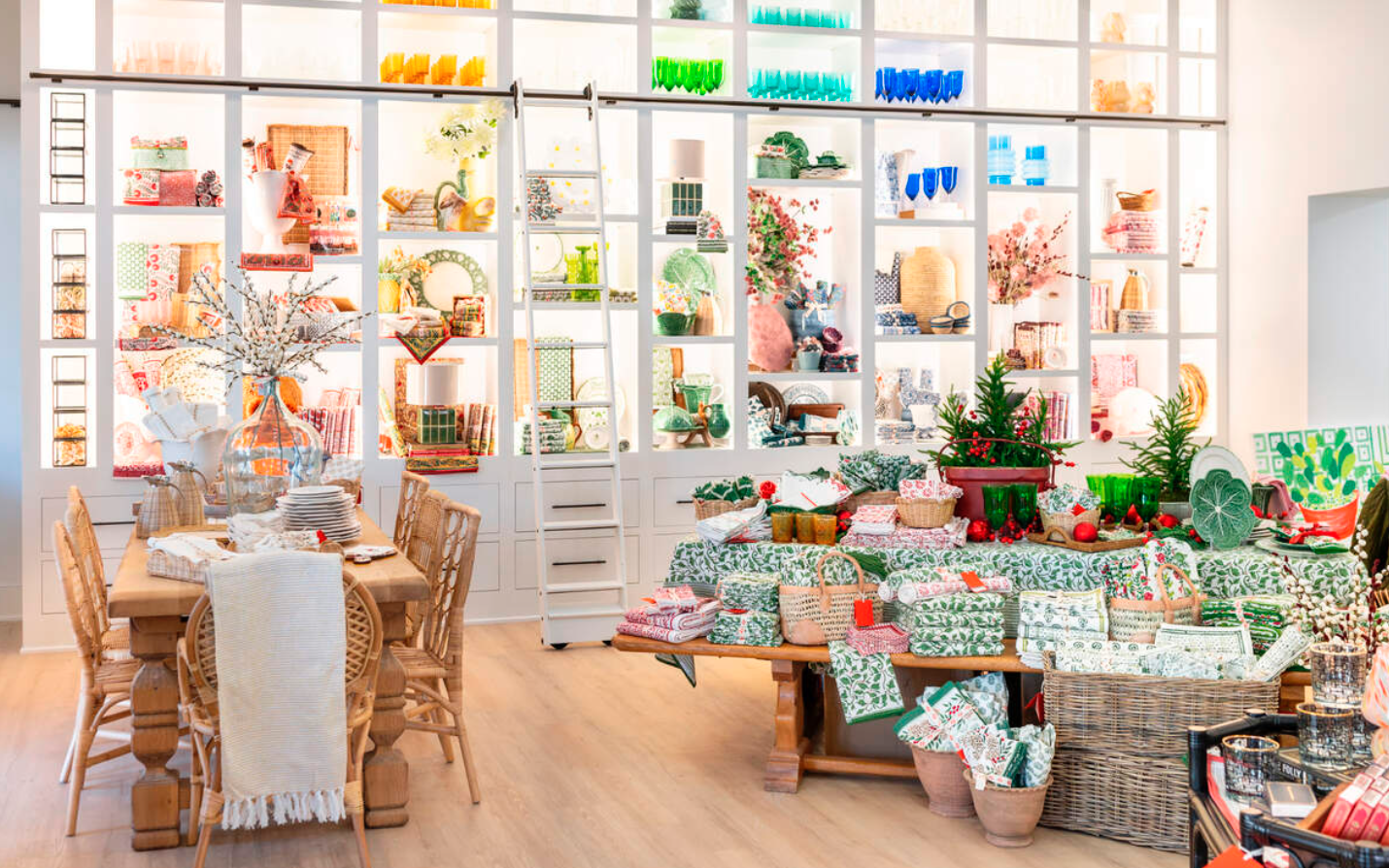
Pomegranate
Outdoor Mall: The Summit at Fritz Farm
A one-stop option if you'd rather not zigzag between neighborhoods. The Summit mixes big-box names — Anthropologie, Arhaus, Pottery Barn, Sephora — with standouts like Fiabesca for luxury shoes, and yes, an Ariat store, if you somehow can't get enough equestrian style after two weeks at the sale. There is also a Whole Foods, a nail salon, and Solid Core for pilates. https://fritzfarmlex.com
Lunch here: Sushi Blue, Cafe Patachou, or Honeywood are all solid picks.
Pro tip: if you're at the sale and don't have permission to slip off the grounds, the Keeneland Gift Shop has a gorgeous selection of high-end goods and apparel — retail therapy without having to stray too far from the pavilion.
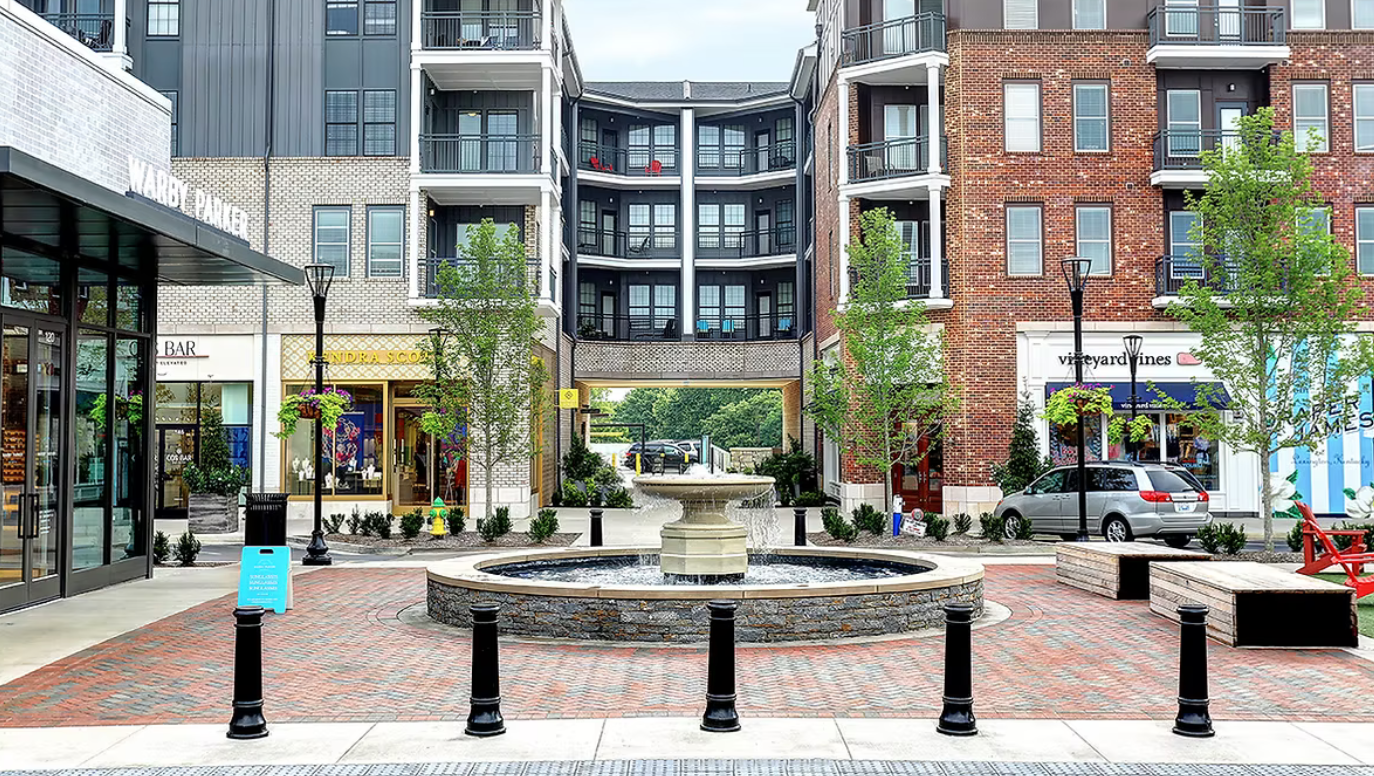
Summit at Fritz Farm
Spa + Lunch
Downtown: The Vine
The Vine has a lovely little spa on-site, complete with a dry sauna, steam room, and cold plunge — plus a rooftop pool and lounge if you'd rather keep lunch casual and stay put. For a sit-down meal downtown, Dudley's is a great option (lunch only, Friday through Sunday), or Carson's, which has a lovely ambience and a huge menu — their sister restaurant, Carson's Back Porch, is worth a try too. If you have time left for shopping, LV Harkness is a large, high-end gift shop downtown with plenty to browse. https://thevinelex.com/spa/
Nicholasville Road: Woodhouse Day Spa
Pair Woodhouse Day Spa with a stop at Joseph-Beth Booksellers for an easy, relaxing couple of hours with painless parking. For lunch, either head down to the Summit, or stop at Palomar on the way — Bella Cafe and Omakase both have locations there. If you want the full pampering experience, there's a Blo Blow Dry Bar nearby the spa too. https://locations.woodhousespas.com/kentucky/lexington/
Sales Etiquette 101
A few unwritten rules that'll keep you from standing out for the wrong reasons:
Keep your voice down near the ring and barn aisles — bidding is happening in real time, and distractions aren't appreciated.
Don't touch the horses unless a handler explicitly invites you to. These are valuable animals being actively shown to buyers, not petting zoo residents.
Stay out of the walking paths in the barn area — grooms are moving horses constantly, and equine traffic has the right of way.
Know your audience — the person next to you on the viewing bench could be a groom, a bloodstock agent, or a first-timer just like you. Everyone's welcome, but a little humility goes a long way.
Don’t raise your hand unless you’d like to own a racehorse :)
Enjoy! The sales are a unique and exciting experience— here’s to finding the next Derby horse!
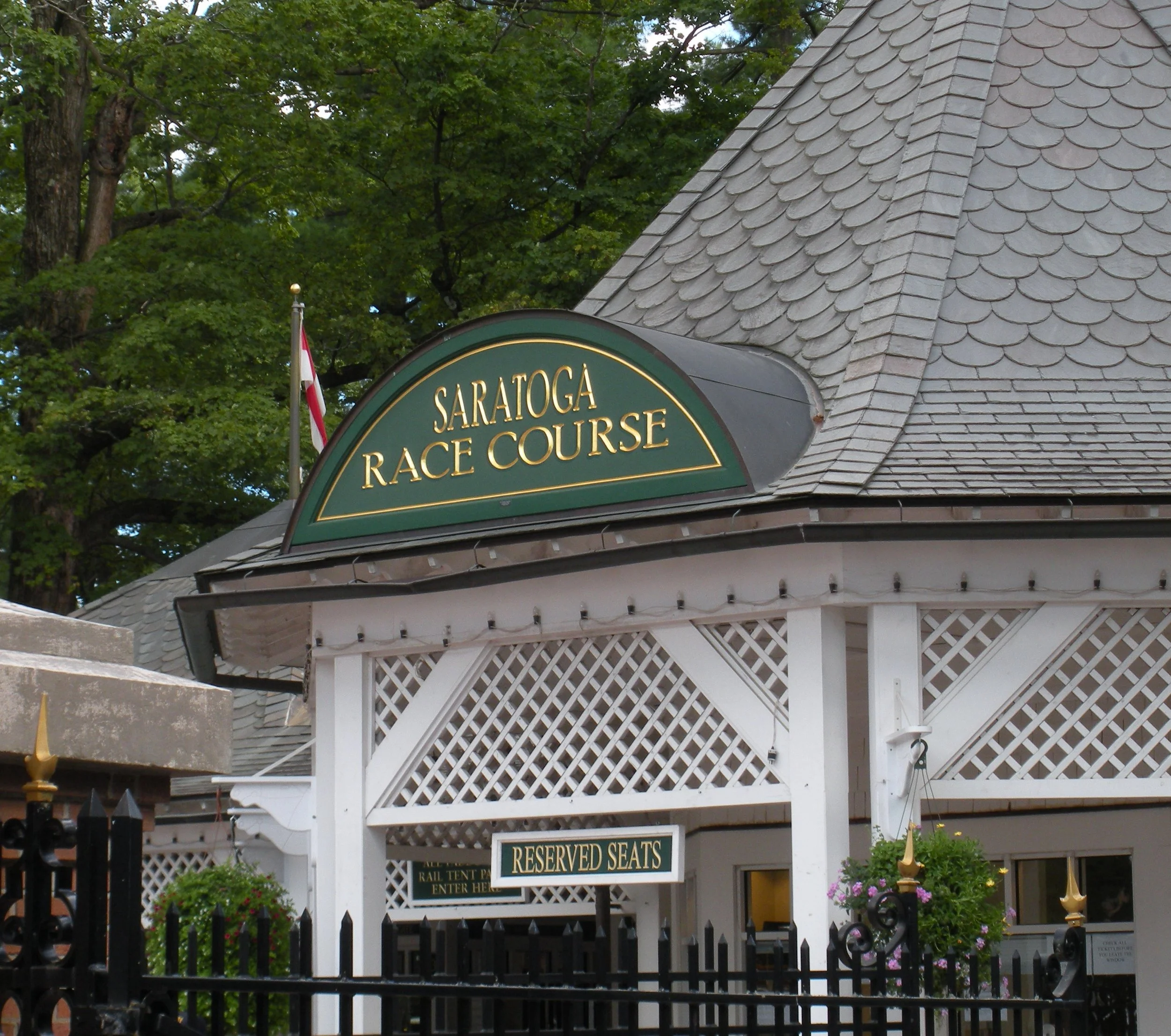
Whitney Weekend: Racing's Present and Future Collide
Whitney Weekend and First Round Picks— A big weekend in Saratoga.
There's a ~72-hour stretch every August when Saratoga shows you both halves of this sport at once. On Saturday August 8th, it's the Whitney — proven champions, million-dollar purses, a grandstand full of pink. Two days later, Monday August 10th-Tuesday August 11th, it's the Fasig-Tipton sales pavilion, where the future of the sport walks through a ring one yearling at a time.
Same town. Same week. Two completely different kinds of electricity. Here's your guide to both.
Saturday, August 8: Whitney Day
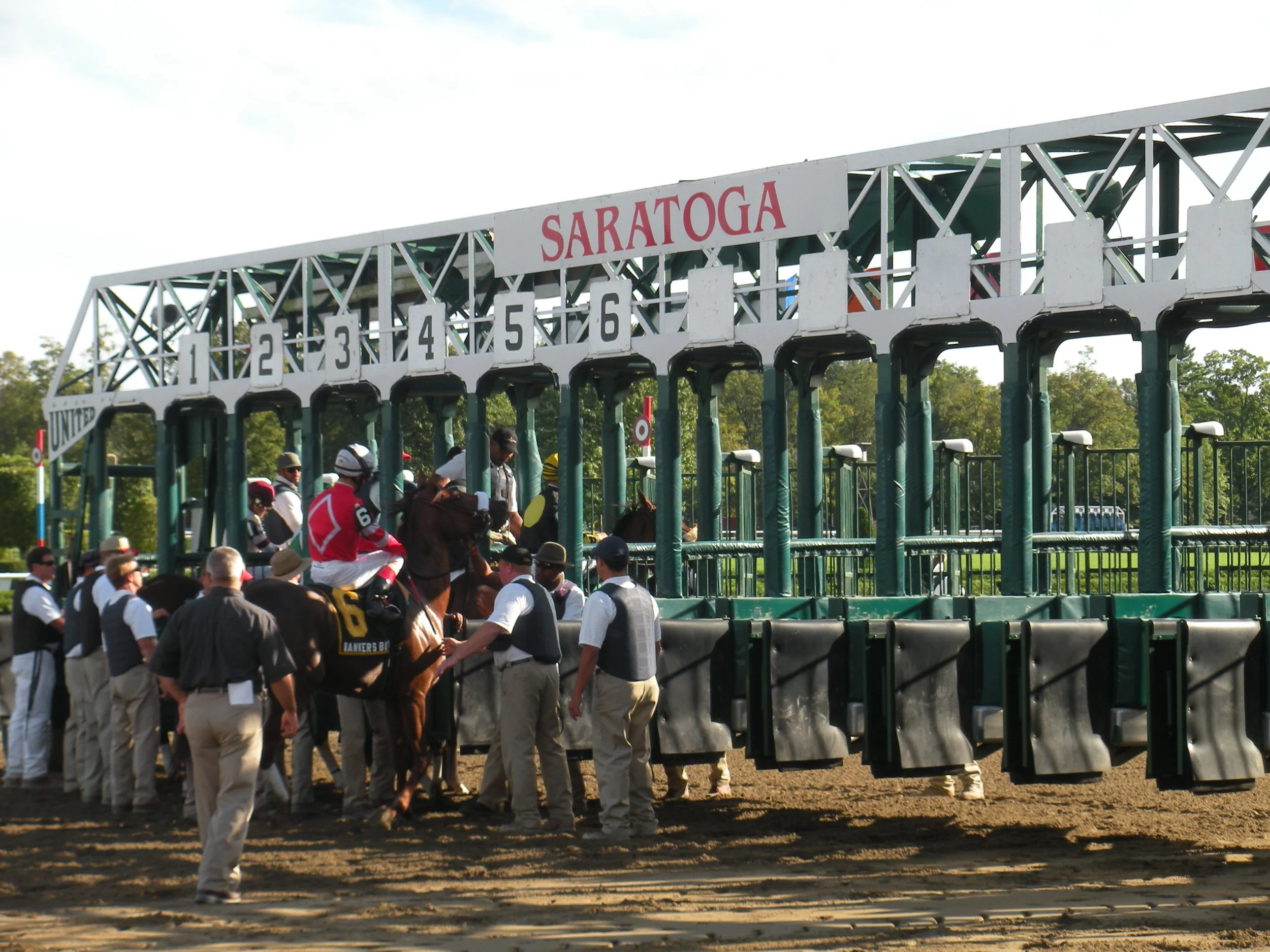
This year marks the 99th running of the Grade 1 Whitney — a $1 million race for the sport's best four-year-olds and up, run over a mile and an eighth on Saratoga's main track. It's the centerpiece of a stacked card that also features three more Grade 1s: the Fourstardave, the Saratoga Derby, and the Test.
The field is as good as advertised. Magnitude comes in on a four-race win streak and was clocked with the fastest workout of the morning at the Oklahoma Training Track heading into the race. Sovereignty, last year's Horse of the Year off wins in the Belmont and the Travers, is still chasing his first win of the season. And Nitrogen — last year's champion three-year-old filly — is stepping into the boys' division, trying to become just the second filly since 1988 to win the Whitney (which would be fitting for the pink theme of the day!). White Abarrio, Antiquarian, Tiztastic, and Forged Steel round out a field that has "photo finish" written all over it. So grab a program and give it your best shot at handicapping this fantastic race day!
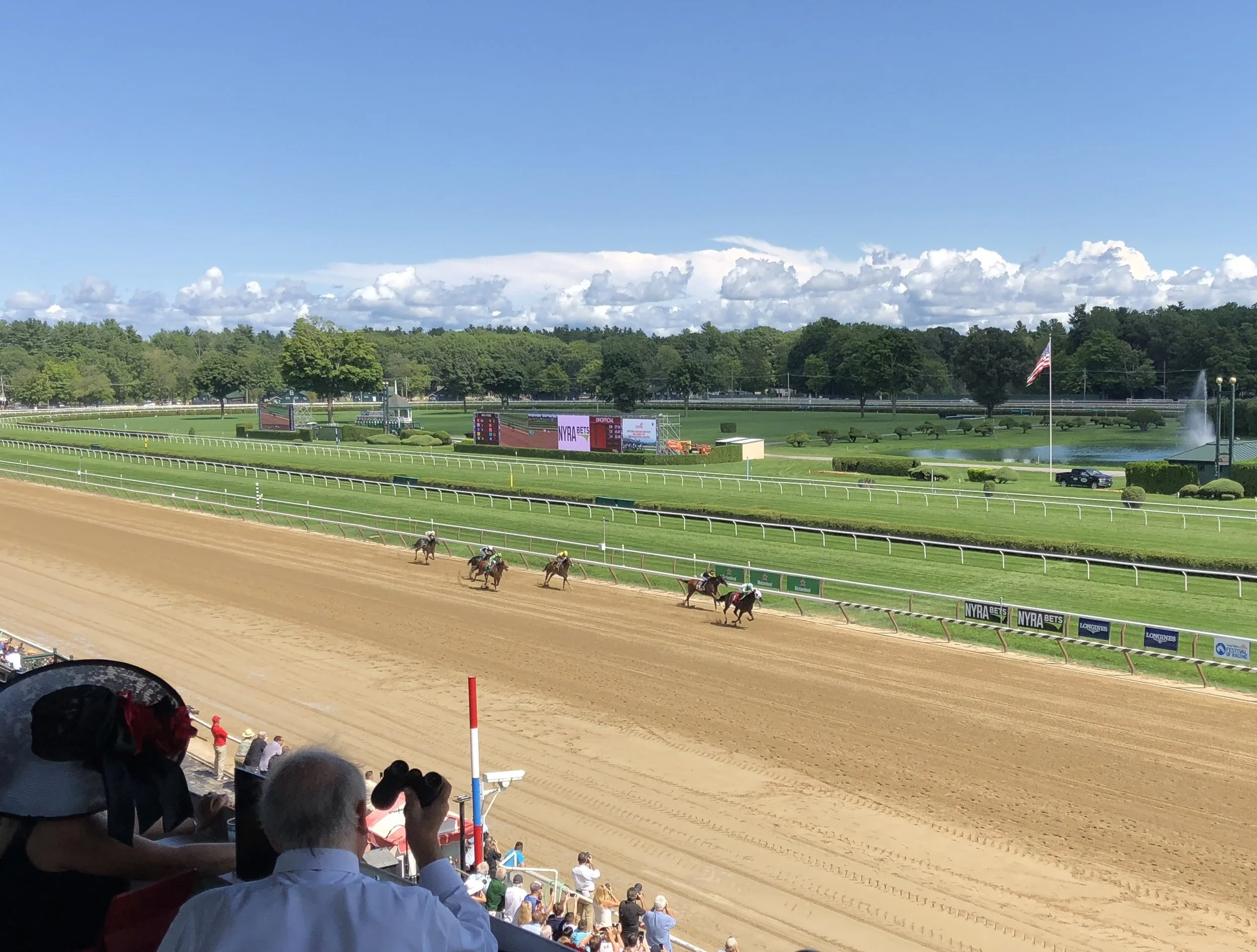
The tradition: every Whitney Day, Saratoga turns pink in honor of Marylou Whitney, one of the sport's great ambassadors. There's a Best in Pink fashion contest, so this is very much a day to lean into your outfit, not downplay it.
What to wear: Whitney Day doesn't come with a stricter official dress code than any other Saturday — but it's a marquee event, and the crowd dresses like it. For the ladies, expect the clubhouse and grandstand to skew noticeably more elevated than a random Tuesday: tailored sundresses or a fit-and-flare in a print, a wide-brim hat or a structured fascinator, wedges or block heels that can handle grass and gravel. Work in a touch of pink without going head-to-toe — a hat, a bag, a great pair of earrings does it.
For the gentlemen, this is a blazer-or-full-suit kind of day — think Sinatra, not sport-casual. Ties are optional but popular, and a good pocket square or a bold tie in a summery color is the easiest way to elevate the look without trying too hard. If you've got box seats or 1863 Club access, those carry real requirements — suits or sport jackets are expected there regardless.
The 48-Hour Turn
By Sunday night, the pink bunting is down and the town has quietly shifted gears. The energy doesn't fade so much as change shape — from champagne-toast-in-the-clubhouse to serious-money-changing-hands. Monday, it's a different kind of crowd walking Union Avenue, and a different kind of tension in the air.
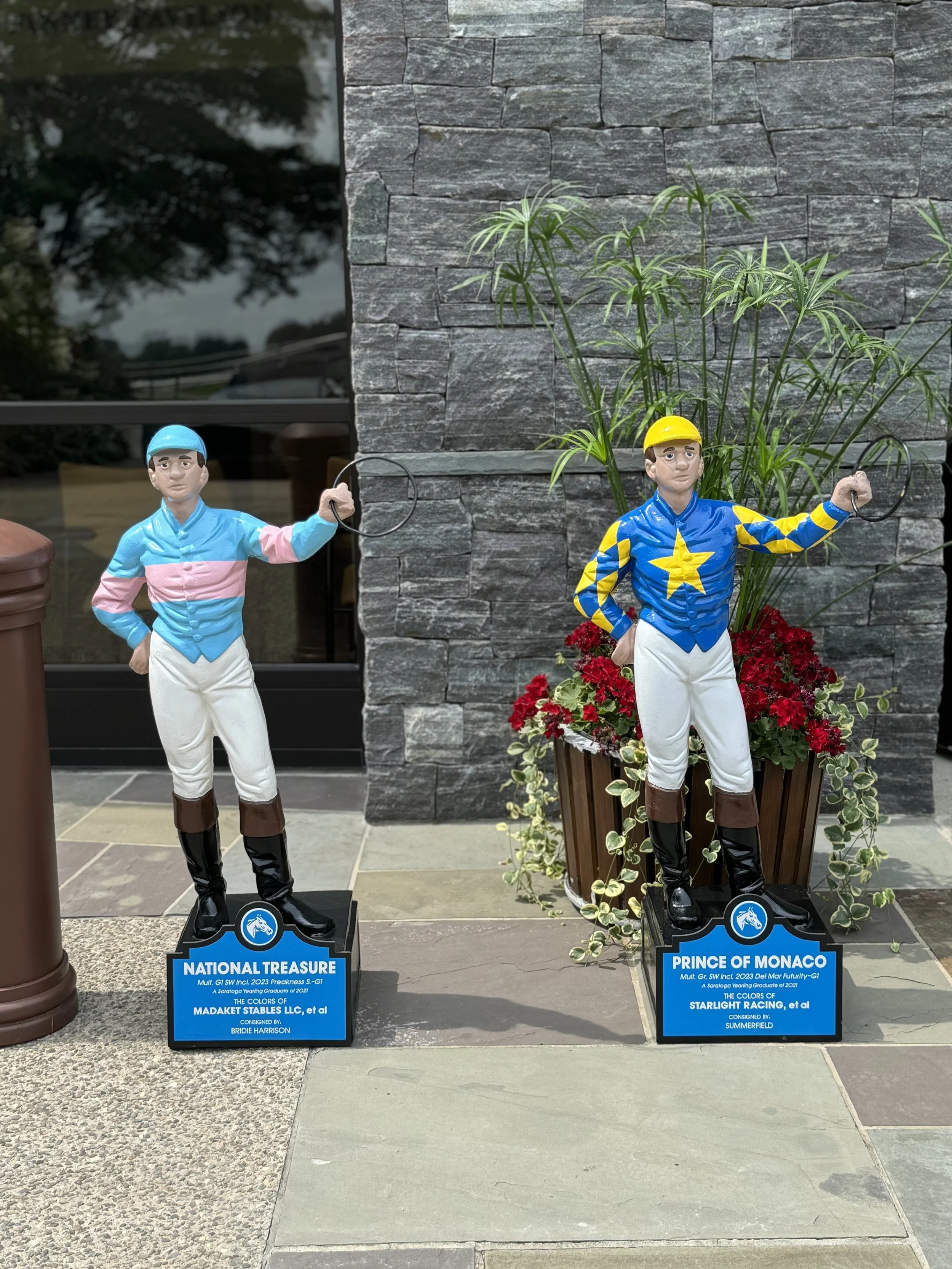
Monday & Tuesday, August 10–11: The Saratoga Sale
If Whitney Day is about horses who've already proven themselves, the Saratoga Sale is about the ones who haven't raced a single furlong yet — all potential, all promise, and priced accordingly. Think of it as the sport's first-round draft night: nobody in that ring has taken a snap, but everybody's betting big on bloodlines and body language.
This is Fasig-Tipton's flagship yearling sale, held every August in the Humphrey S. Finney Pavilion — a tradition that traces back to 1917, making it one of the longest-running fixtures of the Saratoga meet. Every horse cataloged has been vetted by Fasig-Tipton's inspection team for conformation and pedigree before it ever steps into the ring. Recent graduates of this exact sale include a Breeders' Cup Classic champion and three straight Preakness winners — so when you're watching a yearling sell, you're genuinely watching the early chapter of a story that might end at the Kentucky Derby.
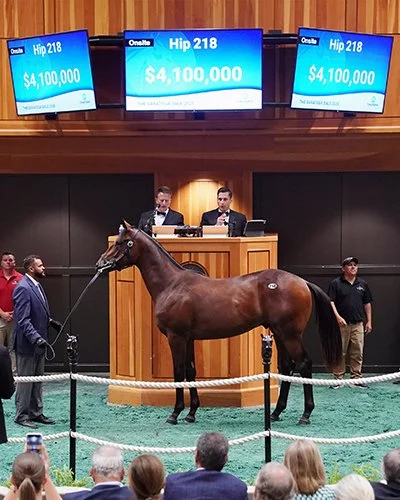
Getting in: the sale is free and open to the public and certainly draws a big crowd, expect it to be standing room only. Indoor seating in the pavilion is generally reserved for registered bidders and agents, but anyone can stand at the back or gather around the walking ring outside to watch the horses parade and listen to the auctioneer work the room — which is honestly half the show. It's a very buzzy atmosphere.
What to wear: there's no official dress code to walk the grounds, but make no mistake, this is a high-society evening event. The room reads track-casual to outright elegant — cocktail dresses, blazers, sport coats. Think less "day at the races," more "evening at a very exclusive open house." Leave the sun hat at the barn for this one; a great dress and a good pair of comfortable (!) heels or wedges will serve you far better under those pavilion lights.
The scene: this is where you'll spot the sport's biggest owners, trainers, and bloodstock agents doing business in real time — paddle up, million-dollar bids exchanged in seconds, and an auctioneer's chant that somehow makes the whole thing feel like theater. Even if you're not bidding on anything, watching the room hold its breath as the price climbs on a hip everyone's been talking about is worth the trip alone.
Insider Tips for the Weekend
For Whitney Day: get to the grandstand early — the Whitney itself runs late in the card, but the best people-watching (and the Best in Pink contest) happens well before post time.
For the Sale: check the catalog ahead of time (https://www.fasigtipton.com/2026/The-Saratoga-Sale#/) and note which hips (that's sale-speak for the horses, numbered by catalog order with their “hip number” being an actual sticker placed on their hip during the sale) are drawing buzz — those are the ones worth timing your visit around. Catalogs are available for free to grab outside the sales ring in the main pavilion.
For both: Saratoga in August moves fast. Give yourself buffer time between the two — traffic, parking, and dinner reservations all get tighter as the week goes on. Honestly, dinner reservations at the hot spots for this weekend (See Belmont at Saratoga blog post https://www.thepaddockwife.com/blog/belmont-at-saratoga) are often booked out 6 months in advance, so plan accordingly!
The Saddle Bag Effect: Beautiful Handbags with Equestrian Pedigree
A rundown of chic equestrian inspired handbags perfect for Fall racing!
Fall is racing season's finest hour — and this year especially we are already looking ahead to fall fashion. Keeneland's Fall Meet kicks things off in October, and the Breeders' Cup World Championships are coming back to Lexington right on its heels — this time to a newly transformed venue, following a $100+ million renovation that's given the track its most significant upgrade in nearly 90 years.
Horses have always had a way of working their way into pop culture and fashion far beyond the track — there's something about their power and elegance, that designers have been chasing for a century. And if you're lucky enough to actually live in that world, even part-time, why not embrace it? Because here's the thing about a great fall race day look: the coat and the boots do the obvious work, but the bag is what tells people you knew what you were doing. And nothing says "I know exactly what I'm doing" quite like an equestrian pedigree. From the leather houses that were doing this before it was fashion to the boutique discoveries worth a passport stamp, here are six to have on your radar before opening day.
1. Hermès — The Origin
Long before it was a handbag house, Hermès was a harness workshop. Founded in 1837 to outfit the carriage trade of Europe's elite, the brand's entire design language — the saddle stitching, the leather selection, the obsessive hardware — traces back to tack, not totes. You don't need the Birkin to see it: look no further than the Della Cavalleria, named for a centuries-old horse riding manual, where the closure itself is shaped like a stirrup iron, rendered in polished gold on rich navy leather. Hermès itself has called the clasp nothing short of spectacular — and it's easy to see why. Or the Steeple bag, a canvas tote in tan and cream where the equestrian nod is almost hidden — a stirrup-shaped leather charm dangling quietly from the handle, easy to miss unless you know to look for it. It's the kind of detail that separates brands that reference the equestrian world from a brand that was literally born in it.
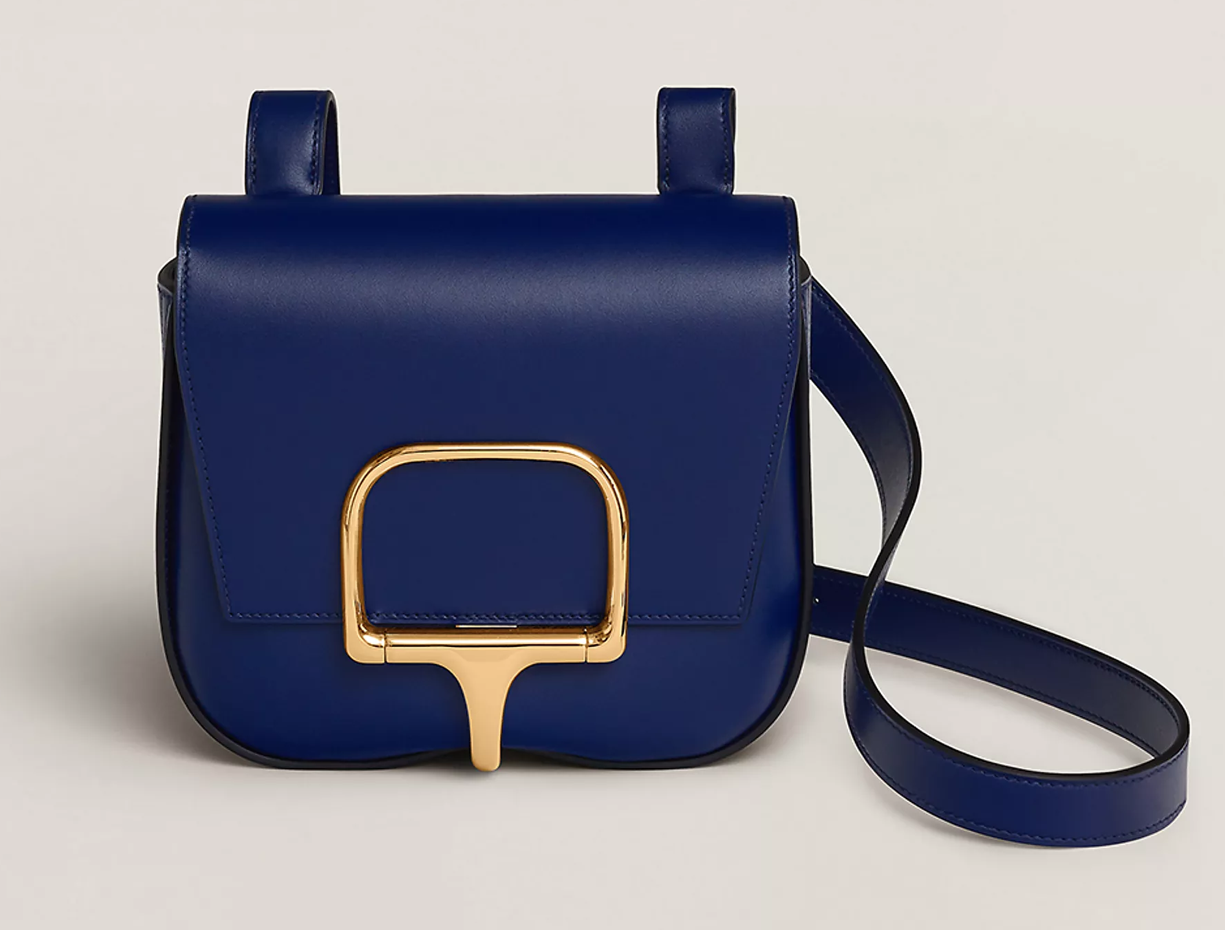
Hermes Della Cavalleria
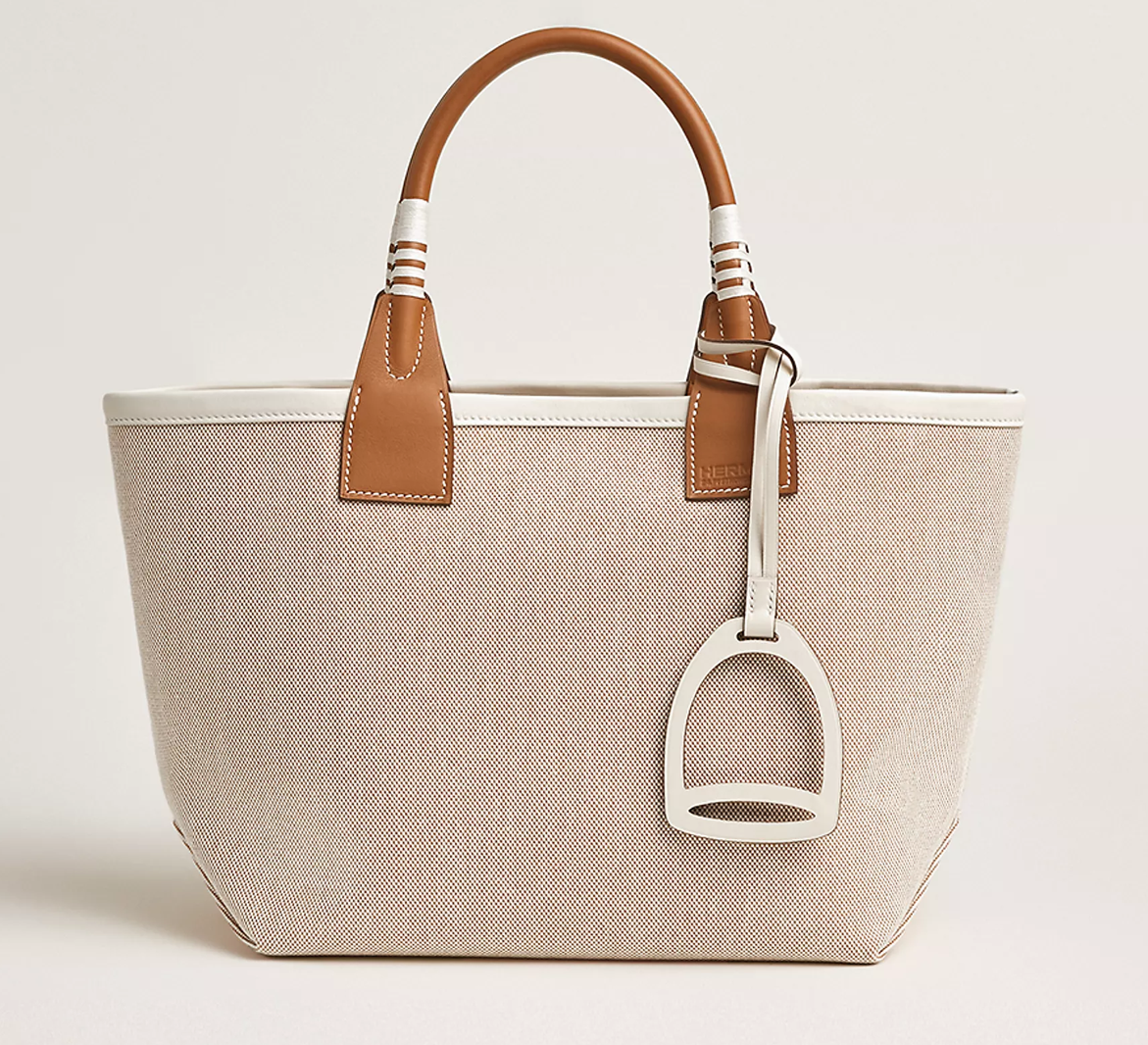
Hermes Steeple Bag
2. Gucci — The Heritage Motif
Gucci's relationship to equestrian style is written directly into its hardware. The horsebit — that interlocking metal clasp modeled after a bridle bit — has anchored the house's accessories since 1953, when it first appeared on a loafer before making its way onto handbags two years later — the same 1955 debut the brand's now-iconic Horsebit bag line takes its name from. It remains one of fashion's most recognizable symbols precisely because it doesn't try too hard: a small, confident nod to the stable rather than a full costume. Case in point: the archival Equestrian Quille saddle bag, a two-tone brown calfskin flap style with the horsebit clasp front and center — proof Gucci was doing the saddle-bag silhouette long before it became a 2000s icon elsewhere. The modern Horsebit 1955 shoulder bag, with its signature green-red-green web stripe, carries the same house code forward in a slightly more polished package, while a sleek horsebit bucket bag in black leather proves the hardware works just as well minimalist as it does heritage. A vintage find, a modern classic, and a quiet-luxury pick — really, any of the three earns its spot in the closet.
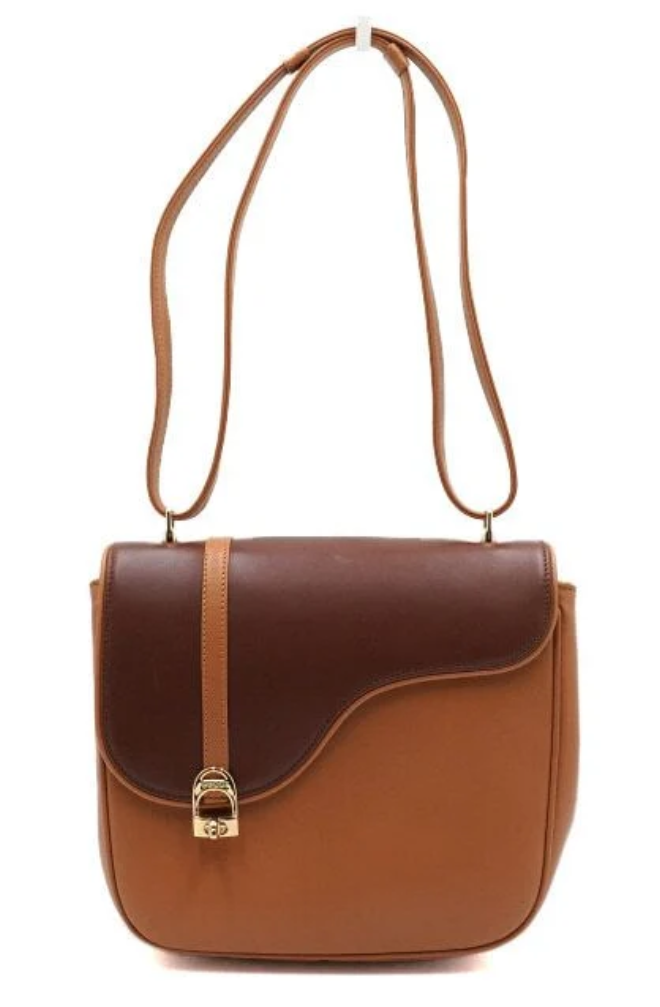
Gucci Equestrian Quille saddle bag (Vintage)
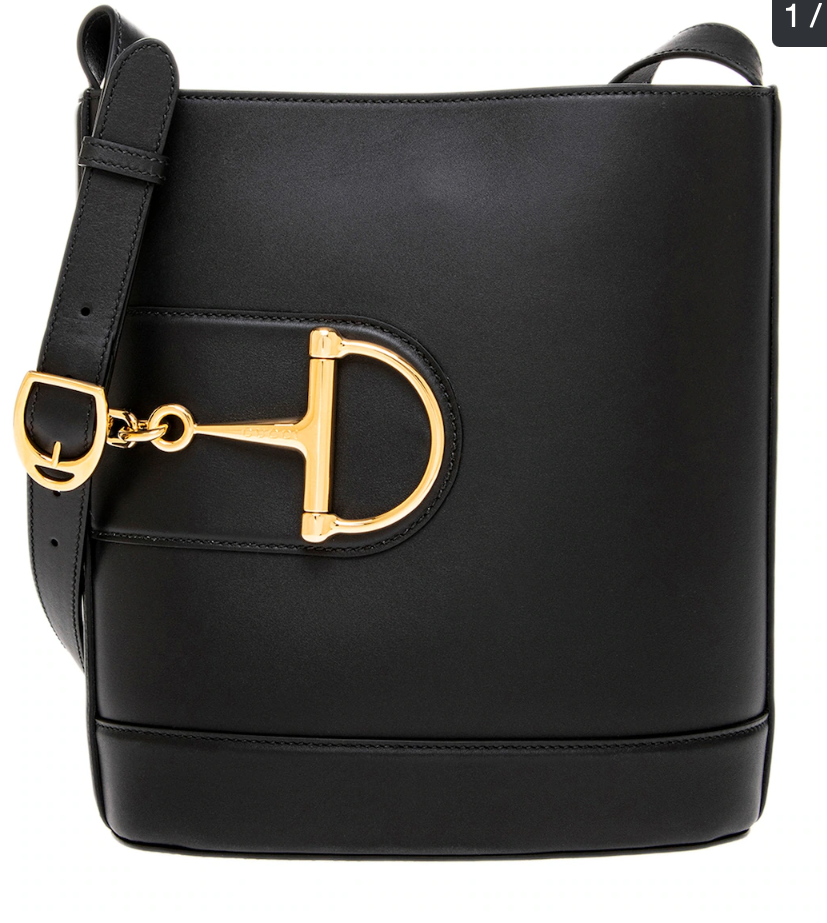
Gucci 73 Bucket Bag (Past season)
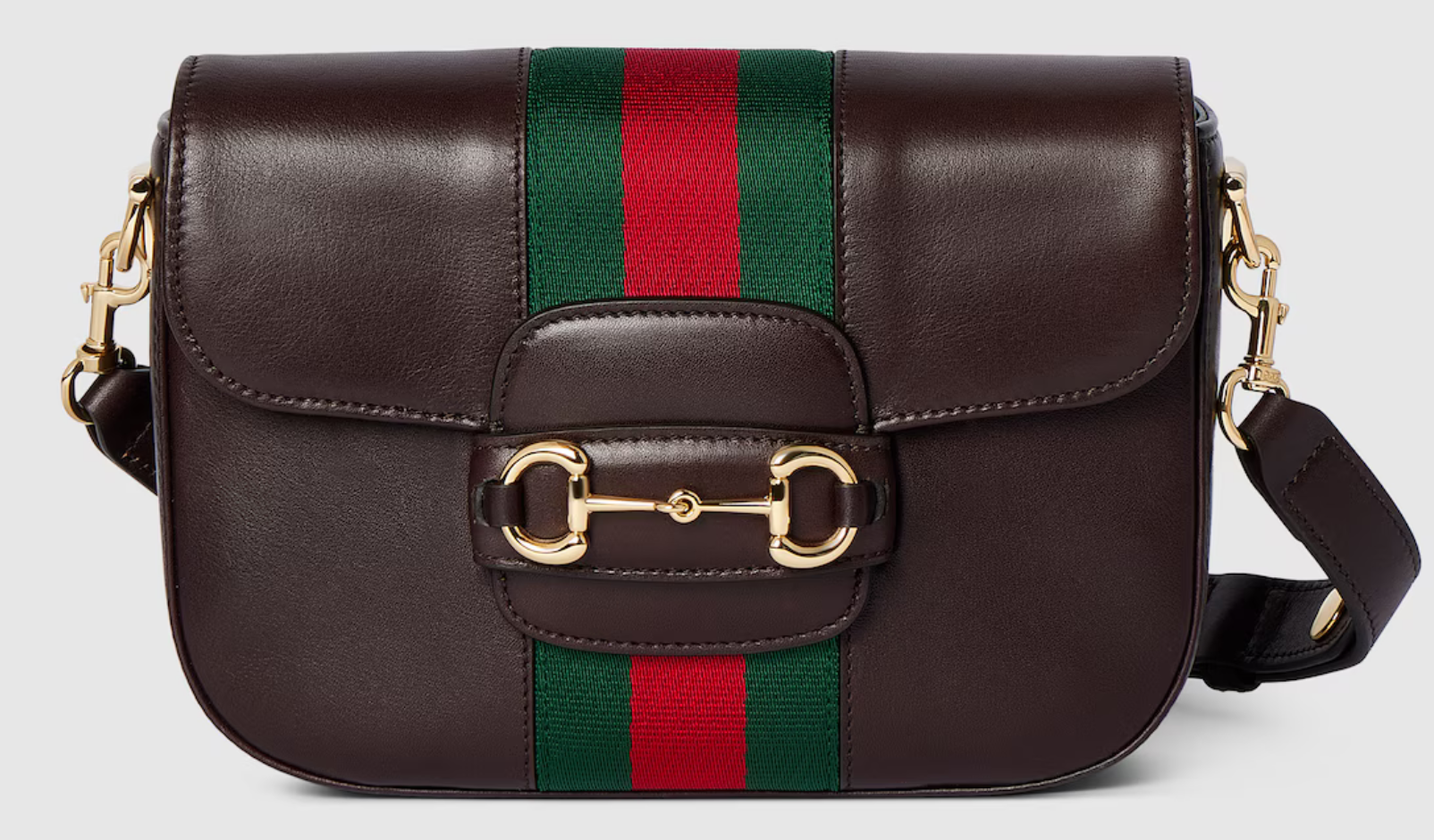
Gucci 1955 Horsebit Shoulder Bag
3. Christian Dior — The Icon
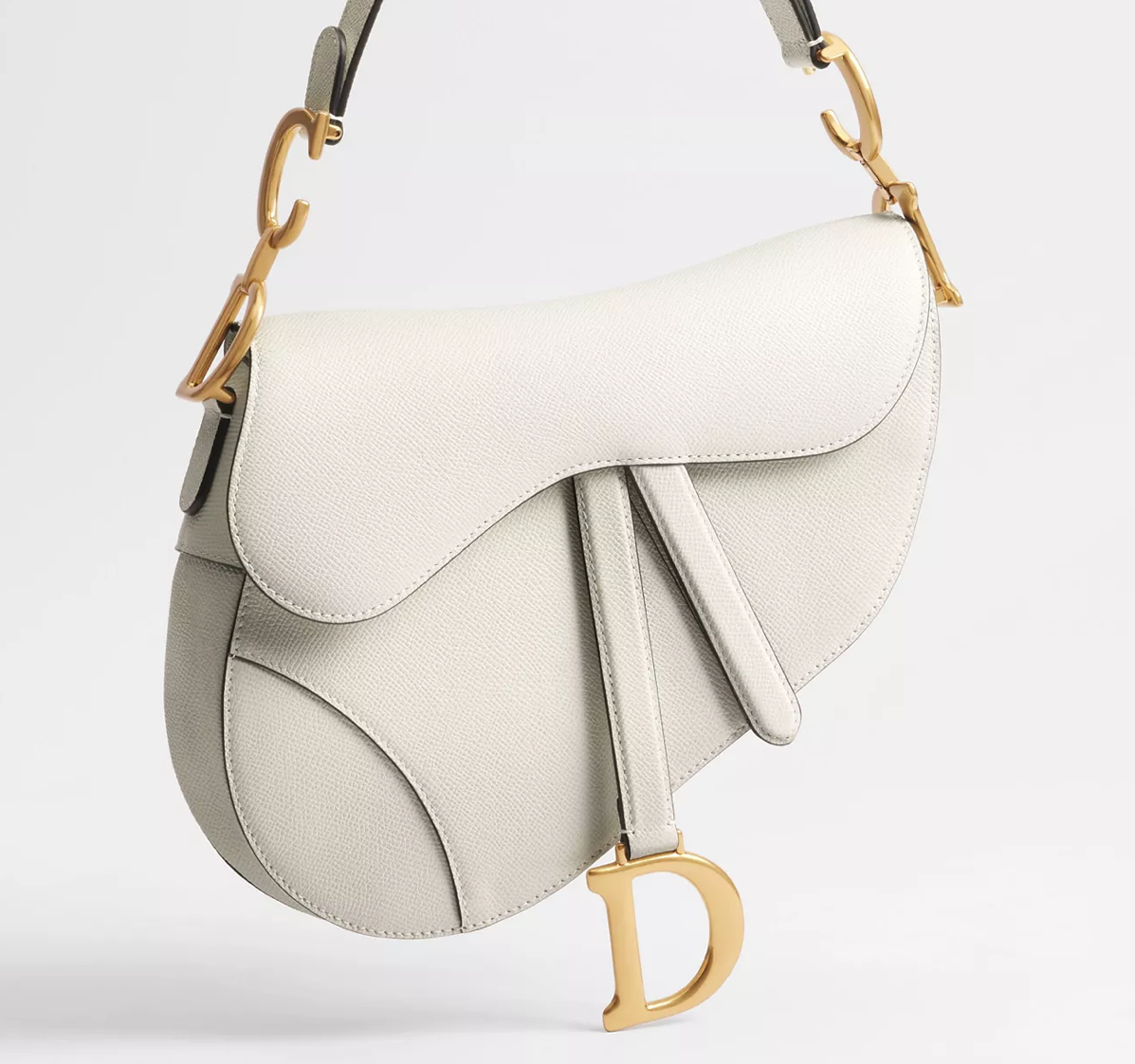
The Saddle bag needs no introduction to anyone who lived through the early 2000s — and needs even less to anyone paying attention to fashion now. Introduced in 1999 and unmistakably shaped like, well, a saddle, it became a Y2K signature before disappearing and then returning to become one of the most successful revivals in modern handbag history. It's proof that equestrian design doesn't have to whisper to be elegant. This season, seek it out in khaki — the topstitched saddle flap and oversized gold "D" hardware feel almost military against the deep green, which might be the most fall-appropriate colorway the bag has ever come in.
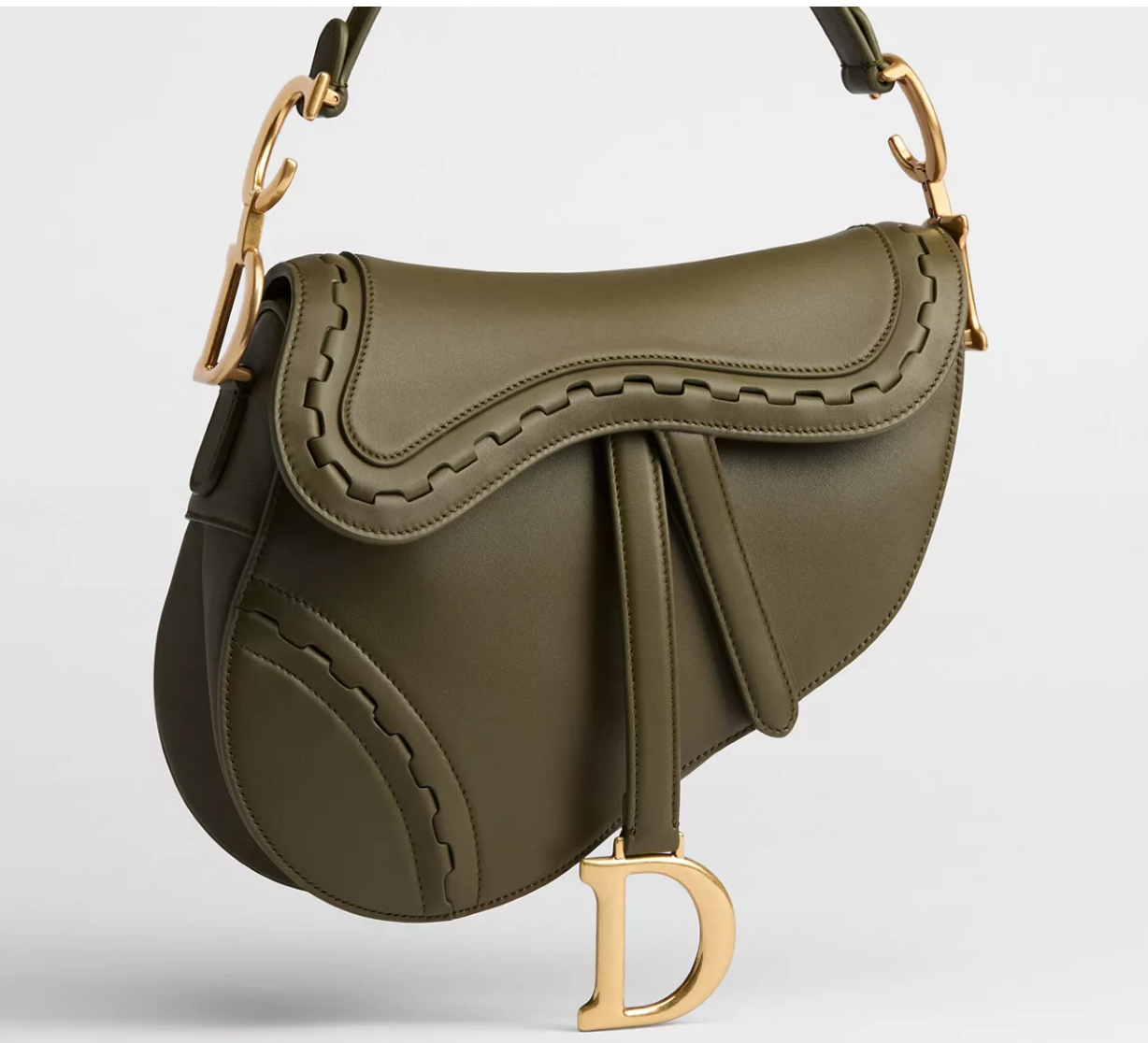
Bag perfection— The Dior Saddle Bag
4. The Horse — The Discovery
Hailing from Australia, The Horse deals in the kind of understated, buttery leather goods that feel like they've been broken in for a decade the moment you buy them. The brand doesn't lean on equestrian iconography so much as equestrian values — quality hides, unfussy construction, pieces built to be used rather than admired from a shelf. A favorite for anyone who wants the sensibility without the logo — though the Clementine Bag comes closest to breaking that rule, with a subtle embossed "The Horse" mark on structured pebbled leather. In Coffee, it's about as perfect a fall bag as this list gets.
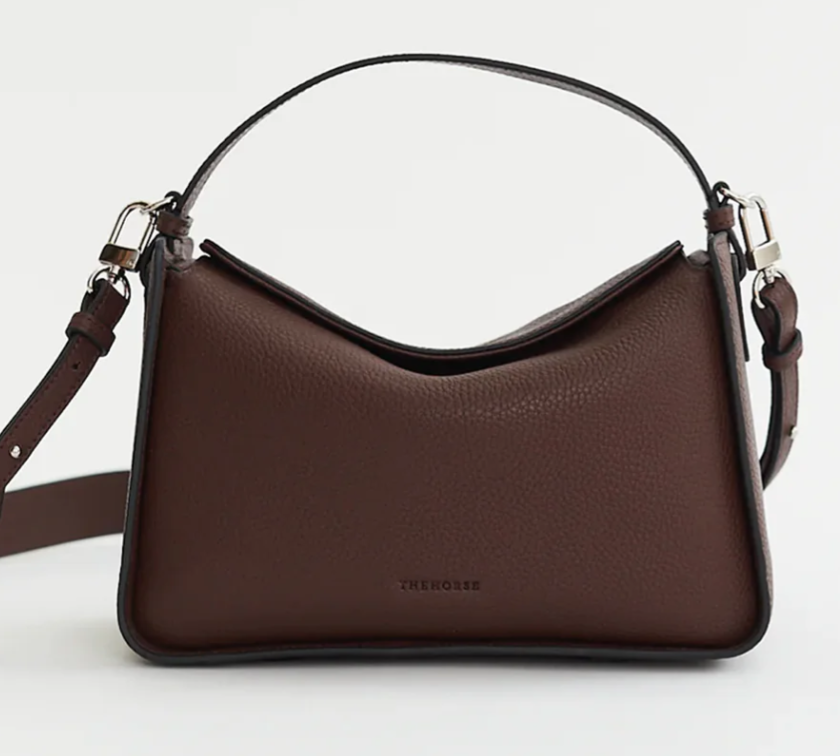
The Horse Clementine Bag in Coffee — eyeing this one for Fall!
5. Deadly Ponies — The Rebel
New Zealand's Deadly Ponies takes the opposite approach from The Horse's understatement — bold silhouettes, architectural shapes, and a name that winks at the whole equestrian conceit without taking it too seriously. The Siamese Bag in Java Suede is the case in point — a slouchy, curved silhouette threaded with a substantial gold chain, suede doing all the fall-appropriate heavy lifting.
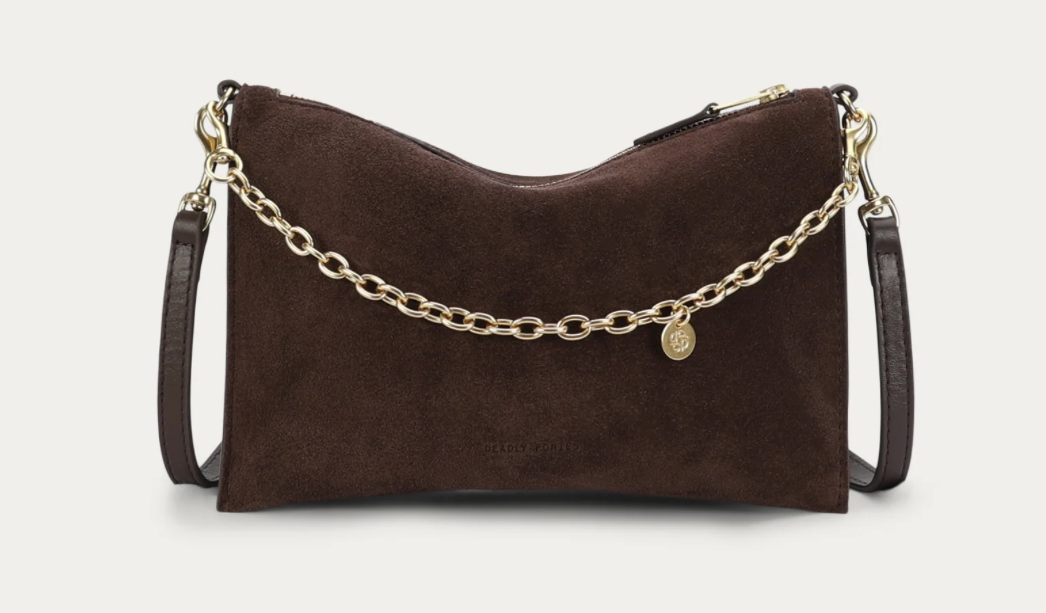
Deadly Ponies— Siamese Bag in Java Suede, classic with an edge.
6. Polène — The Modernist
Polène has built its reputation on clean, architectural shapes — the kind of bags that look minimalist until you notice the hand-stitching. Which is what makes the Numéro Dix "Galop" edition such a departure: released for the Lunar New Year of the Horse, it takes the brand's signature half-moon silhouette and layers in visible saddle stitching and a horse-shaped charm with a hand-braided mane, nodding openly to the equestrian codes baked into the design language of saddlery. Proof that even a famously understated brand can't resist a good horse when the occasion calls for it.
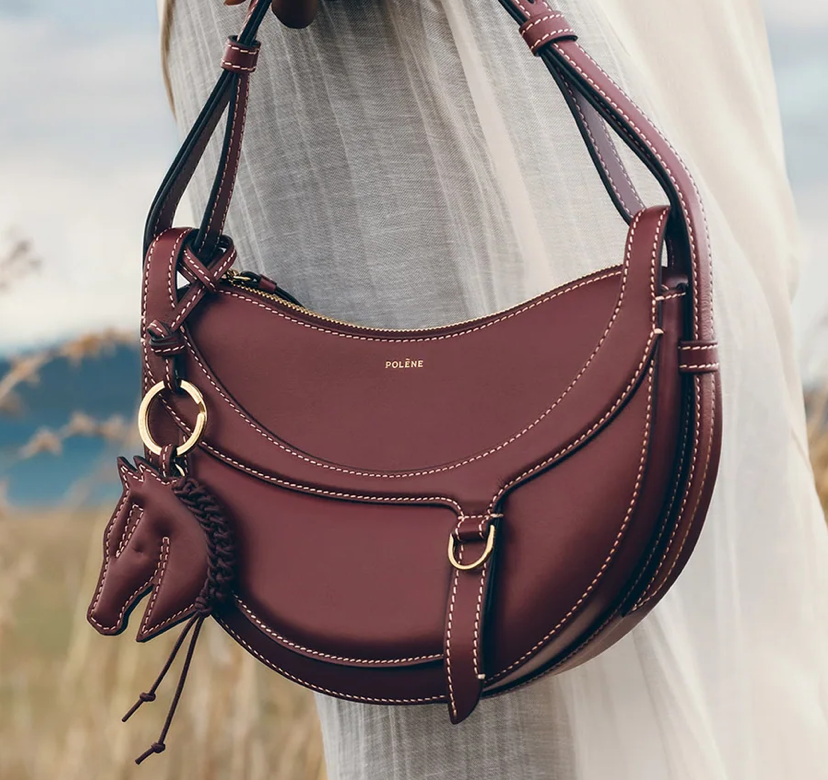
Polene Numéro Dix "Galop" in Black Cherry— chef’s kiss!
BONUS: JW PEI Harper Horse Top Handle Bag
Leave it to JW PEI to take "equestrian-inspired" literally. The Harper Horse Top Handle Bag is shaped like a horse, complete with contrast mane and tail details and charming rivet eyes — playful in a way that reads more clever-conversation-starter than costume. It's made from a structured vegan leather with visible topstitching, comes in a handful of colorways from classic black to a very fun green, and carries as a top handle or crossbody. This is exactly the bag for a race day when subtle isn't the assignment — a serious outfit with one deliberately unserious accessory.
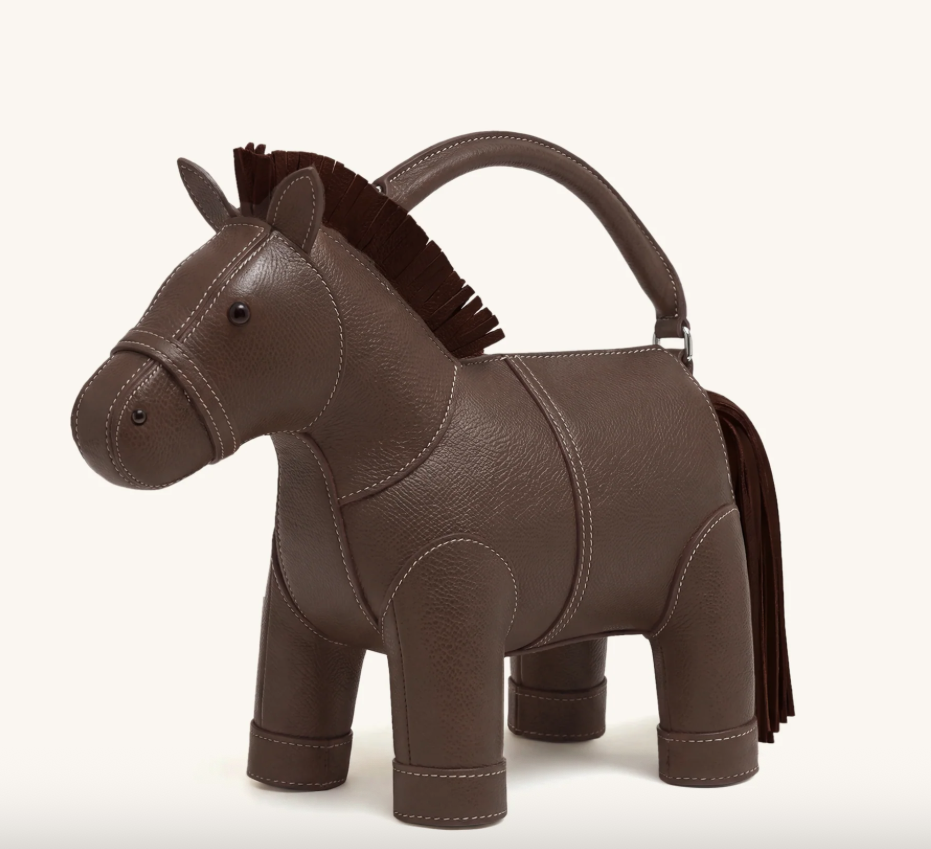
The takeaway: whichever direction you lean — heritage house or under-the-radar find — the goal is the same. A bag that celebrates the world of horses rather than just referencing it. Consider it settled before you even get to the hat. And hey, win big enough at the betting windows this fall, and maybe one of these finds its way into your closet.
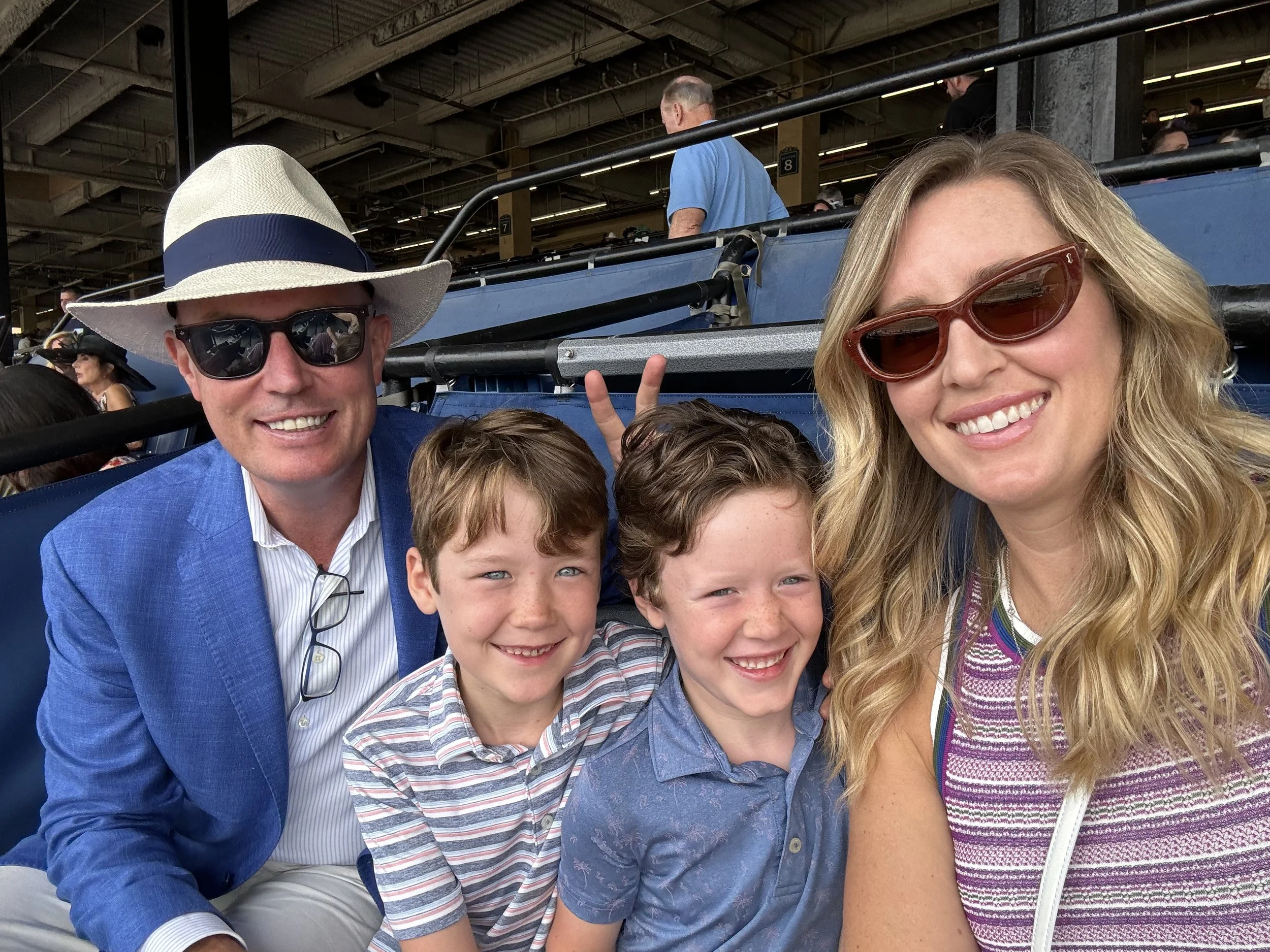
Del Mar: Where to Stay, Play, and Eat (With the Whole Crew)
There's a reason Del Mar has been the West Coast's favorite summer racing getaway since 1937 — and it's not just the "where the surf meets the turf" tagline (though, credit where it's due, that's a great one). It's a track you can genuinely build a family vacation around. Mornings on the beach, afternoons at the rail, and evenings that end with a sunset and a good meal. Del Mar is definitely in my top 2 favorite tracks and holds a special place in my heart as we have loads of fun family memories there and have racing to thank for bringing us to town!
Where to Stay
Solana Beach is our go-to if you want to be near the water without being in the Del Mar scrum. There are more beachfront condo options here than you'll find in Del Mar proper, and here's the insider secret: it's actually an easier walk to the track from Solana Beach than people assume. Bonus — Cedros Avenue runs right through here, and it's one of the best little shopping streets in the area (more on that below).
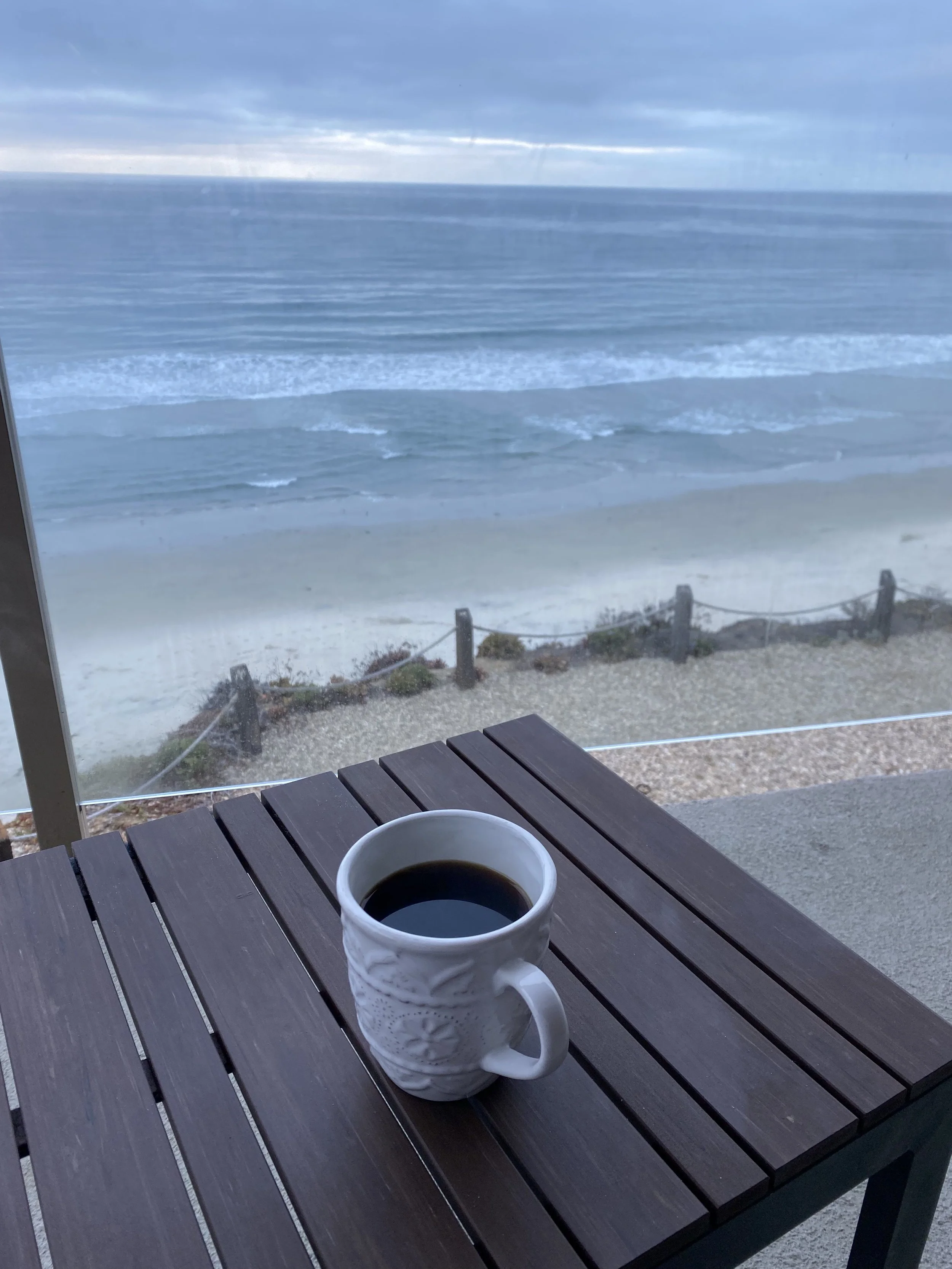
If you want to be in the thick of it, Del Mar Beach Motel is the move. Don't let the word "motel" throw you — this place has been recently renovated and it's a genuinely prime location, an easy walk to both the beach and downtown Del Mar. They also have two larger houses available for bigger groups, but fair warning: these book up fast, so plan and reserve well in advance.
And if you're in the mood to make the whole trip feel like a proper escape, the Fairmont Grand Del Mar delivers full resort energy — sprawling grounds, beautiful facilities, and a spa that's genuinely worth carving out an afternoon for.
Track Style at Del Mar
Del Mar has a style all its own — and it shifts depending on the day. Opening Day is when the crowd goes all in: bright, fun California style with a racing flair, and yes, hats and fascinators are very much part of the look. It's the one day worth dressing up for.
The rest of the season, though? Consider it your permission slip to relax. Board shorts and sandy flip flops are entirely welcome. Del Mar's whole ethos is more casual and easygoing than some of its East Coast counterparts — you're just as likely to see someone walk up from the beach as you are someone in head-to-toe seersucker.
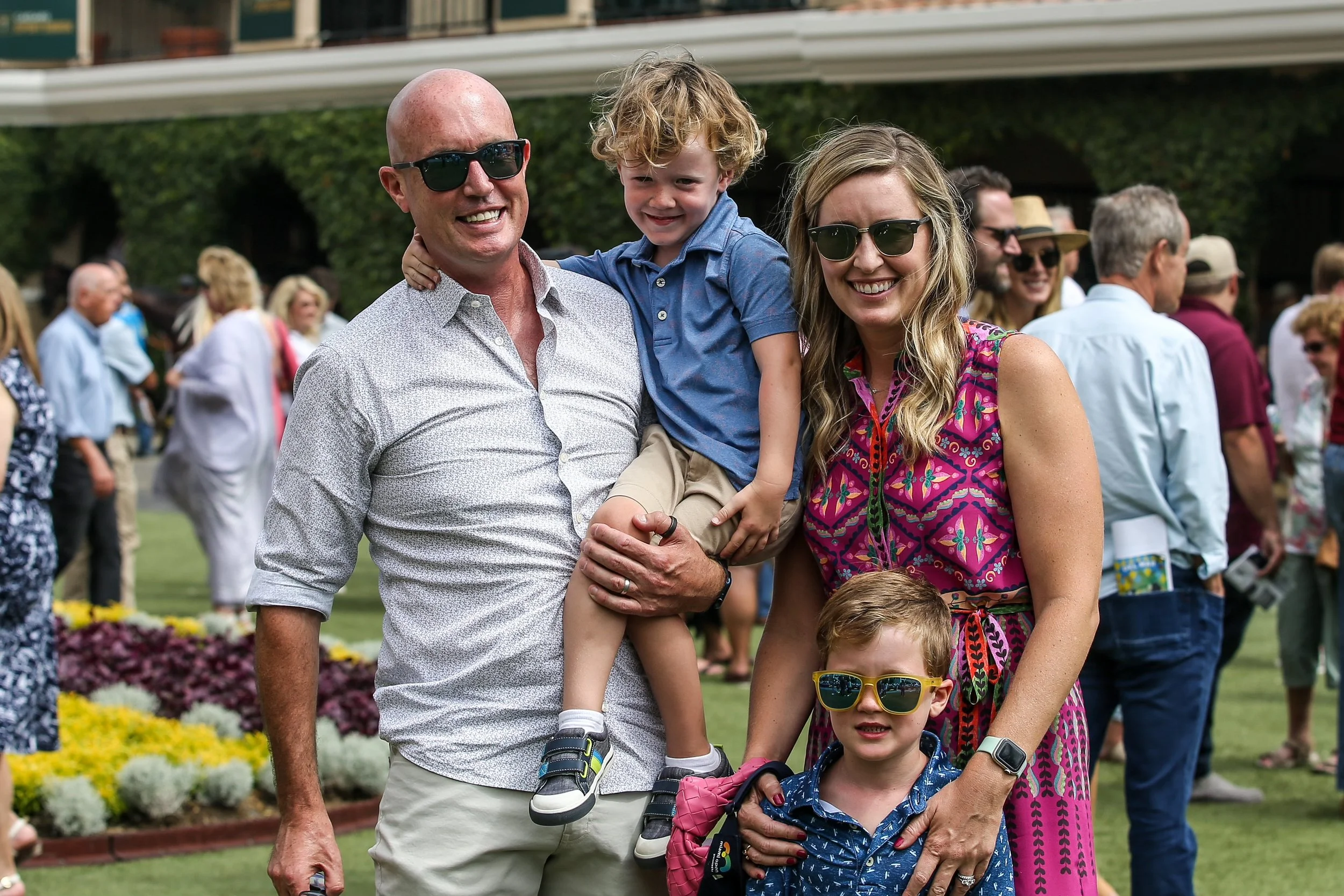
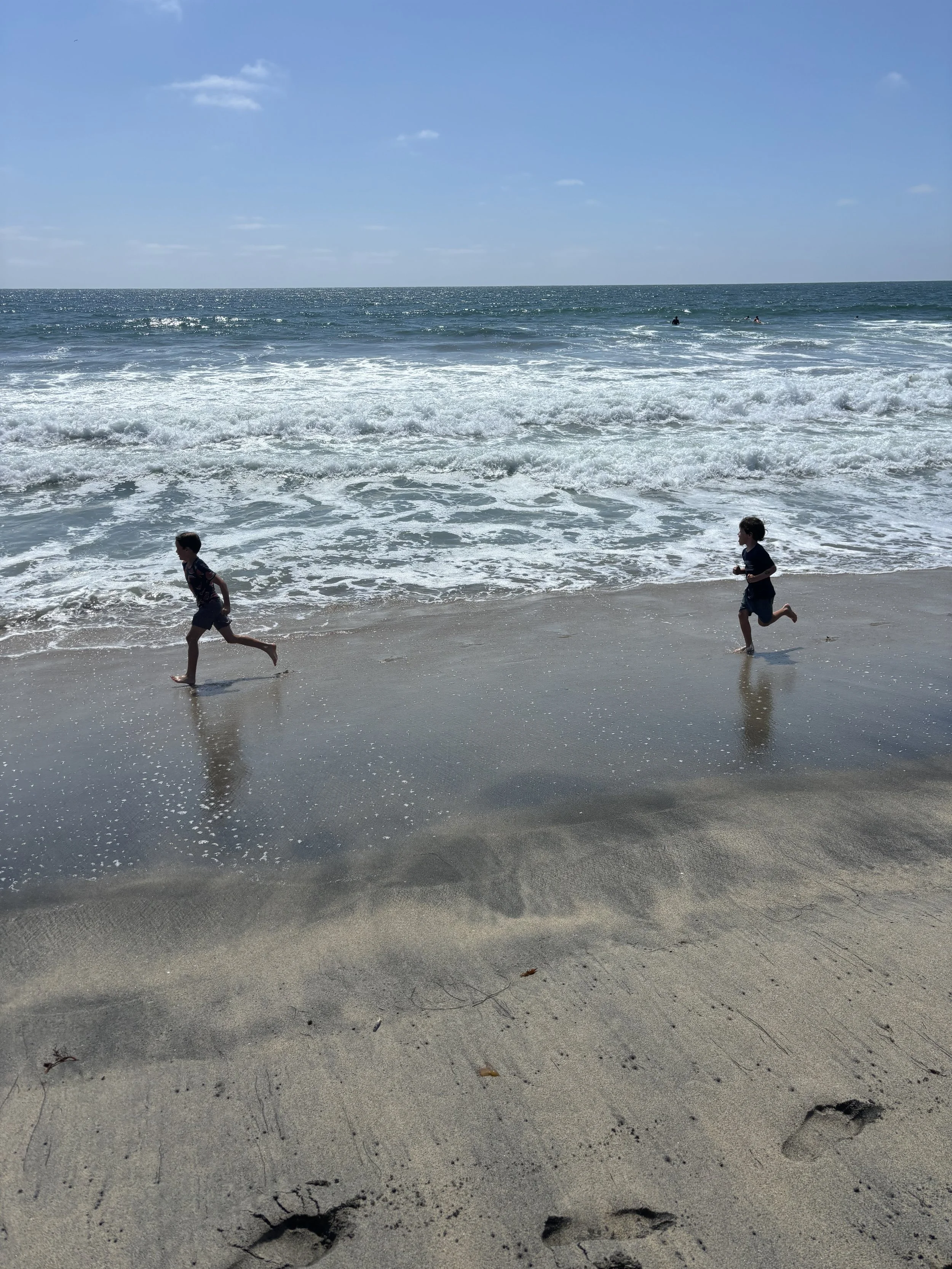
Things to Do (Besides the Obvious)
The beach. We're not going to overthink this one. It's Del Mar. Go.
Legoland is only about 20-25 minutes away, and it's become an annual tradition for our family — kids and adults alike genuinely love it every single time. It's a rare amusement park that doesn't leave you overstimulated and exhausted by 2pm. Everything really is awesome.
Kids' camps. Del Mar has no shortage of them — lifeguard camp, surf camp, tennis camp, and more. It's a fantastic way to keep the kids active and having fun while the grown-ups sneak in some uninterrupted track time.
Fletcher Cove Park — a great low-key spot for families to spread out and let the kids run.
Shopping
Tucci Boutique has two locations — Del Mar Highlands and Cedros Avenue — and it's the kind of thoughtfully chic women's boutique that makes you linger. High-end brands, and an absolutely gorgeous jewelry selection.
Solo on Cedros is a gift and homewares shop that requires, without exaggeration, multiple laps to take it all in. Give yourself time here.
Cedar Kids is a fun kids' boutique with that easy California style — great for picking up something for the little ones.
Muttropolis rounds it out for the four-legged family members. A genuinely fun pet store, because yes, the dog deserves a souvenir too.
Where to Eat
Breakfast
Claire's on Cedros — built around locally sourced ingredients, with a grab-and-go bakery on site for when you need something quick.
Naked Cafe — leans into whole foods, offering fresh, healthy options just a few steps off the sand.
Sunny Side Solana — the staff here is exceptionally friendly, and it's a solid choice for classic breakfast options.
Lunch
Brigantine — the kids will love watching the trains pass by, and the views of the track are hard to beat. Order the fish tacos if you can — just know they're only available when racing is on. Don't ask us why, it's just one of those Del Mar things.
Jake's — consistently good, beach views, and a menu strong enough to work for breakfast, lunch, or dinner.
Board and Brew — casual sandwich spot, easy, reliable. Easy to bring to the beach.
Dinner
Ken's Sushi — fantastic sushi, and the owner's love of golf means the walls are covered in fun golf memorabilia — an unexpectedly fun mix.
Wildland — technically a short drive up to Carlsbad, but worth it for the fresh pizza and excellent drinks. Carlsbad itself is worth knowing about too — a bigger town with more of a nighttime vibe if you're looking to extend the evening beyond dinner.
Del Mar Pizza — the staff is as friendly as it gets, and our favorite move is grabbing a pie here and heading straight down to the beach for a sunset picnic.
Pamplemousse Grille — this award-winning spot strikes that perfect casual-yet-elegant balance, helmed by a chef with a resume as impressive as the menu. Do not leave without trying the lobster and truffle grilled cheese.
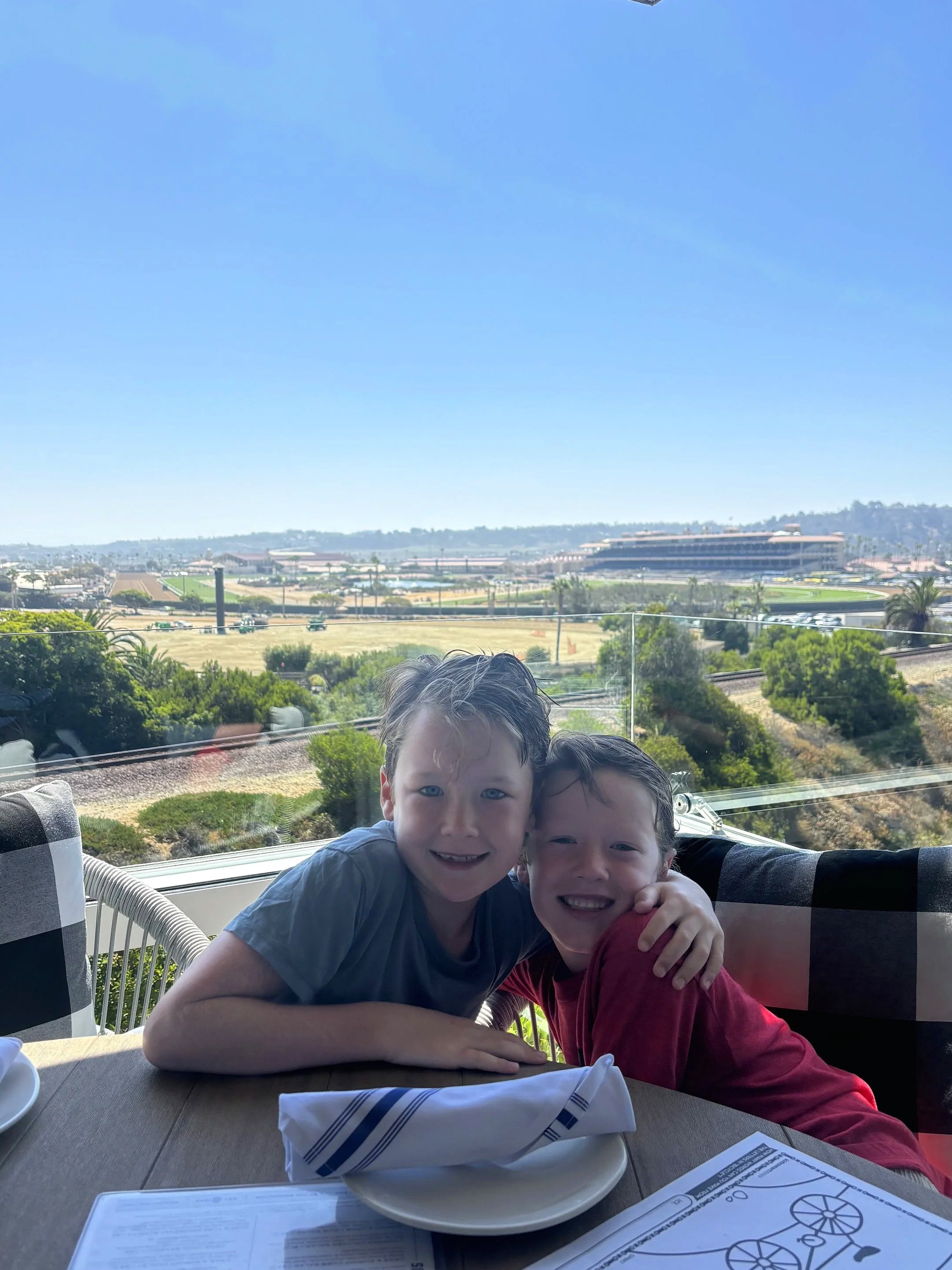
Lunch with a view at the “Brig”
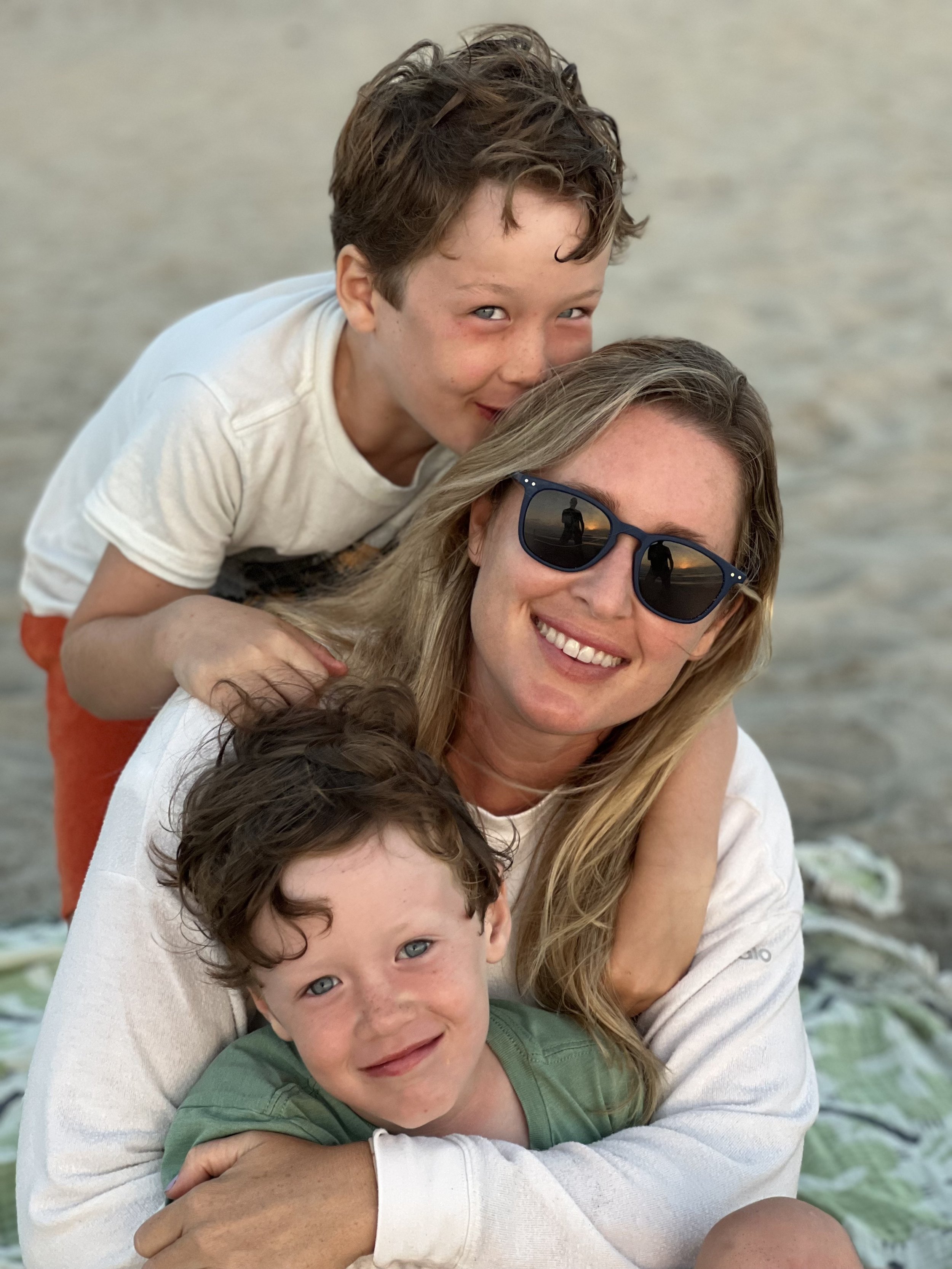
Enjoying our annual pizza picnic at the beach with our boys.
Best Ice Cream in Del Mar
Short and sweet, just one pick here: An's Hatmaker's. (Yes, we noticed the name too — feels like a fitting stop for a blog that just spent an entire post on hats versus fascinators.) Unique flavors that are sure to delight.
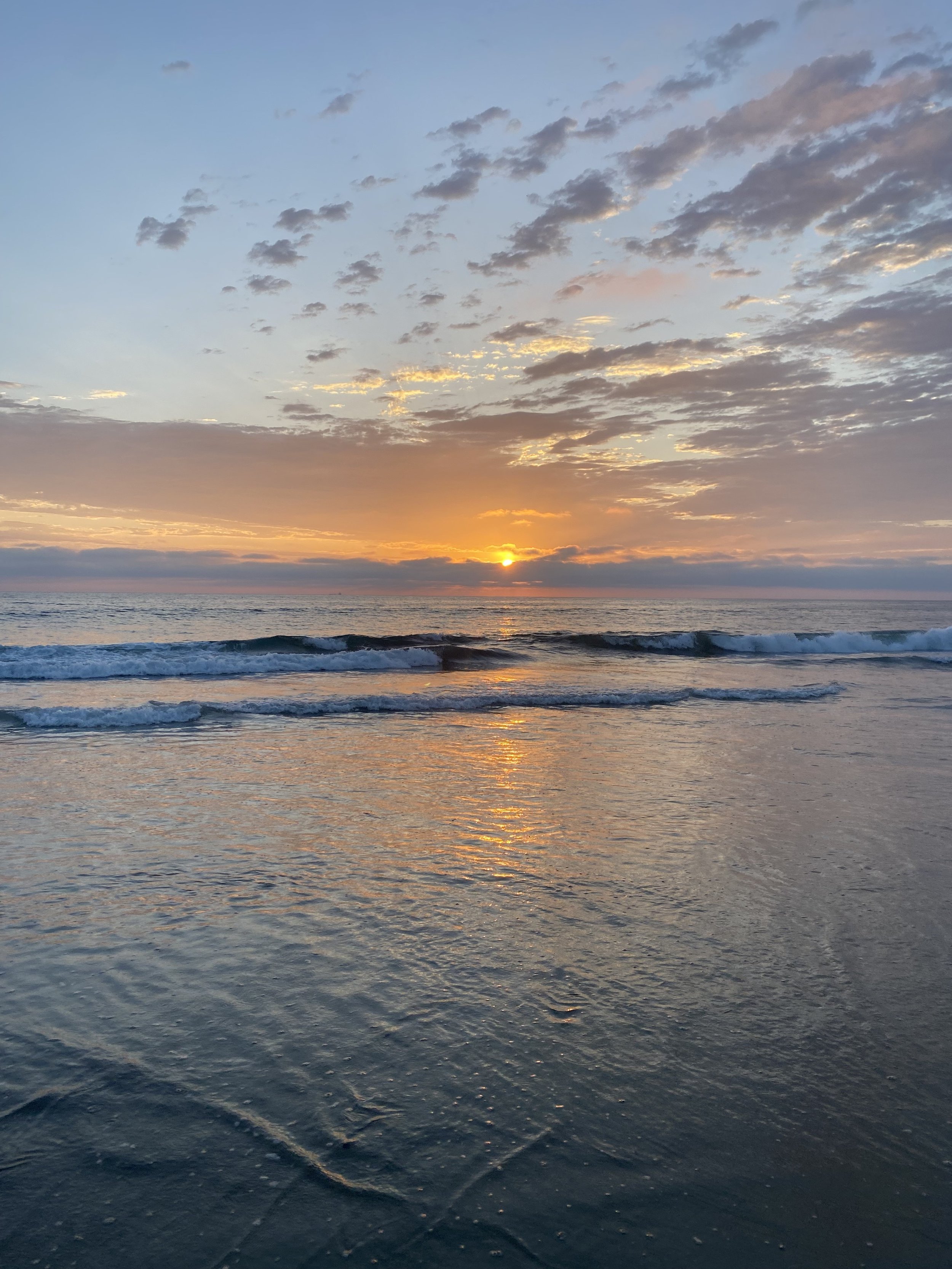
It’s hard to beat the Del Mar sunsets. It truly is a spectacular place.
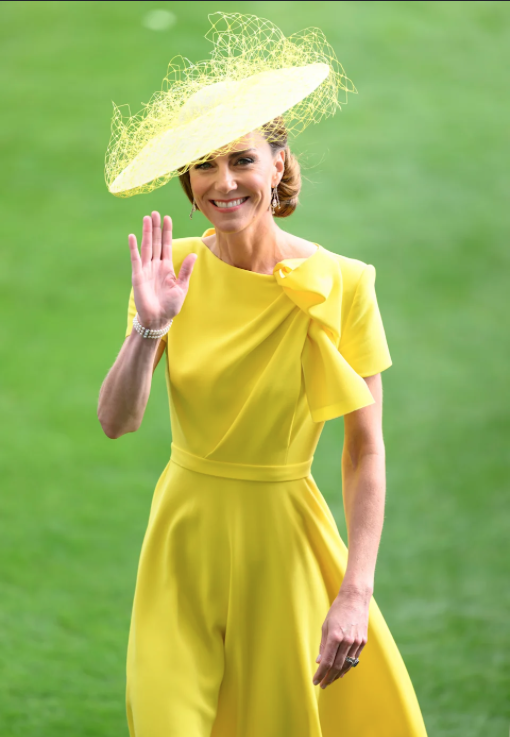
Best Dressed at Royal Ascot 2026 (And What We're Stealing for Our Own Race Day)
Royal Ascot wrapped just last week, and if you weren't glued to the best-dressed roundups the way I was, let me catch you up — because this year's crop of looks gave us some serious race day inspiration.
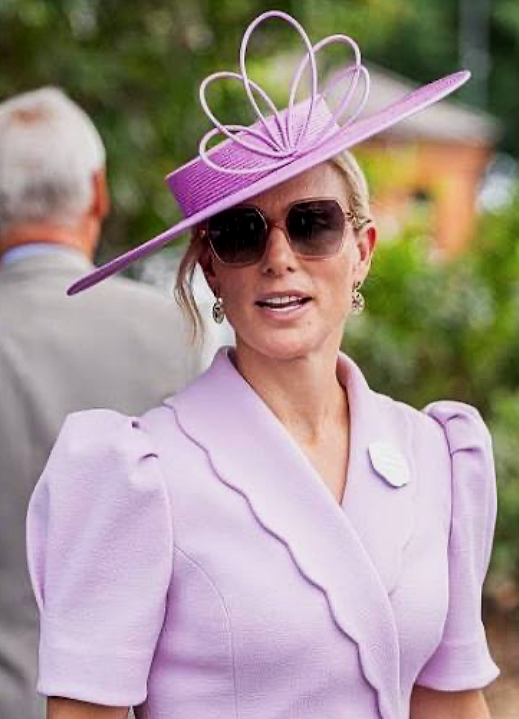
Zara Tindall had fashion writers buzzing all week. Her looks included a pale yellow dress by Rebecca Vallance, a dark blue gown by Leo Lin, and a lilac puff-sleeve midi dress, also by Rebecca Vallance. The internet couldn't stop talking about her closing-day polka dot dress — fashion writers compared it to the brown polka-dot dress Julia Roberts wore as Vivian in Pretty Woman — but for my money, the lilac puff-sleeve midi was her real win of the week. There's something about a soft, romantic color paired with a structured silhouette that felt classic but with an edge, and it didn't need a viral moment to prove it was the better outfit. Yahoo!Yahoo!
So what does this mean for those of us watching from across the pond?
Royal Ascot's dress code is famously strict — hats are mandatory, hemlines have rules, and there's an actual enclosure you can be turned away from if you get it wrong. American tracks like Saratoga and Churchill Downs are more relaxed, but the same principles that made these looks work translate beautifully:
Commit to one statement piece. Zara's lilac midi worked because nothing competed with it — clean lines, one soft color, simple accessories. Next time you're picking a race day outfit, choose either a bold color or a showstopping hat. Let one thing be the star.
Re-wearing is chic, not lazy. The most photographed women at Ascot re-wear their favorites all the time — more on that below. You can absolutely re-wear your favorite Derby dress to next year's Oaks.
Range over the course of an event is its own kind of style flex. A soft pastel one day and a completely different mood the next (more on that below) shows you don't have to commit to one "vibe" for an entire race meet — just make sure each individual look is intentional.
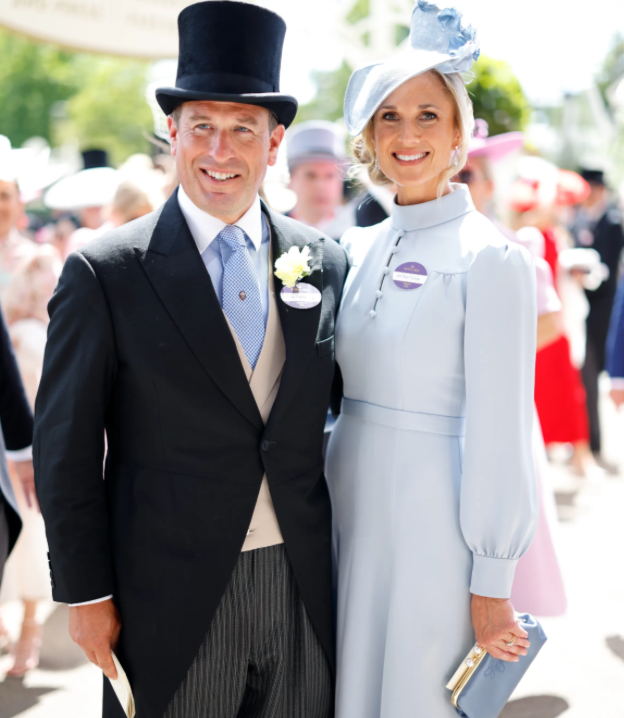
If there's a breakout star of this year's meet, it's Harriet Phillips. Newly married to Peter Phillips, this was her first Ascot as a member of the royal family, and she made the most of it. On day one, she stepped out in an elegant pale blue Suzannah London dress, paired with a matching Jane Taylor hat and Jimmy Choo slingback heels — soft, polished, and exactly the kind of look that makes a strong first impression. By the final day, she'd shifted gears entirely: a bridal-white look from Beulah London, complete with a semi-sheer section and a netted hat from Jane Taylor, a wink back to her wedding just weeks earlier. That range — soft pastel to bridal white in a single week — is exactly why people can't stop watching what she wears next. The Royal Observer + 2
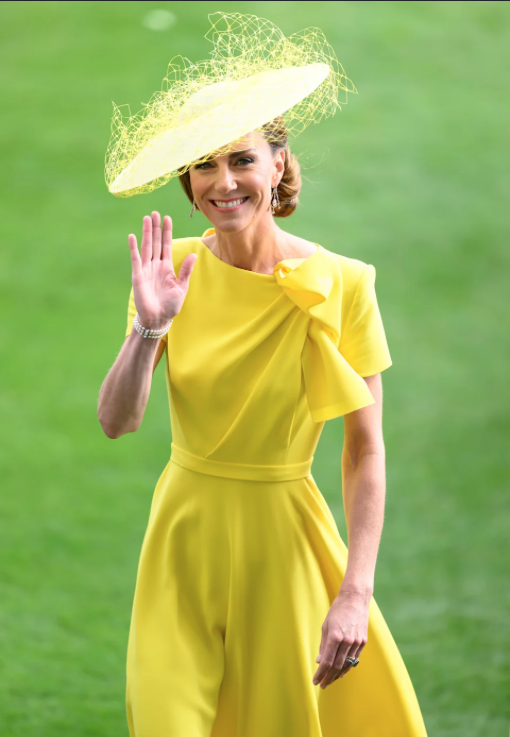
And then there's Princess Kate. Let's just be honest with each other: she's the reigning queen of Ascot style, and this year was no exception. She re-wore her vibrant yellow Roksanda dress — a piece she'd already worn on a royal tour and at Wimbledon — and somehow it still felt like the moment of the week. That's the thing about her style: it's never about chasing a trend or debuting something new just to be talked about. It's polish, consistency, and total ease in her own clothes, every single time. Other looks come and go, but Kate's the one who quietly, reliably wins. HELLO! Fashion
At the end of the day, Royal Ascot and a Saturday at Saratoga are different animals — one has a literal royal procession, the other has a mad dash to claim a picnic table by the rail — but the styling instincts hold up across both. Confidence in one strong choice, comfort built in on purpose, and just enough personality to make the look yours. That's the real dress code, wherever you're watching the race from.
RANKED: The Triple Crown Signature Drinks (And Which One Actually Deserves a Trophy)
Triple Crown Signature Drinks— Ranked!
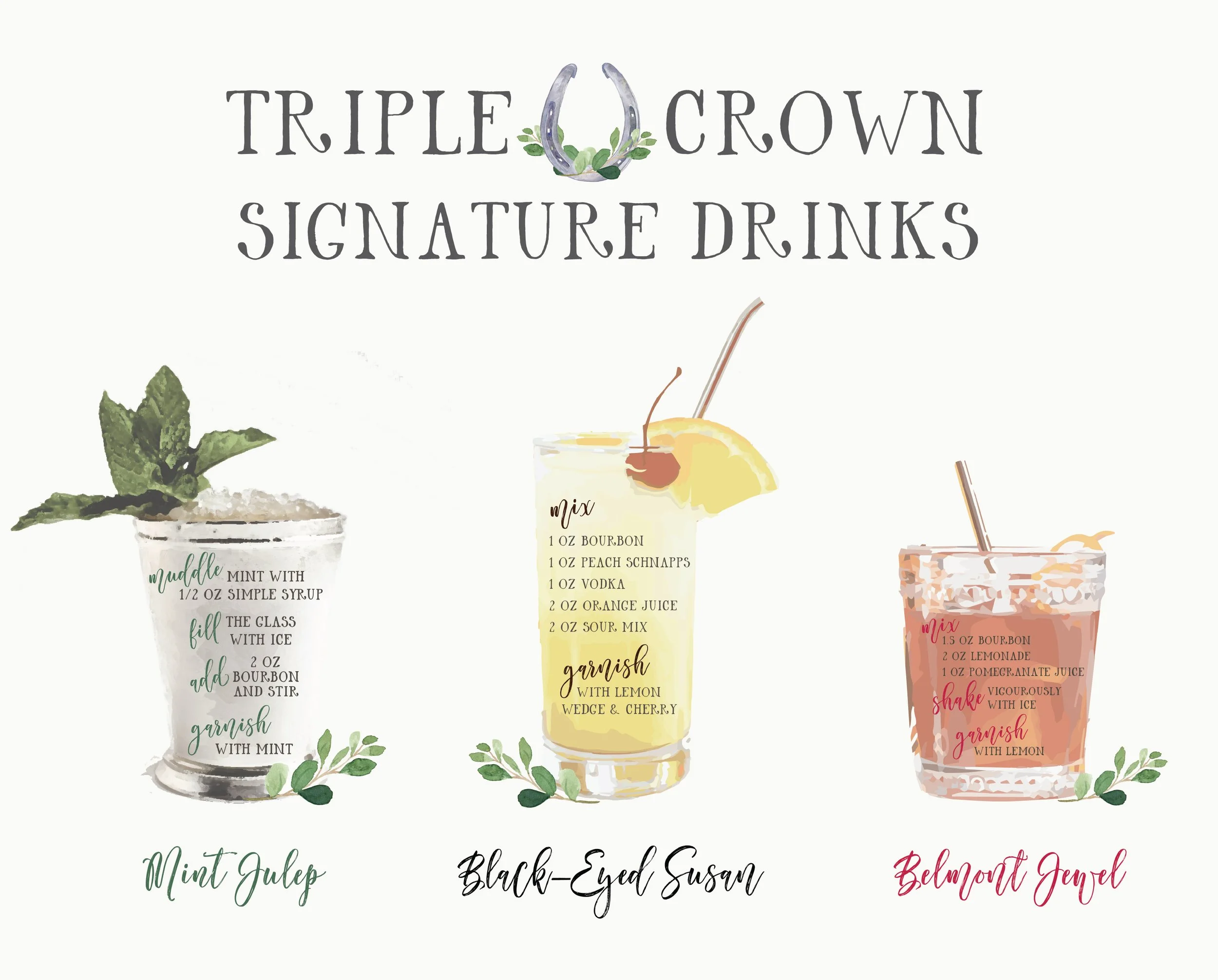
Every race has a signature drink.
The Triple Crown is horse racing's greatest achievement — three big races, at three different tracks, over five weeks. Each leg has its own flower, its own tradition, and yes, its own cocktail. Ranked below!
A note before we begin: we're including the Oaks Lily in this roundup, and no, it is not a Triple Crown drink. The Kentucky Oaks runs the day before the Derby, and it is its own race with its own drink and its own crowd. But if you're planning Derby Weekend, you're almost certainly there for both — and the Lily deserves a seat at the table. Consider this a bonus entry.
Bonus: The Oaks Lily (Kentucky Oaks)
Before we rank the Triple Crown drinks, we have to talk about the one that beats most of them.
The Oaks Lily has been the official drink of the Kentucky Oaks since 2006, and it is unapologetically a Cosmopolitan cousin: vodka, cranberry juice, triple sec, lemon juice. Bright, berry-forward, served over ice with a fresh blackberry and lemon wedge. It comes out hot pink, it photographs beautifully, and it tastes exactly like what it is — a summer drink at a party where everyone is dressed up.
Churchill Downs has also tied the drink to breast cancer awareness, donating a portion of proceeds from every Oaks Lily sold to Horses and Hope, a local initiative supporting Kentucky's horse racing industry. So it looks good, tastes good, and does good. Difficult to argue with.
The Lily lands outside the official ranking only because it belongs to a different race. But between you and me, if you're at Churchill Downs on Friday (or on Derby Day!), this is the move.
#3 — The Black-Eyed Susan (Preakness Stakes)
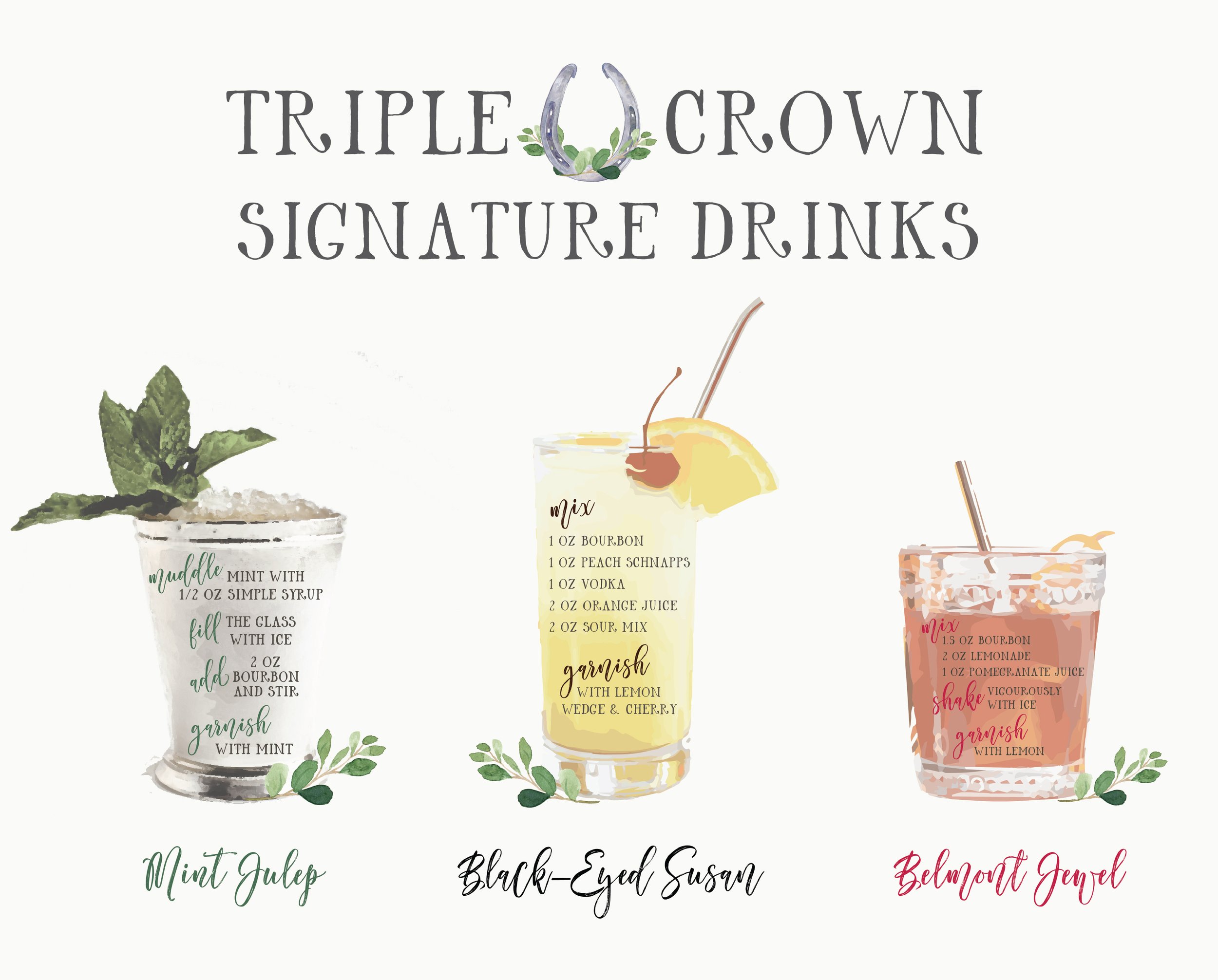
The Black-Eyed Susan is named for Maryland's state flower — the one draped over the winning horse at Pimlico — and the cocktail has existed since 1973. While the name has stayed the same, the recipe has changed repeatedly. Early versions were rum-based, some have included pineapple juice. The current official recipe includes bourbon, vodka, peach schnapps, orange juice and sour mix. Nobody seems to have told Pimlico that a classic is supposed to stay classic.
What's consistent: it's cold, it's served in a big glass, and it goes down dangerously fast in the May heat.
The Black-Eyed Susan lands at #3 because despite its identity crisis, it genuinely captures the vibe of the Preakness — scrappy, festive, a little unpredictable, and very Maryland. It's the middle child of the Triple Crown, and the drink reflects that energy in the best possible way. Nobody goes to Pimlico expecting understated elegance. They go to have a good time, and this drink shows up for that.
#2 — The Belmont Jewel (Belmont Stakes)
Bourbon, lemonade, pomegranate juice. Three ingredients, zero fuss, and honestly — it works.
The Belmont Jewel became the official cocktail around 2012, introduced after a long search for something that could hold up on a busy race day. Before it, the Belmont's official drink was the White Carnation — a vodka and peach schnapps situation that never really caught on — and then the Belmont Breeze, which was better but too time-consuming to make at scale. The Jewel solved that problem, and then some.
The combination is more balanced than it sounds on paper. The tartness of the lemonade cuts the sweetness of the pomegranate, and the bourbon holds everything together with enough backbone to remind you this is still a horse race, not a garden party. It's bright, it's refreshing, and it's the kind of drink you finish faster than you intended.
Pro tip: If you're making it at home, bump the bourbon up slightly — the official recipe's juice ratio can overpower it, and the drink is better when the bourbon has room to breathe.
#1 — The Mint Julep (Kentucky Derby)
Was there ever any doubt?
The Mint Julep has been the official drink of the Kentucky Derby since 1939, and an estimated 120,000 juleps are served during the two-day event. The recipe has barely changed: bourbon, fresh mint, simple syrup, crushed ice, silver cup. It's one of the few sporting event cocktails that would be just as at home in a proper bar as it is in a crowded infield. That's a rare thing.
That number — 120,000 — is staggering, and yet somehow the drink doesn't feel mass-produced when it's in your hand. The ritual matters: the frosted cup, the mountain of crushed ice, the mint bouquet you smell before you sip. It's theater and it's refreshing and it is genuinely, classically good.
The julep wins this ranking for the same reason Churchill Downs wins the pageantry competition every year: it knew exactly what it was from the beginning, and it never tried to be something else.
A note on the glass: The official Churchill Downs julep cups are a collectors' item you’ll definitely want to keep and collect over the years!
The Final Word
Mint Julep. Oaks Lily. Black-Eyed Susan. Belmont Jewel. They each belong to a race with its own character, and each drink reflects that character back at you. The Derby is tradition and theater. The Oaks is a party in pink. The Preakness is a good time that can't quite commit to a recipe. The Belmont is a test. Whether it’s at home or at the track— you can’t go wrong with any of them to cheers to the big race!
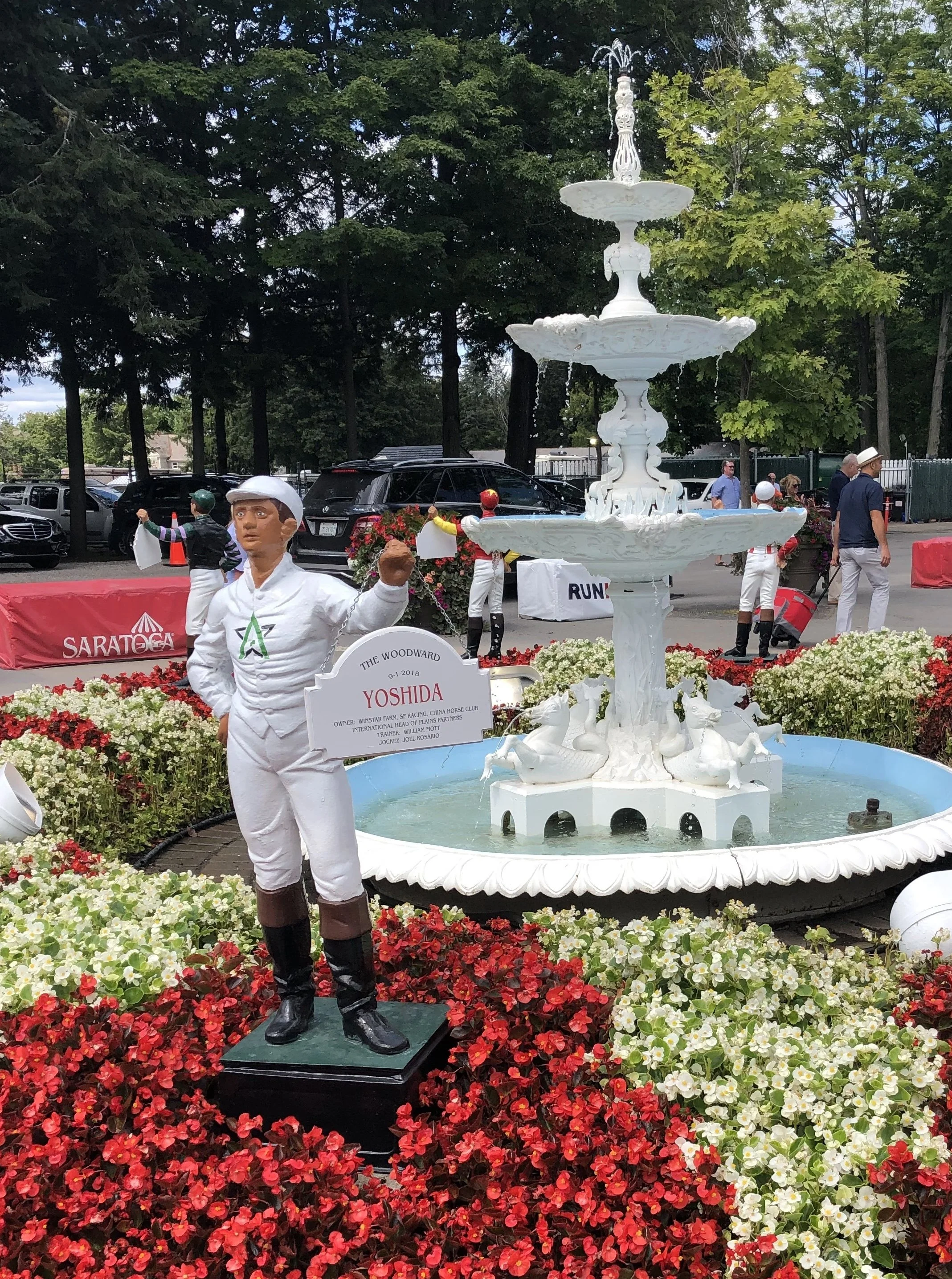
Belmont at Saratoga
It's the last leg of the Triple Crown — and for the third and final time, it's not in NYC. It's upstate.
The 158th Belmont Stakes takes place on Saturday, June 6th at Saratoga Race Course — the third and final year Saratoga hosts while Belmont Park undergoes a full rebuild on Long Island. Come 2027, the race returns home. Which means this weekend is genuinely the last chance to say you watched the final leg of the Triple Crown at one of the most storied tracks in American horse racing. For horse racing fans, Saratoga is a must visit destination, stepping back in time to where racing takes center stage in this picturesque town.
The five-day Belmont Stakes Racing Festival runs June 3 through June 7, kicking off with a free concert on Broadway Wednesday night (Fitz & The Tantrums, with Chelsea Handler hosting a VIP pre-show) and building to post time for the big race at 7:04pm ET on Saturday. Twenty-five stakes races. Five days. One city that does this better than almost anywhere else in the world.
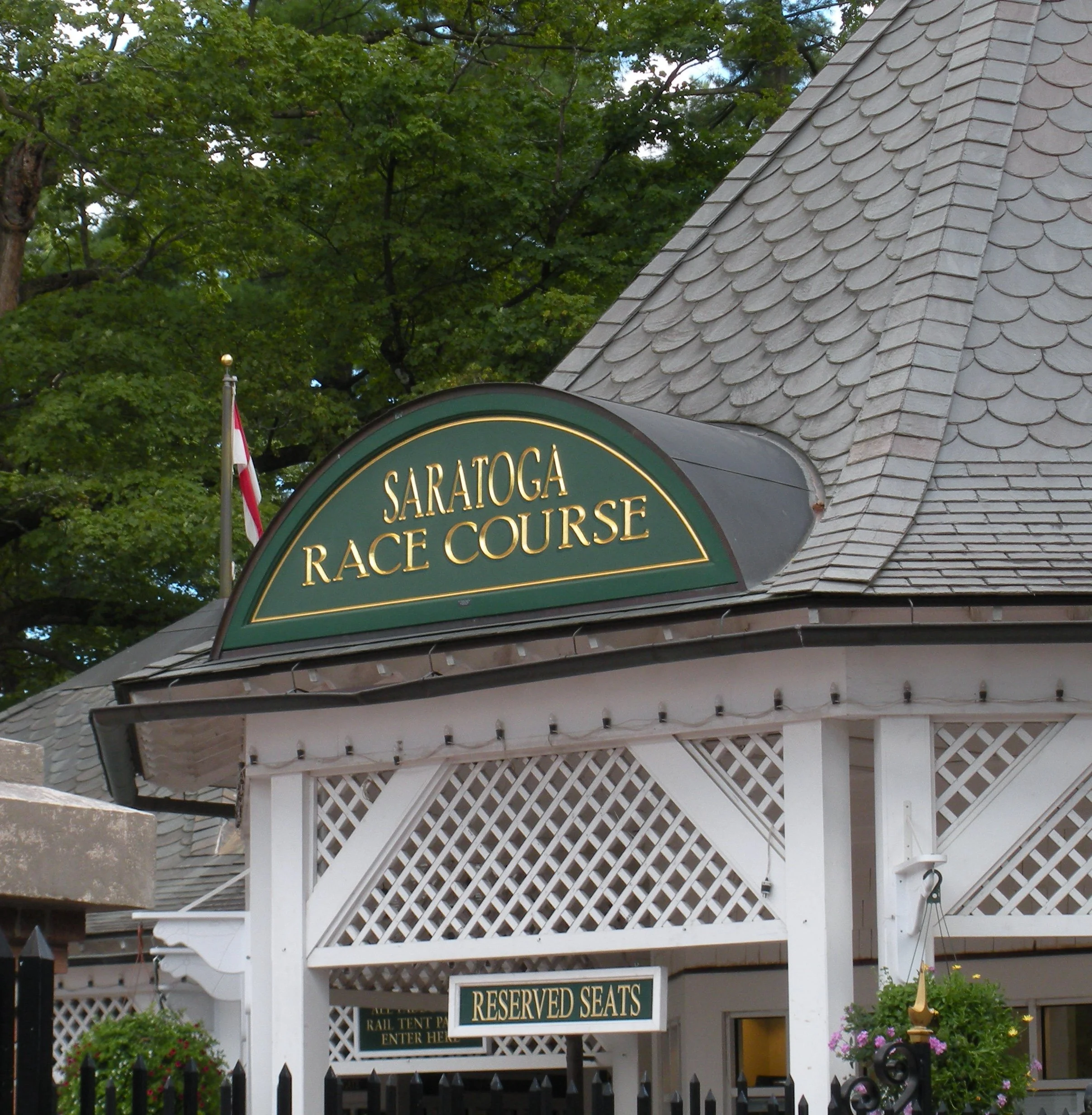
Where to stay
NO. 1 PICK
The Adelphi Hotel
365 Broadway — Downtown Saratoga Springs
If you want the full Saratoga experience, start and end your days here. The Adelphi is a Neoclassical landmark right on Broadway — the main drag — which means you're walking distance from everything and living inside the energy of race week. The hotel pairs historic bones (think: a proper library, a garden terrace) with genuinely luxurious rooms: heated bathroom floors, electronic shades, soaking tubs. Morrissey's Lounge and the on-site Salt & Char steakhouse mean you never have to leave to eat or drink well.
The staff earns consistent, almost emphatic praise — the kind of attentive-without-hovering service that makes a difference when you're wrangling race day logistics and a fascinator at the same time. The Adelphi is also on Amex's Hotel Collection if that means anything to your points strategy. Note that summer rates reflect the demand: rooms during race season can run $3,000 a night. Book early.
VIBE: Refined luxury, historically grounded
LOCATION: Downtown, walkable to everything
BEST FOR: The full occasion experience
ON-SITE DINING: Salt & Char, Morrissey's Lounge
NO. 2
Saratoga Arms
497 Broadway — Downtown Saratoga Springs
Don't let the bed-and-breakfast label mislead you — Saratoga Arms is a proper boutique hotel, and one that regularly earns near-perfect guest scores (9.8 out of 10 across 146 reviews at U.S. News). The 1870 Second Empire brick building is a downtown landmark, and the 31 individually decorated rooms are spacious, immaculately clean, and in many cases include fireplaces, balconies, or sitting rooms.
What makes it particularly good for a race week stay: a cooked-to-order breakfast is included (eaten on the wrap-around front porch), a 24/7 guest pantry with complimentary snacks and drinks, and a genuinely personal concierge who people mention by name in reviews. It's family-owned and run, which gives it a warmth that larger properties can't manufacture. Parking is easy, the location couldn't be more central, and it's a short drive to the track.
VIBE: Elegant B&B, personal service
LOCATION: Downtown Broadway, walkable
BEST FOR: Couples, value-conscious guests
BREAKFAST: Included, cooked to order
NO. 3
Hotel Brookmere & Arbor Spa
500 Union Avenue — Near the Track
Brookmere is the newest option of the three — a reimagining of the former Longfellows property on Union Avenue, just minutes from Saratoga Race Course and next door to Yaddo Gardens. The 88-room property sits on nearly ten acres of wetlands and lush grounds, giving it a resort quality the downtown hotels can't offer. The Arbor Spa has a proper sauna, a pool, a fitness area, and full treatment menu; the on-site Regent restaurant serves French-influenced fine dining that guests tend to rave about (particularly the duck consommé French onion soup).
The tradeoff is location — you're not walking to Broadway, and the vibe skews more retreat than race week. If you're coming for the full five-day festival and want a place to decompress between big days at the track, Brookmere delivers beautifully. But if you want to be embedded in the downtown energy, it's a drive away. It lands third here not for any flaw, but because the Adelphi and the Arms win on atmosphere and downtown access for a race-week context specifically.
VIBE: Spa resort, tranquil grounds
LOCATION: Union Ave, minutes to the track
BEST FOR: Spa-seekers, multi-day stays
ON-SITE DINING: Regent Restaurant & Bar
HONORARY MENTION
Hampton Inn & Suites Saratoga Springs Downtown — Not boutique, but worth flagging for the practical traveler. It's centrally located, consistently well-reviewed (9.2/10 on Hotels.com), and the free breakfast and reliable parking take the guesswork out of race week mornings. If the boutique options are sold out or outside the budget, this is the clean, no-drama choice.
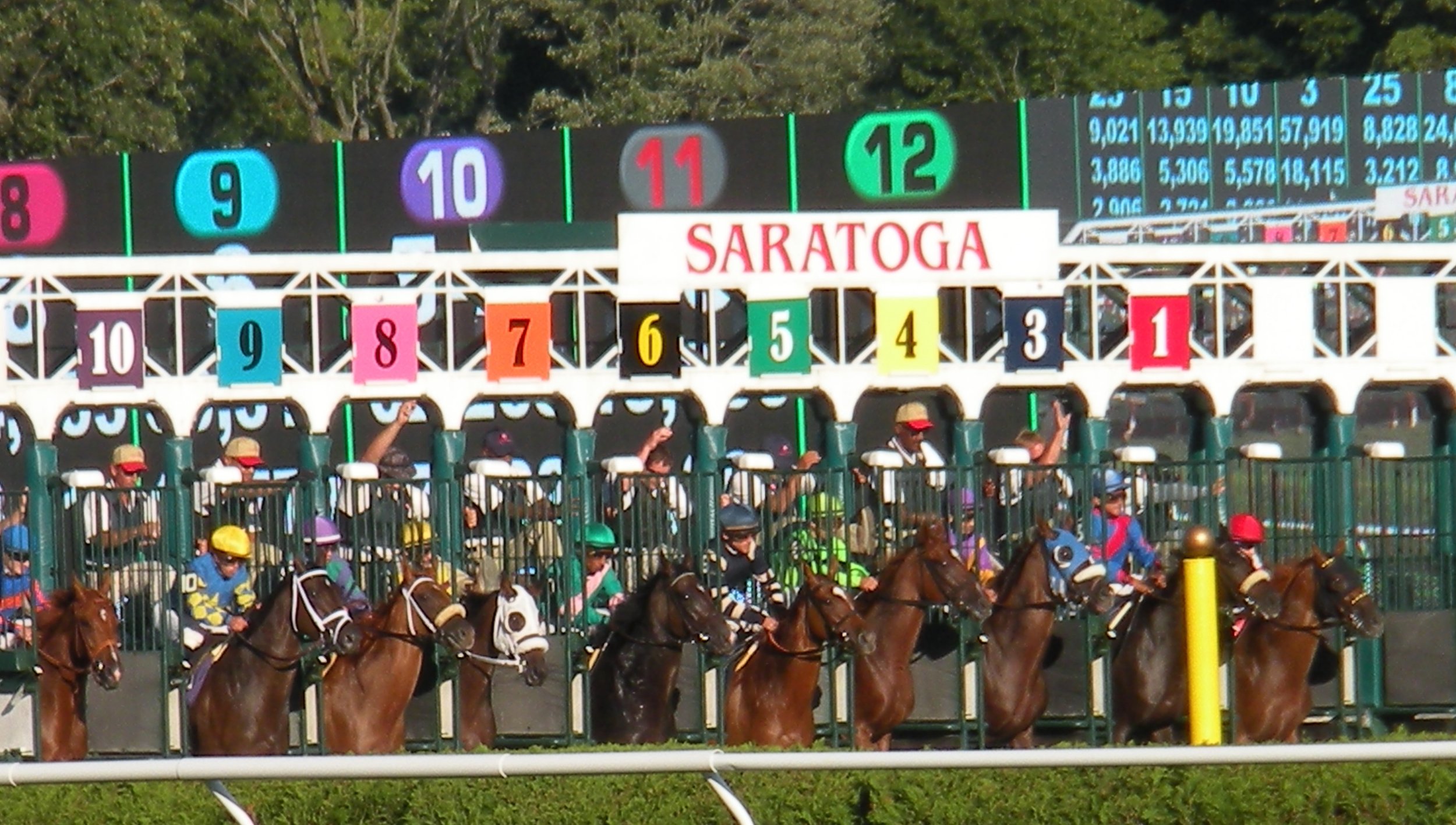
Where to Eat
Saratoga's dining scene punches well above its size. Salt & Char, Solevo and 15 Church are the obvious front runners for dinner where you will find the “who’s who” of racing. Here's some other curated options to check out across the three meals of race week.
DINNER
Hamlet & Ghost
New American seasonal menu in a converted 1870s storefront on Caroline Street. The cocktail program is the draw — inventive, house-made, genuinely good. Reserve ahead.
Seneca
CIA-trained chef, wood-fired grill, local ingredients. The menu rotates seasonally and the open kitchen is half the show. One of the most consistent dinner rooms in the city.
Familiar Creature
French- and Québécois-inspired wine bar from the Hamlet & Ghost team. Small plates, a curated bottle list, and a bistro atmosphere that earns a nightcap after dinner elsewhere.
LUNCH
Max London's
Farm-to-table seasonal menu on Broadway, with wood-fired pizzas, house-made bread, and a relaxed-but-polished atmosphere. Desserts are made by Wendy London — Mrs. London herself — keeping it very much a family affair.
Morrissey's Lounge
The Adelphi Hotel's in-house bistro. Ideal if you're already downtown and don't want to venture far — solid food, great room, and a proper bar for a mid-afternoon drink between races.
Hattie's
Southern and Louisiana cuisine since 1938. The fried chicken is the thing people come back for, year after year. Hattie's also has a seasonal presence at the track itself.
BREAKFAST
Mrs. London's
A Broadway institution since 1977 — a French bakery and café that started as a love story and never stopped delivering. Croissants, artisan breads, macarons, and a pastry case that genuinely earns the Paris comparison.
Sweet Mimi's
Voted best breakfast in the city annually since 2013. Mediterranean-influenced, farm-fresh eggs, Italian-trained kitchen. Arrive early — the line forms before opening.
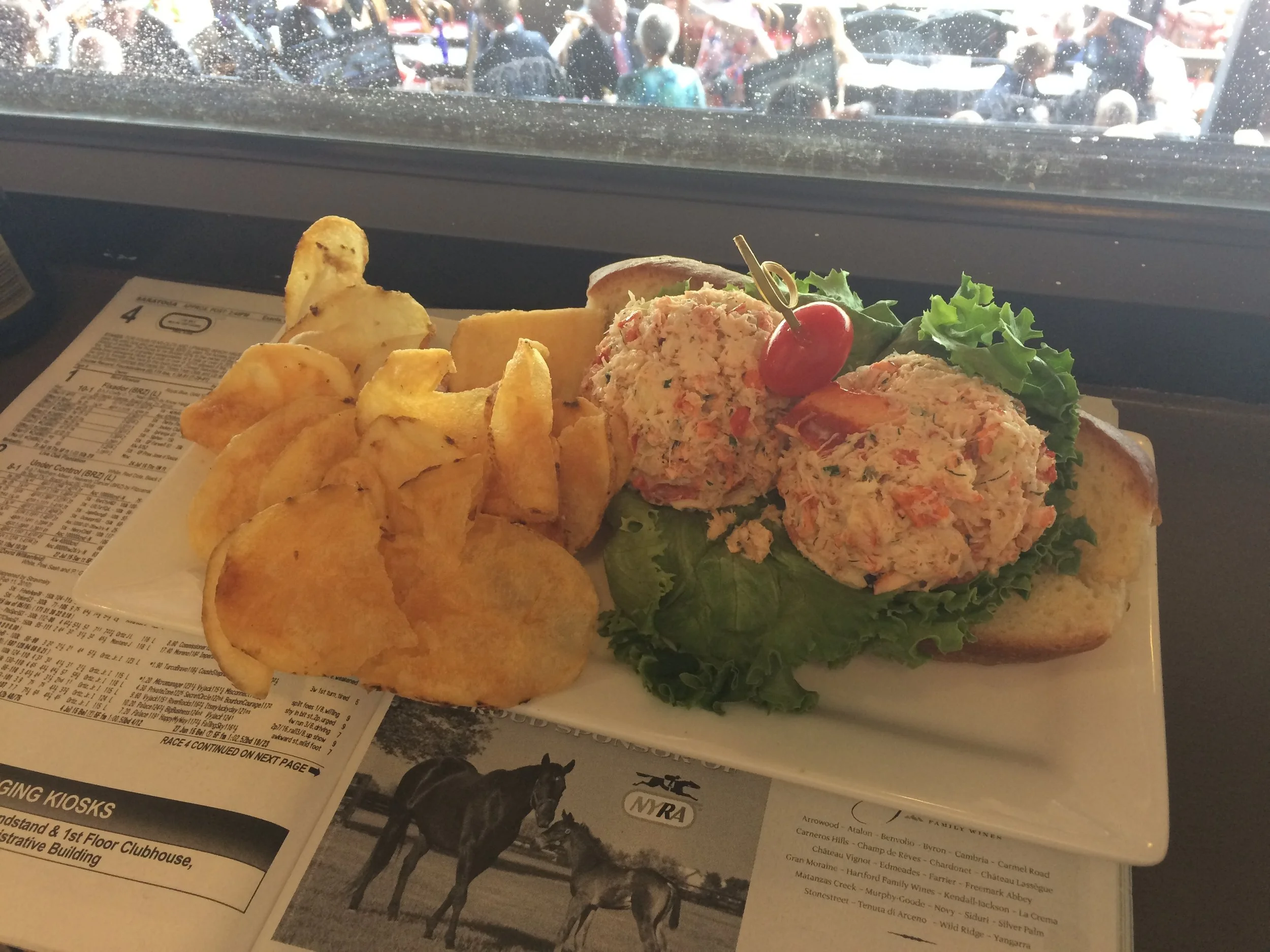
A Few Things to Know Before You Go
The Belmont Stakes Racing Festival runs June 3–7. The race itself — the 158th running — goes off at 7:04pm ET on Saturday, June 6.
This is the final year Saratoga hosts the Belmont. Belmont Park is slated to reopen in the fall, and the race returns to Long Island in 2027.
The race is contested at 1¼ miles (10 furlongs) rather than the traditional 1½, due to Saratoga's main track configuration.
Parking at the track is not included with tickets and sells out — purchase a pass online in advance. Shuttles run from outer lots to the track gates.
General admission on Belmont Stakes Day is standing room only. Reserved seating and hospitality areas are the move if you want a guaranteed spot.
The Belmont Ball (Friday, June 5) is a ticketed cocktail dinner benefiting equine charities — a quieter, more formal evening for those who want something off-track.
What to Wear
The Belmont at Saratoga has a different energy than a typical summer meet — and last year, people dressed accordingly. That spirit is back this year for the final edition.
The short version: dress for where you're sitting. The actual dress codes break down by ticket type.
Grandstand (General Admission): Informal attire. Shirts and shoes required — beyond that, you have full latitude. You'll see everything from shorts and sundresses to full race-day looks.
Clubhouse/Box Seats: No jeans, shorts, rompers, or abbreviated wear. Gentlemen are required to wear a suit or sports jacket — ties are not required. Ladies will be dressed to impress.
Premium Hospitality (e.g. Turf Terrace): Gentlemen must wear a collared shirt. Ladies must wear a skirt, dress, or slack outfit. No shorts, t-shirts, jeans, sneakers, or flip-flops.
A few things that are always true at Saratoga in June: it will be warm, it may rain briefly, and you will do more walking than you expect. Stilettos in the backyard or paddock are a gamble — not the good kind. Wedges, block heels, dressy flats, and clean sneakers all work.
On the style side: this is a Belmont, not a Tuesday. Bright colors, bold patterns, and lightweight fabrics are the move. A hat or fascinator earns its place here — this is exactly the occasion for it. For men, a linen blazer in a summer color does more work than a dark suit, and a pocket square or interesting tie goes a long way.
Where to Shop
Broadway is walkable and genuinely worth an afternoon. Two stores in particular are worth making time for before or after the races.
BEST MEN'S STORE
Union Hall Supply Co.
437 Broadway. Locally owned since 2019, Union Hall is the kind of men's shop that actually makes shopping enjoyable — a curated edit of brands like Faherty, Marine Layer, and 34 Heritage, a denim bar, and cold local beer on tap while you browse. The philosophy is simple: clothes for a guy who wants to look good without overthinking it. There's a style guide on hand if you need one, and the store's own words sum it up well — it's not the place to buy a suit, and not the place to buy a golf shirt. It's somewhere in between, and it's exactly right.
BEST WOMEN'S BOUTIQUE
Encounter
482 Broadway. A designer boutique that carries labels you won't find at the mall — Ulla Johnson, DVF, Alice + Olivia, Vince — with the kind of personalized service that makes it feel like shopping with a friend who has excellent taste. Notably, Encounter also stocks hats and headpieces by milliners Christine A. Moore and Nancy Matt, which makes it a genuinely useful stop before race day.
BEST FOR KIDS
G. Willikers
461 Broadway. A Saratoga Springs institution since 1985 — a specialty toy shop stocked with distinctive games, puzzles, and gifts for children of all ages. The kind of independent toy store that's increasingly hard to find. Look for the signature purple bag on the way out. Perfect for picking up something for the kids you left at home.
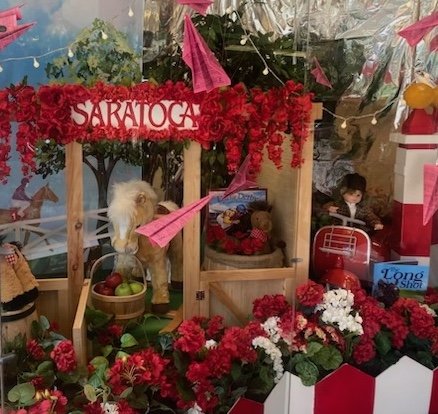
BEST BOOKSTORE
Northshire Bookstore
424 Broadway. A two-story independent bookstore that's been a Broadway anchor since 2013 — family-owned, beautifully stocked, and the kind of place that earns its own reason to visit. An entire floor is devoted to children's books with a large toy train display. For race week specifically, it's worth noting that Northshire is currently featuring Tom Durkin's memoir on the art of race-calling — a fitting read to pick up before post time.
Off the Track
Five days straight days at the track might not be for everyone, so if you need a break highly recommend the Saratoga Spa State Park — less than a mile from the track — is the best answer to a slow morning or a non-racing afternoon.
The park is a National Historic Landmark, and it looks the part: classical brick architecture, shaded paths, mineral springs, and enough room to decompress between big days. For tennis, there are eight clay courts set in a peaceful, scenic setting — and play is free and open to all. For swimming, the park has two distinct options: the Peerless Pool Complex, with a zero-depth entry main pool, a waterslide pool, and a children's wading pool; and the Historic Victoria Pool, a smaller pool surrounded by arched promenades. Both pool areas have food and beverage service on site, which takes care of lunch without having to leave the grounds. It's also worth noting that the park is home to the Gideon Putnam Resort and the Roosevelt Baths and Spa — a useful address if a mineral bath sounds like the right way to end race day.
Saratoga Springs is not incidentally connected to horse racing — it is horse racing, in a way that very few places in the world can claim. Broadway fills up with people who actually know what they're watching. The hat game is real. The stakes races draw real horses. And for one more weekend, it's hosting the final leg of the Triple Crown.
Wherever you stay, go early, dress for it, and get to the rail for the big race.
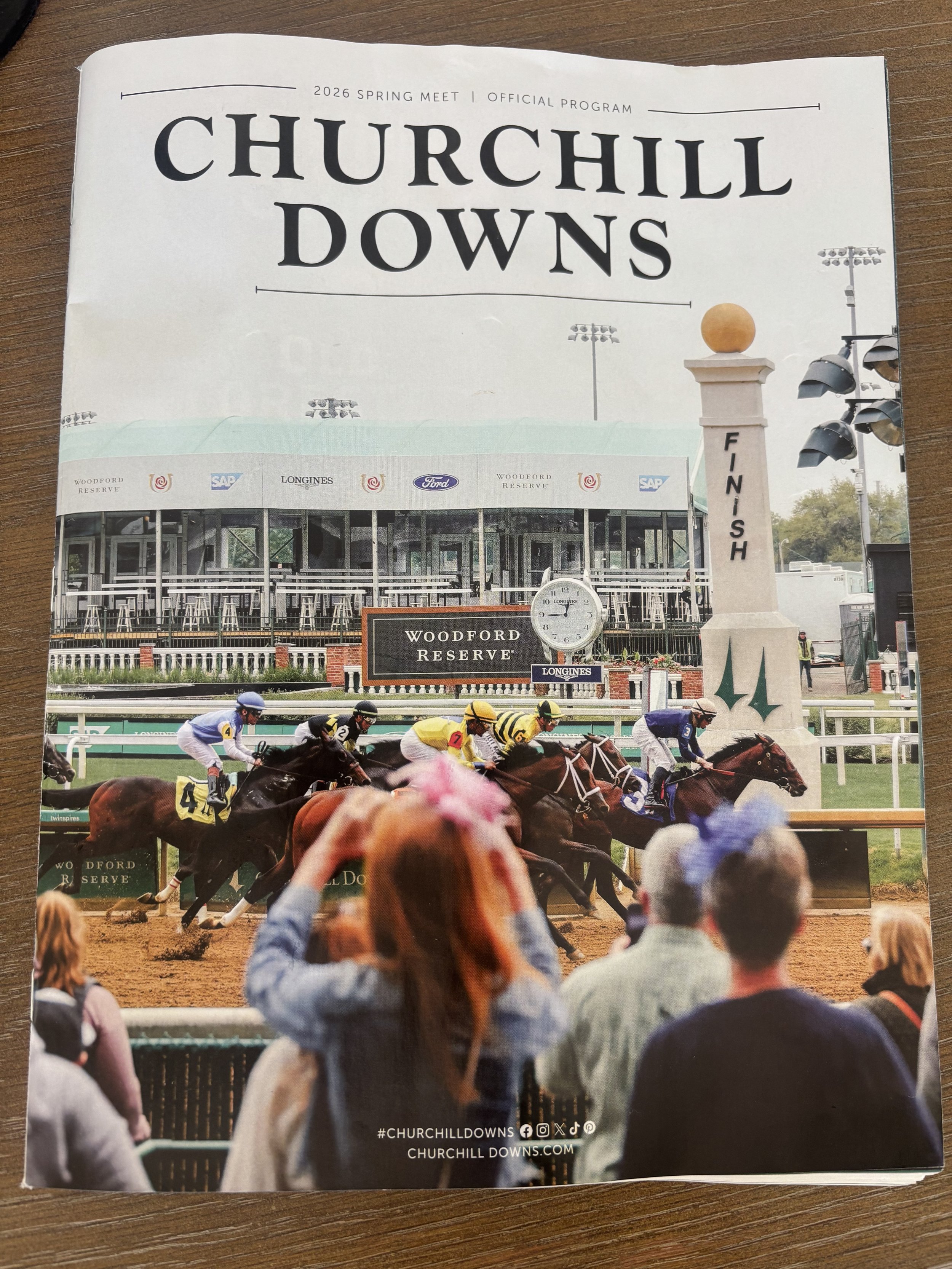
How to Read a Racing Program Without Feeling Lost
You pick it up at the gate, flip through a few pages, and immediately feel like you're reading a foreign language. Numbers, abbreviations, tiny print, and not a single explanation in sight.
That's the racing program — and it's intimidating until it isn't.
Here's the thing: you don't need to understand every line. You need to understand the right lines. Let me walk you through what's actually on the page, section by section.
The Race Card
The program opens with a race card — a full list of every race running that day, in order. Think of it as the day's schedule. Each race has a number, a post time, and a brief description of what kind of race it is (more on that in a moment).
Start here. It tells you how many races are on the card (usually 8–12), which one the big stakes race is, and roughly how long your day is going to be. Races run about 30 minutes apart, so you can plan your afternoon accordingly.
The Race Conditions
At the top of each individual race page, you'll see a block of text that looks something like this:
"For Three Year Olds and Upward. Non-winners of two races at a mile or over since April 1."
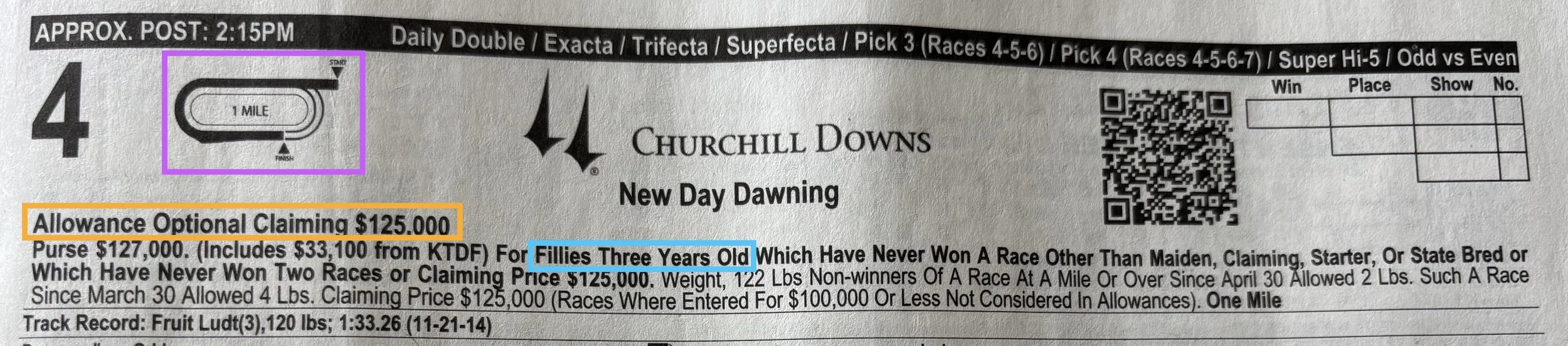
This is the conditions box, and it tells you exactly who is eligible to run in this race. Don't overthink it. The key things to scan for are:
Age — Are these young horses (2- or 3-year-olds) or older ones?
Distance — Is this a sprint (under a mile) or a route (a mile or more)? It also depicts if it is on the inner turf course or outer dirt course and where the start and finish will occur.
Class — Words like maiden, claiming, allowance, and stakes indicate the level of competition. Stakes races are the most prestigious; maiden races are for horses that have never won. Higher purses typically mean higher caliber horses.
The Horse's Name and Basic Info
Each horse's entry starts with its name, followed by details like age, color, sex, and breeding. Just below that you'll find the jockey and trainer names.

Trainer and jockey stats are printed in the program for a reason — a hot trainer or a jockey on a winning streak matters. If you see a name with a high win percentage next to it, pay attention.
The Past Performances
This is the meaty middle section — the rows of numbers that look like a spreadsheet had a bad day. Each horse in the race gets its own block, and inside that block is a line-by-line history of its recent races.
You don't need to decode all of it. Focus on these columns:
Date and track — When and where did this horse last run?
Distance — Has it run this distance before?
Finish position — That number at the far right. A string of low numbers (1, 2, 3) means a horse that consistently finishes up front. A string of 7s and 8s? Not so much.
Odds — What did the crowd think of this horse last time? If it was heavily favored and still finished fifth, that's worth noting.
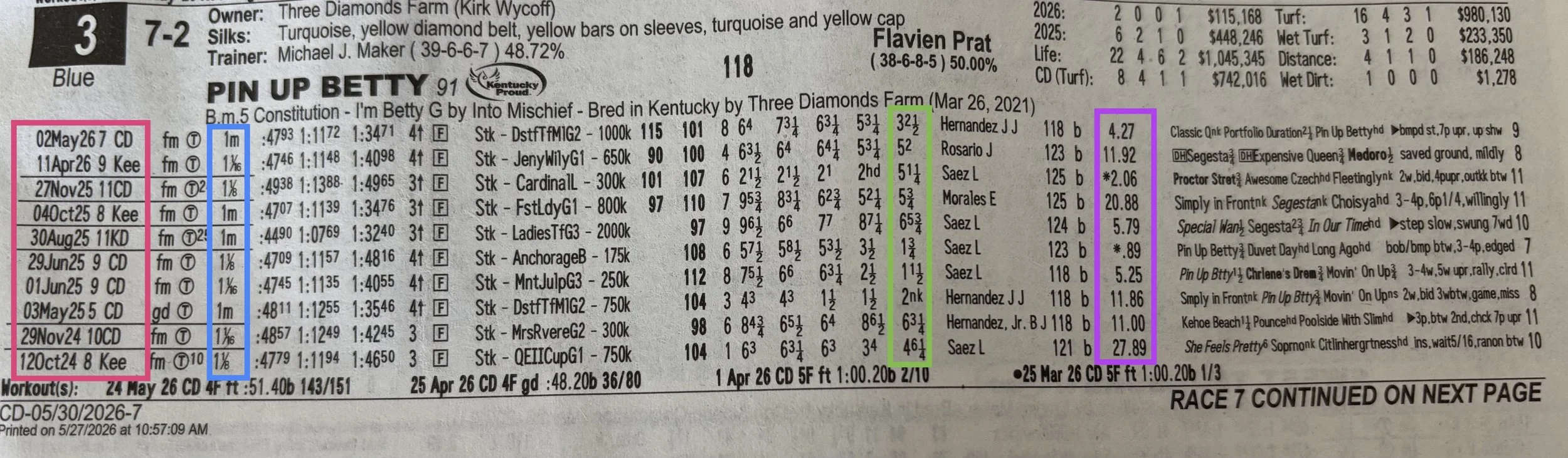
The past performances are where the real handicapping happens — but even a casual read gives you a feel for which horses are in form and which ones are not.
The Morning Line Odds
On the right side of each horse's entry, you'll see a fraction — something like 5/2 or 8/1. These are the morning line odds, set by the track's official handicapper before betting opens.
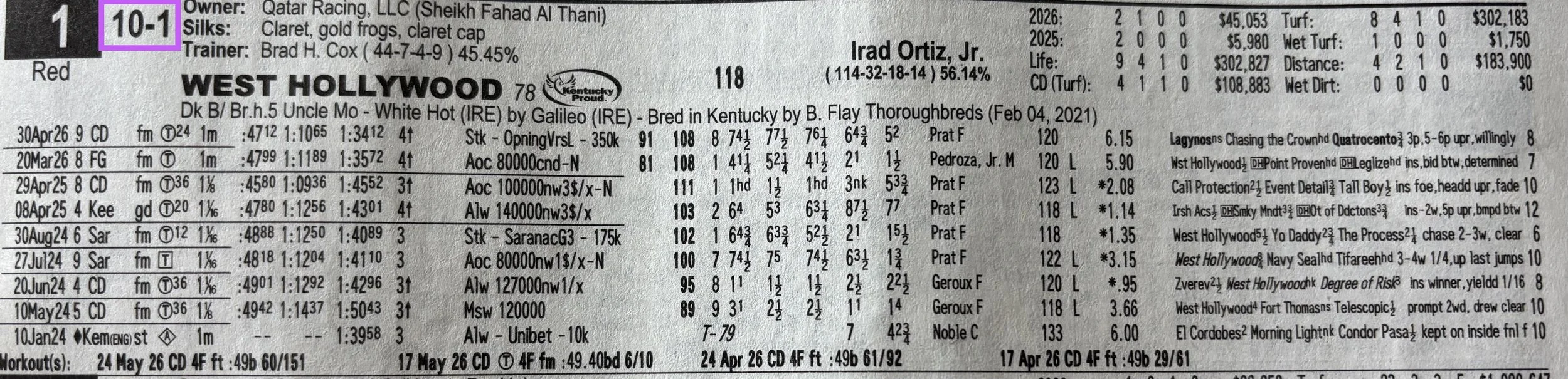
Think of them as a starting suggestion, not a final answer. By the time the race goes off, the actual odds will have shifted based on where the crowd puts their money. But the morning line gives you a quick read on who the experts think has a shot. The higher the number, the longer the odds and the crowd thinks they have a lower chance of winning. The lower the number, the shorter the odds. Higher odds = larger payouts.
You Don't Need to Know Everything
The program is designed for serious handicappers who spend hours studying horses. You are not required to be that person. If you want additional insight, there is a key at the start of the program which explains each and every number, letter, symbol, etc. Horse racing is like a big puzzle— the more you learn, the more interesting it gets!
Pick one or two things to focus on each race — maybe just the past finish positions, or just the odds — and build from there. The more races you watch, the more the numbers start to tell a story.
By race five, you'll be reading it like you've been doing it for years.
Your Race Day Glossary — Terms Every First Timer Should Know
Horse racing glossary for first time race goers.
The Great Race Place — Santa Anita Park
Because nothing kills the vibe like nodding along and having absolutely no idea what anyone is saying.
You've got your outfit sorted. You've got your tickets. You might even have a mint julep already in hand. But then someone next to you says something like "the morning line has the four horse as the chalk but I like the closer in the eight hole" and suddenly you feel like you've wandered into a foreign country.
Don't worry. That's exactly what this is for.
Here's your cheat sheet to the most important terms you'll hear on race day — from the basics every first timer needs to know, to a few insider terms that will make you sound like you've been doing this for years.
The Basics — Start Here
Post Time The official scheduled start time of a race. When someone says "post time is 6:30" they mean that's when the horses are expected to leave the starting gate. Arrive before post time — things move fast once the gates open.
The Field Simply the group of horses competing in a race. "A strong field today" means there are a lot of competitive horses running.
The Favorite The horse considered most likely to win based on the betting odds. Not always the winner — which is part of what makes racing so exciting.
The Longshot The horse with the highest odds — meaning least likely to win according to bettors. But longshots do win, and when they do, the payouts can be spectacular.
Odds The ratio that determines how much you win based on your bet. Lower odds mean the horse is favored — higher odds mean a bigger potential payout but less likelihood of winning. Odds are displayed on the tote board and update in real time as bets are placed.
The Tote Board The large display board at the track showing current odds, payouts and race information. Your best friend for keeping track of what's happening.
Handicapping The process of studying and analyzing horses, jockeys, trainers and conditions to predict race outcomes. Serious bettors spend hours handicapping. You can also just pick your favorite name — both are valid strategies.
The Track
The Paddock The area where horses are saddled and shown to the public before each race. This is one of the best places to be on race day — you can see the horses up close, watch the jockeys mount up, and get a feel for which horses look calm and ready. Don't miss it.
The Post Parade When the horses walk from the paddock to the starting gate before a race. A lovely few minutes to get a good look at the horses before they run.
The Backstretch The far side of the track — the straightaway on the opposite side from the grandstand. Also refers to the stable area where horses are housed and trained.
The Homestretch / Home Straight The final straightaway leading to the finish line. This is where races are won and lost — and where the crowd goes absolutely electric.
The Rail The fence that lines the inside edge of the track. "On the rail" means running along the inside. Getting a spot near the rail at the finish line is prime real estate on race day.
The Infield The grassy area inside the track oval. At the Kentucky Derby the infield is famous for its enormous, festive crowd. It's a party unto itself.
The Horses
Thoroughbred The breed of horse used in flat racing. All Kentucky Derby, Preakness and Belmont horses are Thoroughbreds — one of the most athletic and finely tuned animals in the world.
The Chalk Racetrack slang for the favorite. If someone says "bet the chalk" they mean bet on the horse with the lowest odds.
A Closer A horse that runs from behind and makes a late charge toward the finish. Closers can be incredibly exciting to watch — they often come out of nowhere in the final stretch.
A Front Runner A horse that prefers to lead from the start. Some horses need to be in front to perform well — others fade if pushed too early.
A Maiden A horse that has never won a race. Maiden races are specifically for horses that haven't yet won.
The Morning Line The odds set by the track's official handicapper the morning before a race — before any betting has taken place. It's a starting point, not a guarantee. Odds shift significantly once the public starts betting.
The Betting
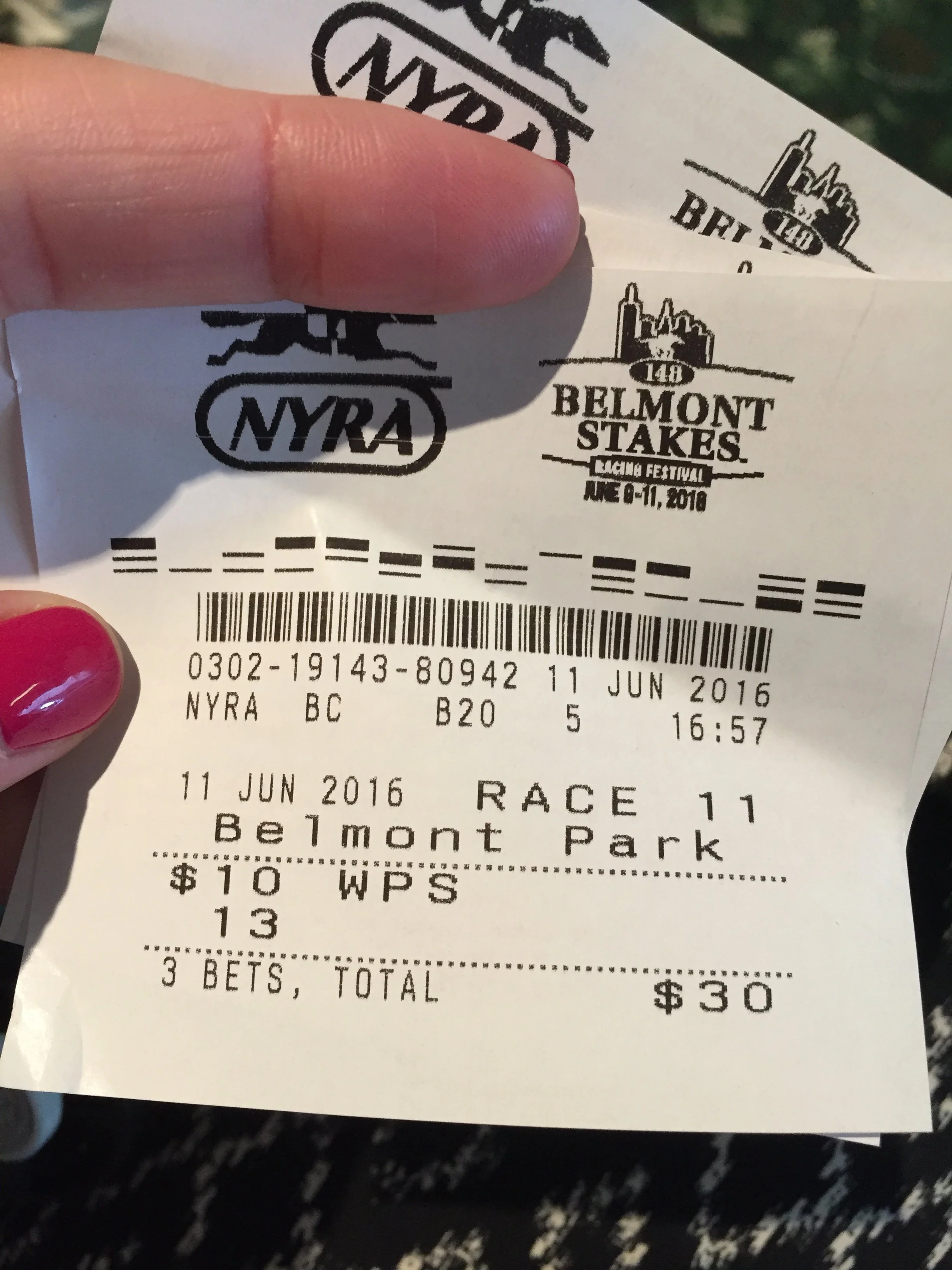
WPS = Win, Place, Show or $10 “across the board” for a total bet of $30
Win, Place, Show The three simplest bets. Win means your horse finishes first. Place means first or second. Show means first, second or third. Start here.
Exacta Picking the first and second place finishers in the correct order. Harder than a simple win bet but the payouts are better.
Trifecta Picking the first, second and third place finishers in the correct order. Even harder — but the payouts can be extraordinary.
Superfecta Picking the first four finishers in exact order. A long shot bet — but for $1 or $2 it adds enormous excitement to a race.
Box A betting option that covers multiple combinations. An "exacta box" on horses 3 and 5 means you win if either finishes first or second — in any order. Costs more but gives you more coverage.
Trifecta Box Covers all possible finishing combinations for your selected horses. A popular choice for bettors who like three horses but aren't sure of the exact order.
Payout / Mutuel The amount paid out for a winning bet. Displayed on the tote board after each race.
The People
The Jockey The rider. Jockeys are elite athletes — small in stature but extraordinarily skilled. Their decisions during a race can make or break a horse's chances.
The Trainer The person responsible for preparing the horse for race day — training, conditioning, strategy. A great trainer is as important as a great horse.
The Owner The person or syndicate that owns the horse. Owners are often in the paddock before races and in the winner's circle after. If your husband works in racing — this is the world he lives in.
The Stewards The officials who oversee the race and ensure the rules are followed. If there's an inquiry after a race — the stewards are investigating a potential infraction.
The Insider Terms — Use These to Impress
In the Money Finishing first, second or third — the positions that pay out. "She ran in the money" means she finished in the top three.
Scratched When a horse is withdrawn from a race before it starts — usually due to health or track conditions. Always check for scratches before placing your bets.
Going The condition of the track surface. "Fast" means dry and firm — ideal conditions. "Sloppy" or "muddy" means wet conditions that can significantly affect performance. Some horses love the mud. Others hate it.
Furlong A unit of distance used in horse racing. One furlong equals one eighth of a mile. Most races are listed in furlongs — the Kentucky Derby is run at ten furlongs, or one and a quarter miles.
The Blanket Finish When multiple horses finish so closely together they could be covered by a single blanket. One of the most thrilling moments in racing.
Wire to Wire When a horse leads from start to finish — from the first wire to the last. A dominant, commanding performance.
The Winner's Circle The designated area where the winning horse, jockey, trainer and owner gather for the post-race photo. If you ever find yourself in the winner's circle — you'll never forget it.
Bookmark this page and pull it up on race day. And if someone next to you starts talking about closers and morning lines — smile knowingly. You've got this.
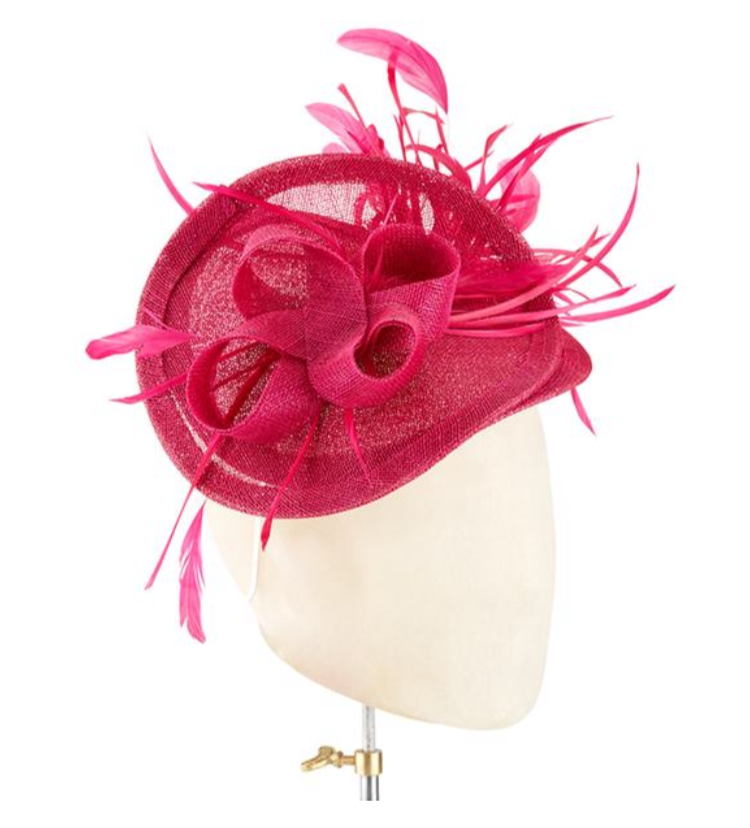
A Complete First-Timer's Guide to Race Day
Everything you need to know before you go — and a few things nobody thinks to tell you.
So you're going to the races. Maybe your husband has been talking about it for years and you finally said yes. Maybe a friend invited you and you said yes mostly because of the hat situation. Either way — welcome. You're going to love it.
But before you show up with the wrong shoes and no idea what a trifecta is, let me save you some time. I've spent years navigating race day from the inside, and I'm here to give you the guide I wish someone had handed me.
First Things First — What Even Is Race Day?
Horse racing isn't just a sport. It's an event. Think part fashion show, part social gathering, part athletic spectacle — all wrapped up in one of the most storied traditions in American culture. The three biggest races — the Kentucky Derby, the Preakness Stakes, and the Belmont Stakes — each have their own personality, their own dress code energy, and their own signature drink. We'll get into all of that in future posts. For now, just know this: no two race days are exactly alike, but the fundamentals apply everywhere.
Before You Go
Book everything earlier than you think you need to. Hotels near major tracks sell out fast — sometimes a year in advance for the Kentucky Derby. Don't wait until a few months out and wonder why nothing is available. The same goes for restaurant reservations. Plan ahead, or plan to be disappointed.
Know your seating area. Most tracks have several ticket tiers — general admission, grandstand, clubhouse, and premium suites or boxes. Each comes with a different experience, dress code expectation, and price point. Do your research before you go so you know what to expect and what to wear.
Download the track's app or grab a program. You don't need to become a racing expert overnight, but having a basic program in hand makes the day infinitely more enjoyable. You'll know which horses are running, who the jockeys are, and you'll actually have something to root for.
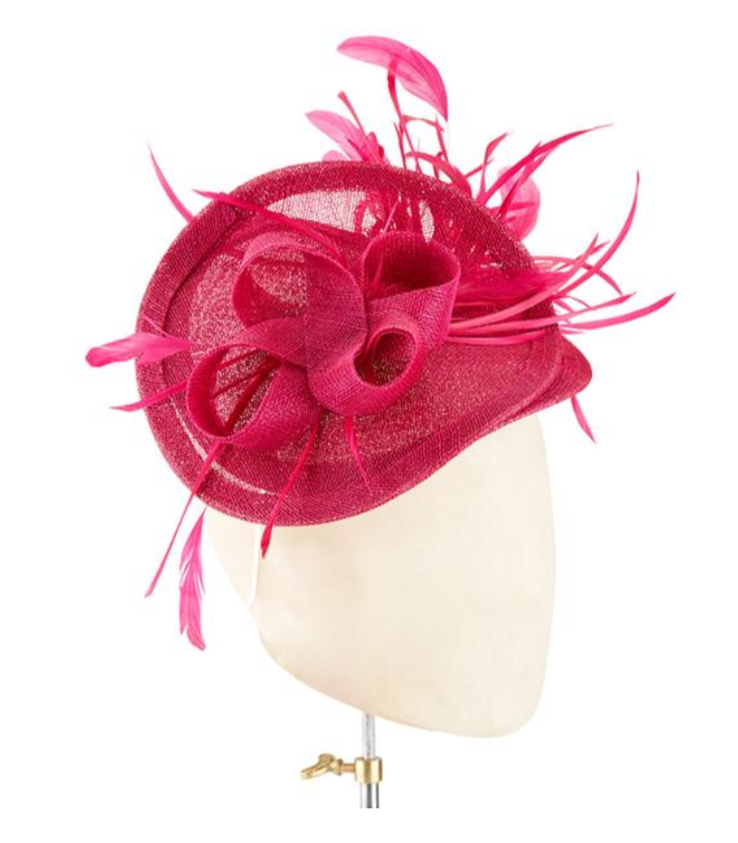
A fascinator is a lightweight decorative headpiece worn by women for formal occasions. Unlike a hat, it’s fixed to the hair with a comb, clip, headband, or elastic and sits at the side or top. Made from feathers, netting, beads, silk flowers, sinamay, etc., fascinators range from subtle accents to bold statements and are popular at weddings, horse races, and similar events.
What to Wear
This deserves its own post (and it will get one), but here are the essentials:
Do: Wear a hat or fascinator — especially at the Derby. It's not just encouraged, it's part of the experience. Go for it.
Do: Dress up. Race day is one of the few occasions left where people genuinely dress to impress. Lean into it.
Don't: Wear stilettos if you'll be on grass or gravel. You will sink, stumble, and regret every decision that led you there. A block heel or wedge is your best friend. It’s a LONG day on your feet, a hidden pair of flats will be a godsend when it’s time to walk back to the parking lot.
What to Bring
A small crossbody bag — easy to carry, hard to lose
Cash — some vendors and betting windows are cash only
Sunscreen — you will be outside longer than you think
A light layer — mornings at the track can be cool even in May
Comfortable shoes you can actually walk in
Your program or the track app downloaded and ready
How to Place a Bet
Here's the part everyone is secretly afraid of. Don't be. Betting at the races is genuinely fun once you understand the basics. We will elaborate further in future posts but for now, let’s start with a simple example.
Win — your horse finishes first. Place — your horse finishes first or second. Show — your horse finishes first, second, or third.
Pick a horse you like — maybe the name speaks to you, maybe you like the jockey's colors, maybe your husband actually knows something useful for once — and place a small bet. The minimum is usually $2. You're not trying to fund your retirement. You're trying to have a reason to scream at a horse for two minutes and have fun cashing a ticket.
And that's perfectly enough for your first time. But here's the thing about betting — the deeper you go, the more interesting it gets. As you learn more about the horses, the jockeys, the trainers and the track conditions, your bets naturally become more informed and more exciting. Exotic bets like exactas, trifectas and superfectas open up a whole new level of strategy and anticipation. It's a rabbit hole worth going down — just take it one race at a time.
What to Eat & Drink
Every major race has a signature cocktail and you should absolutely have one purely for the experience:
Kentucky Derby — the Mint Julep
Preakness Stakes — the Black-Eyed Susan
Belmont Stakes — the Belmont Jewel
And while the Triple Crown is where most people begin, it is only the beginning. Horse racing is a world unto itself — with stunning tracks, incredible events and unforgettable experiences happening all year long, all across the country. We have so much more to explore together.
Beyond the signature drinks, most tracks have a surprising range of food options these days — from fine dining in the clubhouse to casual bites trackside. Eat before you go or plan your food strategy in advance. Hungry + crowds + long lines is not a winning combination.
The Things Nobody Tells You
Arrive early. The energy before the main race is half the experience. Give yourself time to explore, find your spot, place your bets, and soak it all in.
The main race is fast. Like, two minutes fast. The Kentucky Derby — the most famous horse race in the world — is over in roughly two minutes. The buildup, the pageantry, the anticipation is hours. The race itself is a blink. Be present for it.
Wear sunscreen. I know I already said this. I'm saying it again.
It's louder than you expect. When those horses hit the final stretch and the crowd comes alive, it is genuinely electric. Don't be surprised if you find yourself on your feet screaming for a horse you picked because you liked its name. That's normal. That's race day.
You will want to go back. Fair warning.
And they’re off…welcome to The Paddock Wife
After years living inside the horse racing industry, I've become the unofficial resource for everyone experiencing race day for the first time. Because race day — whether it's the Kentucky Derby, the Preakness, or the Belmont — is one of those experiences that deserves to be done right. And there is always something new to discover, something to get exactly right, and something nobody thought to warn you about. That's why I started The Paddock Wife.
Every great race day has a story.
After years of living inside the horse racing world — not just as a fan but as someone whose life is genuinely woven into this industry — I've become the unofficial resource for everyone in our circle who is experiencing race day for the first time. Friends, family, colleagues, neighbors. If they're coming to the races, they're coming to me first.
And honestly? I love it.
Because race day is one of those experiences that deserves to be done right. The Kentucky Derby. The Preakness Stakes. The Belmont Stakes. The Breeders Cup. Thursday at Keeneland. Royal Ascot. Each one is a world unto itself — a collision of sport, fashion, tradition and pure electric energy that is unlike anything else. And whether you're a seasoned attendee or stepping into the paddock for the very first time, there is always something new to discover, something to get exactly right, and something nobody thought to warn you about.
That's why I started The Paddock Wife.
One of the first things I want you to know is this — horse racing is not one single experience. It can be a relaxed weekday afternoon at a local track, casual and unhurried, where you ease into the sport and find your footing. Or it can be an all out primetime event — think Kentucky Derby weekend, where the fashion is fierce, the crowds are massive, and the energy is unlike anything you have ever felt in your life. And everything in between. Part of what makes this sport so special is that it meets you wherever you are, and grows with you the more you lean in.
This blog is for the women who married into this world and are still finding their footing. For the friends who said yes to a race day invitation without knowing what they signed up for. For the guests who want to show up confident, stylish and prepared. And for the fans who want to share the experience they love with the people they love.
Here you'll find everything the racing form won't tell you. What to wear to each race and why it matters. Where to stay, where to eat, and what to skip. How to place a bet without embarrassing yourself. How to navigate a track like an insider.
And here's what makes The Paddock Wife a little different — we're going beyond the general advice. We'll be breaking down specific racing locations and giving you real, on the ground recommendations for each track. From Churchill Downs to Pimlico to Belmont Park and beyond, consider this your location by location insider guide to the best race days in the country. No two tracks are the same, and you deserve to know exactly what to expect at each one.
We're just getting started — and I can't wait to share all of it with you.
Welcome to the paddock. 🐴